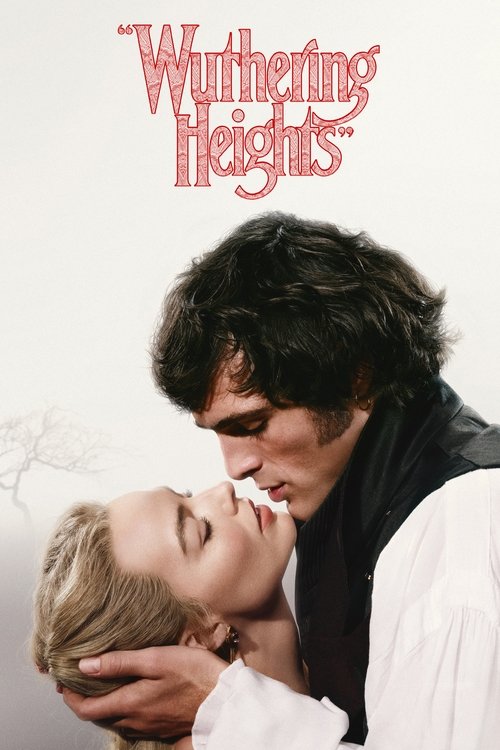
"Wuthering Heights"
2026 · Emerald Fennell
Saltburn made her the queen of divisive: bathwater scene memes, "eat the rich but make it horny" think-pieces, and class-tourism accusations, with her Wuthering Heights (Robbie/Elordi casting outrage) pre-generating discourse a year out. Criticizing or defending her is a personality.
For when you want a big, transgressive, all-consuming love story — date-night material only if your date likes their romance dark and thorny. Expect to argue about it afterward.
What it's about
Emily Brontë's famous doomed romance, retold with the volume turned up: Heathcliff, an outsider raised in the Earnshaw household on the Yorkshire moors, falls consumingly in love with Catherine, the wealthy family's untamable daughter. Class, pride, and cruelty pull them apart, and their obsession curdles into something that scorches everyone around them across years of grief and revenge.
The experience
Fevered, sensual, and deliberately provocative — this is the gothic novel played as obsession and appetite rather than tasteful costume drama. It runs hot and means to unsettle as much as swoon.
The craft
Emerald Fennell brings the lush, needling style of her earlier films to period material: sumptuous imagery of the moors and manor houses charged with an openly erotic, confrontational edge. It's designed to look ravishing on a big screen and to make an old classic feel dangerous again.
Why it matters
One of the most hotly debated literary adaptations of its decade — its casting and frank approach sparked argument long before release — and a marker of how boldly filmmakers now remix canonical novels.
Snapshot
Emerald Fennell's Wuthering Heights is the third feature from the British writer-director, following Promising Young Woman (2020) and Saltburn (2023), and her first literary adaptation — a retelling of Emily Brontë's sole novel, published in 1847. Produced by Margot Robbie's LuckyChap Entertainment with MRC and released by Warner Bros. Pictures, it premiered on January 28, 2026 at Grauman's Chinese Theatre and opened in the UK and US over Valentine's weekend in February. Robbie stars as Catherine "Cathy" Earnshaw opposite Jacob Elordi's Heathcliff, in a 136-minute film that drops the novel's second half to concentrate on the Cathy–Heathcliff story. Having been one of the most publicly contested literary adaptations of the decade before anyone had seen it — over the casting of Heathcliff, the ages of the leads, and its frankly eroticized marketing — the finished film arrived as a deliberately maximalist, film-shot romantic spectacle that divided critics almost exactly down the middle (57% on Rotten Tomatoes from 357 reviews; a Metacritic score of 55) while becoming a substantial commercial success, grossing $241.7 million worldwide against an $80 million budget.
Industry & production
The film sits squarely inside the LuckyChap model that has defined Fennell's directing career. LuckyChap produced both Promising Young Woman and Saltburn, and Wuthering Heights pairs that producing team with MRC financing and Warner Bros. distribution — a step up in scale and studio backing from the boutique releases of the earlier films, with an $80 million budget to show for it. The casting of Robbie as Cathy and Elordi as Heathcliff functioned simultaneously as star-vehicle assembly and as marketing provocation: Robbie is a bankable above-the-title lead and LuckyChap principal, while Elordi arrived off Saltburn and Priscilla as one of the most in-demand young leads of the moment. The supporting cast includes Hong Chau, Shazad Latif, Alison Oliver, Martin Clunes, and Ewan Mitchell.
Production was brisk and UK-based: a 50-day shoot from January to March 2025, split between Sky Studios Elstree and Yorkshire locations including Todmorden and the Yorkshire Dales. Notably, more than 40 of those days were on stage — both houses were built, interiors and exteriors alike — with the locations used mainly for landscape work, a construction-heavy approach consistent with Fennell's stated preference for handmade, in-camera design.
Two intertwined controversies shaped the production's public life. The first concerned Heathcliff: Brontë's text repeatedly codes him as racially and socially other — a dark-skinned foundling of unknown origin — and a substantial strand of modern Brontë scholarship and prior screen practice (notably Andrea Arnold's 2011 version, which cast Black actors in the role) reads that otherness as central to the novel's meaning. Casting Elordi, a white Australian actor, drew immediate criticism on those grounds. The second concerned the leads' ages, since Robbie and Elordi are adults playing characters who, in the novel's early movements, are children and adolescents. That discourse was genuine, well-documented public reaction, and it followed the film all the way to release.
Technology
The finished film is a photochemical object: Fennell and cinematographer Linus Sandgren shot on Kodak film in a 1.85:1 frame, mixing standard 35mm with large-format VistaVision. The 35mm material was shot 3-perf on Aaton Penelope cameras, the VistaVision on 8-perf Beaumont cameras, all through Panavision Primo lenses. The stock strategy was specific: Kodak VISION3 500T (5219) for low light and night, 200T (5213) for daylight, with the 200T rated at 100 ASA and the 500T at 250 to thicken the negative. The VistaVision format was reserved in particular for the wide landscape compositions with small figures in them — the reasoning, per Kodak's account of the production, being that the larger negative's finer grain holds up when a viewer's eye settles on a small region of a vast frame. The 1.85:1 widescreen canvas marks a decisive pivot from the boxy 1.33:1 Academy ratio of Saltburn: a format choice scaled to the Yorkshire-moor imaginary the novel invites, and sold accordingly as a premium large-canvas theatrical release under a major studio.
Technique
Cinematography
Sandgren, who photographed Saltburn, returns, and the continuity of Fennell's house style — high-saturation, tableau-conscious, unafraid of beauty as provocation — is now stretched toward landscape scale. Sandgren has described the lighting approach as naturalistic as far as possible but with an unrealistic amount of dramatic lighting layered on, with weather itself deployed expressively to carry the different emotions of scenes; Fennell's directive, in his telling, was to go all in on romanticism. His stated reference points map the film's visual DNA: a little Kubrick, Gone with the Wind, German Expressionism, and the Romantic painters — heightened realism rather than naturalism. The result drew some of the film's most unanimous praise: JoBlo's Chris Bumbray judged the photography Oscar-caliber, alongside the production design and costumes. The moor and the two houses are treated as charged, oppositional visual worlds — wildness versus cultivation — the contrast every serious screen Wuthering Heights has organized its imagery around, from William Wyler onward, here rendered with stage-built houses and VistaVision vistas rather than Arnold-style handheld rawness.
Editing
Victoria Boydell, who cut both of Fennell's earlier features, edited the film. Her sensibility across those films favors withholding and reveal — long-held compositions punctured by sharp tonal breaks, and music-driven set pieces that let a scene tip from romance into transgression. The defining structural decision of this adaptation is the excision of the novel's second half: Fennell jettisons the second-generation plot entirely, and she has said her aim was to distill the things about the book she found exciting and subversive rather than to cover it all. The film announces its tonal method from the start — it opens with a hanging scene whose staging Bumbray singled out — a cold-open gambit characteristic of Fennell's taste for seduction braided with shock.
Mise-en-scène / staging
This is the register in which Fennell is most distinctive, and the finished film bears it out. Suzie Davies's production design and Jacqueline Durran's costumes were conceived, by the production's own framing, through the sensibility of a fourteen-year-old reading the book for the first time — deliberately unbound from historical accuracy. The design is full of outré touches: a bright red acrylic floor in one room of the Lintons' home, and Met Gala-caliber gowns for Cathy. Durran built forty-five to fifty costumes for Robbie's Cathy, working from mood boards that mixed Tudor, 1950s, and contemporary references, including vintage Mugler and McQueen; one red dress — echoing, by some accounts, Vivien Leigh's in Gone with the Wind — is made not of latex but of an ultra-shiny, plasticized contemporary synthetic. The wedding dress is an amalgam of Victorian and 1950s fashion, from Winterhalter to Charles James. The men are coded by contrast: Heathcliff is dressed in a much more Georgian register, white shirts and a long black coat, while Edgar Linton's clothes use fabrics unlike anything a Victorian gentleman would wear, signaling new money. Fennell has described Thrushcross Grange as a space that tries to constrain nature — the design thesis of the whole oppositional scheme. Critics split on whether the surfaces serve the story: Hannah Strong in Little White Lies likened the Grange to the Overlook Hotel as decorated by Simone Rocha and argued that the aesthetics, gowns included, feel disconnected from the drama they dress.
Sound
Anthony Willis, who scored both prior Fennell features, returns, and the pop-adjacent musical strategy the project signaled is realized through original songs by Charli XCX. Willis's score is built around prepared piano: a "felted" piano played by Gavin Greenaway, a folk piano tune carrying what he describes as Cathy's true heart, and a toy-like prepared-piano theme for Isabella Linton. His string writing near the bridge (sul ponticello) was designed to share a sound world with Finn Keane, Charli XCX's producer, stitching score and songs together. Fennell's briefs to her composers were affective rather than technical — she wanted music about sorrow and sadness, and her working question to Charli XCX was simply what the material made her feel. Willis assembled the score in Logic with sample libraries, a workflow consistent with the hybrid, contemporary texture of the result.
Performance
Critical consensus, such as it is, tilts toward Robbie: Bumbray found she handles her role better than Elordi, whom the film presents as an object of erotic fantasy rather than a genuinely dark figure, and Strong similarly argued that Elordi's expressive eyes undercut Heathcliff's brutality. The structural demand the material places on the leads — a volatile, near-operatic register in which love is compulsion and cruelty — has defeated as many screen versions as it has served, and the divided reviews suggest this version converts the pairing into erotic spectacle more reliably than into destructive menace. Among the supporting cast, Alison Oliver makes a strong impression, and Martin Clunes supplies the film's emotional anchor in a brief scene. Fennell's own stated casting principle was performers who could make audiences love the unlovable.
Narrative & dramatic mode
Brontë's novel is a Gothic tragedy of thwarted, mutually annihilating love — obsession, revenge, property, and the supernatural persistence of feeling beyond death ("I am Heathcliff," Catherine's often-cited avowal, expresses a fusion closer to metaphysics than courtship). Every screen adaptation must decide how much of the second generation and revenge plot to keep, and Fennell's answer is categorical: the entire second half of the novel goes. Her film centers on childhood companions Cathy and Heathcliff who fall in love as adults; Cathy marries the wealthy Edgar Linton instead, and Heathcliff returns years later a rich man. The dramatic mode is the one her marketing promised — passion as transgression rather than tasteful romantic tragedy — opened on a hanging and conducted at a pitch of stylized, eroticized melodrama. Strong's dissent is precisely that this mode comes at a cost: in her reading, the adaptation strips out the novel's class critique, its portrait of abuse masked as love, and its generational trauma.
Genre & cycle
The film belongs to two overlapping lineages. First, the literary costume adaptation — the prestige mode of British and Anglo-American cinema that runs through decades of Austen and Brontë transpositions. Second, and more specifically, the recurring cinematic cycle of Wuthering Heights itself, one of the most-adapted English novels: William Wyler's canonical, Oscar-winning 1939 version with Laurence Olivier; Luis Buñuel's transposed Mexican Abismos de pasión (1954); Robert Fuest's 1970 AIP version; Peter Kosminsky's 1992 adaptation with Ralph Fiennes and Juliette Binoche; and Andrea Arnold's raw, naturalistic, race-conscious 2011 film. Fennell's entry is a deliberate swerve from Arnold's austere realism back toward heightened, stylized, star-driven melodrama — a glossy, provocative literary reworking aimed at a broad theatrical audience rather than the arthouse, and its grosses confirm it found that audience.
Authorship & method
Wuthering Heights is unmistakably an auteur project. Fennell wrote and directed, extending the total-authorship posture of her first two features, and the key-collaborator circle from Saltburn carried over nearly intact: Sandgren on camera, Boydell in the cutting room, Willis on score. Her method fuses provocation with polish — she uses genre and beauty as bait, then implicates the audience in the pleasures she stages — and applying that sensibility to a canonical text is the method's next move: taking a fixture of the Anglophone literary imagination and reworking it as something sensual, contentious, and pop-inflected, down to commissioning songs from Charli XCX. Her adaptation philosophy, in her own account, was distillation — keeping what she found exciting and subversive in the book rather than dramatizing all of it — and her design philosophy was handmade and in-camera, with both houses physically built. The producing authorship is equally central: this is a LuckyChap film, and Robbie's dual role as producer and star makes the project as much a Robbie–Fennell collaboration as a solo-auteur statement.
Movement / national cinema
The film is a British-led, American-studio-financed production — a characteristic transatlantic prestige configuration, shot entirely in the UK at Sky Studios Elstree and on Yorkshire locations. It draws on the deep tradition of British literary heritage cinema while refusing that tradition's usual tastefulness; Fennell's project is closer to a punk or provocateur inflection of the heritage film than to its Merchant-Ivory template. It also belongs to a distinctly contemporary strand of British filmmaking that treats class, sex, and Englishness as combustible material — a lineage in which Saltburn itself is a recent landmark. The Yorkshire setting and Brontë source root it in a specifically English regional and literary landscape, even as its financing, star apparatus, and release scale are Hollywood.
Era / period
Brontë set her novel in the late-eighteenth and early-nineteenth centuries, and the story is inseparable from period questions of inheritance, property, marriage, and social station. Fennell's film loosens rather than fixes that historical moment: the design brief explicitly rejected period accuracy in favor of a teenager's fevered first impression of the book, so Georgian silhouettes for Heathcliff coexist with plasticized contemporary fabrics, 1950s couture references, and anachronistic rooms like the Lintons' red acrylic floor, while Charli XCX's songs do the same work on the soundtrack. The film treats period as mood and material rather than as documentation. Production-wise, it is a mid-2020s work — a studio-era data point for event-scale, star-driven literary properties released theatrically on film-originated, large-format photography.
Themes
The enduring themes are Brontë's: obsessive love as a force indistinguishable from destruction; the collision of the wild and the cultivated — moor against manor, nature against propriety, a polarity the film literalizes in Fennell's description of Thrushcross Grange as a machine for constraining nature; class humiliation and revenge; inheritance and property as the material substrate of passion. Fennell's authorial preoccupations map onto these with unusual precision — she has consistently dramatized desire entangled with class and cruelty, and the seductions of beauty as a trap — and her adaptation foregrounds the erotic and transgressive dimensions of the Cathy–Heathcliff bond above all else. That emphasis is also where the sharpest critical disagreement lies: Strong's review argues the film sheds the novel's substance on class, abuse, and generational trauma in favor of surface, while admirers take the maximalist surface as the point. The casting controversy, meanwhile, kept alive a genuine thematic debate about Heathcliff's coded racial otherness and whether an adaptation can honor the novel's meanings while eliding it.
Reception, canon & influence
Reception was split almost perfectly in two. On the aggregate measures the film sits at 57% on Rotten Tomatoes across 357 reviews and 55 on Metacritic from 59 critics, with a B CinemaScore from opening audiences. The poles of the argument were stable: Bumbray at JoBlo gave it 7/10 as a defiantly maximalist, technically impressive but emotionally uninvolving spectacle, with Oscar-caliber work from Sandgren, Davies, and Durran; USA Today hailed it as the first must-see movie of 2026. Against that, Strong at Little White Lies found it pretty vacant — style over substance, built for fan edits and mood boards; Tomris Laffly at RogerEbert.com judged it curiously timid; and Kate Erbland at IndieWire observed that the smutty material was all in the trailers. Commercially the verdict was clearer: $241.7 million worldwide — $84 million domestic, $158 million international — against an $80 million budget, a solid hit for an R-adjacent literary melodrama.
On influences upon the film, the lineage is explicit in the makers' own accounts: Emily Brontë's 1847 novel first; behind it the long cinematic Wuthering Heights tradition — Wyler, Buñuel, Kosminsky, and especially Arnold, against whose austerity Fennell's stylization defines itself; and, per Sandgren, Kubrick, Gone with the Wind, German Expressionism, and Romantic painting. Fennell's own Promising Young Woman and Saltburn are the proximate stylistic sources — the same fusion of provocation, saturated beauty, pop scoring, and class-and-desire themes carries directly into this film. Looking forward, its clearest early legacy is commercial: as a profitable, high-profile studio bet on an auteur-driven, deliberately provocative reimagining of a canonical text, it strengthens the case for greenlighting more of the same, and its film-and-VistaVision production adds momentum to the current revival of large-format photochemical shooting. Where it ultimately lands in the Wuthering Heights adaptation canon — beside Wyler and Arnold or below them — is a question its divided first reception leaves open.
A Deleuzian reading
It begins with a hanging.
The full Deleuzian reading of "Wuthering Heights" →
Reception
Arrived in February 2026 pre-hated by Brontë purists and opened at #1 anyway with a $34.8M Valentine's weekend debut — the year's biggest opening at that point despite a mixed ~63% Rotten Tomatoes score. Five months on it's settled in as 2026's defining love-it-or-loathe-it release, adored and despised with equal fervor.
How "Wuthering Heights" was received, from release to now →
How to watch "Wuthering Heights": what to notice on a first viewing
- Notice how the moor and the houses look like different worlds. Sandgren and Davies set wildness against cultivation. The two houses are dressed with outré touches, a bright red acrylic floor at the Lintons' among them, while the moor gets VistaVision scale and weather. Fennell calls the Grange a space that tries to constrain nature. The houses are built to keep something out, and the film keeps showing you what.
- Watch the weather change with the mood of a scene. Sandgren lights naturally, then layers an unrealistic amount of dramatic light on top and uses weather to carry each scene's emotion. His references are Kubrick, Gone with the Wind, German Expressionism and the Romantic painters. The sky is not background; the film tells you what the people feel before they do.
- Watch Cathy's dresses. Durran built forty-five to fifty costumes for Robbie mixing Tudor, 1950s and contemporary references, vintage Mugler and McQueen; one red dress is a shiny plasticized synthetic. Heathcliff stays in Georgian white shirts and a long black coat, and Edgar's fabrics signal new money. Accuracy was never the brief; the clothes tell you who is wild, who is old money and who is new.
- Listen for which century the music comes from. Willis scores with a felted prepared piano and strings played near the bridge, then Charli XCX's songs arrive in the same sound world; Willis built the string writing to stitch into Finn Keane's production. The period image and the present-day music refuse to agree, so nothing here gets to be simply the past.
- Wait for the cut that breaks a held composition. Boydell, who cut both earlier Fennell films, holds a beautiful image long, then punctures it with a sharp tonal break or a music-driven set piece, and the scene tips from romance into transgression. You were enjoying the picture a second before it turned; that flinch is the method.
The whole guide to watching "Wuthering Heights", with the keys for a rewatch →
Influences: the films it descends from and the films it influenced
- Wuthering Heights (1939) — Establishes the property's screen grammar Fennell inherits and cites: the Nelly-Dean frame narrative bracketing the doomed romance, and Gregg Toland's deep-focus painterly tableaux that make the moors a compositional actor rather than backdrop.
- Wuthering Heights (2011) — The named antagonist-influence — Arnold's tactile handheld naturalism, weather-in-the-lens elemental texture, and recasting of Heathcliff as a racialized outsider set the terms Fennell's glossy star-driven version defines itself against.
- Abismos de Pasión (1954) — Precedent for radical transposition of the novel — proving the property survives being wrenched into a director's private idiom (here surrealist Mexican melodrama), licensing Fennell's anachronistic, provocation-first reworking.
- Promising Young Woman (2020) — Source of Fennell's core method carried directly here: genre-and-beauty-as-bait that implicates the viewer, candy-saturated surfaces weaponized against their pleasure, and diegetic pop needle-drops scoring transgression.
- Saltburn (2023) — The proximate stylistic parent — same LuckyChap circle and Anthony Willis score, class-and-desire chamber staging, boxy academy-to-large-format framing, and 'desire through surfaces' where wealth and want are rendered as licked, gleaming texture.
- Marie Antoinette (2006) — Template for the anachronistic pop cue over rigorous period costume — using contemporary music and candied color to render a historical interior as felt, present-tense adolescent hunger rather than museum reconstruction.
- Bright Star (2009) — Model for Romantic-era sensuality staged through surfaces and withholding — fabric, threshold, and touch doing the erotic work the dialogue refuses, obsession rendered as tactile restraint.
- The Piano (1993) — Ancestor of the gothic-desire register: mud, cloth, and the body as the vocabulary of forbidden longing, with an operatic emotional pitch and elemental landscape standing in for repressed will.
- Portrait of a Lady on Fire (2019) — Sibling in the editing/staging logic of 'withholding and reveal' — painterly held tableaux and the charged gaze structuring desire, deferral itself becoming the film's erotic and formal engine.
- Barry Lyndon (1975) — Ancestor of the saturated painterly tableau in large-format period cinema — each frame composed as a Georgian-era canvas, landscape and costume lit to picture-plane flatness, the visual mode Fennell scales up to IMAX.
- Jane Eyre (2011) — Sibling Brontë adaptation using the frame narrative and gothic moodlighting to withhold-and-reveal backstory, treating the moor-house as a chamber of desire and menace rather than heritage tourism.
- Atonement (2007) — Ancestor for the retrospective frame narrative wedded to lush heritage surfaces and a class-transgressive romance, where editing conceals then detonates a reveal that reframes everything before it.
Similar films
- Saltburn (2023) — influence & lineage
- Atonement (2007) — influence & lineage
- Emma. (2020) — influence & lineage
- Promising Young Woman (2020) — influence & lineage
- Portrait of a Lady on Fire (2019) — influence & lineage
- Poor Things (2023) — influence & lineage · same viewing thread
- Bram Stoker's Dracula (1992) — same viewing thread
- The Love Witch (2016) — same viewing thread
All the films related to "Wuthering Heights" →
Watch it with: curated runs of related films
- Drunk on Design — Watch these together for the rush of maximalist, color-drenched cinema where a woman is made, remade, or consumed by an art form — ballet, fashion, gothic desire — and the production design does half the storytelling.