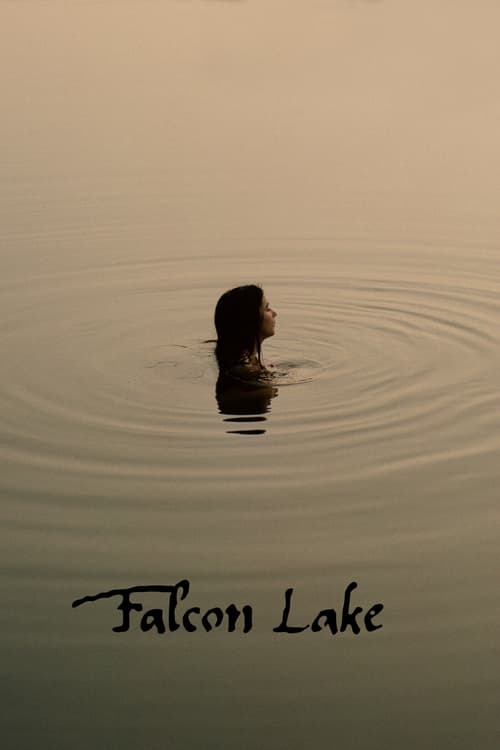
Falcon Lake
2022 · Charlotte Le Bon
For a wistful summer evening when you want first-love ache with a shiver in it — mostly comfort, but it leaves you a little unsettled, in a way you'll want to talk about.
What it's about
A shy thirteen-year-old, summering with his family at a lake house in rural Quebec, falls into an ambiguous friendship with a sixteen-year-old girl who is fluent in everything he isn't — cigarettes, parties, the local legend of the drowned. Over one hazy summer, first love and the lake's ghost story start to blur into the same thing. It follows the mortifying, electric gap between thirteen and sixteen, which feels wider than any ocean.
The experience
Tender and sun-drunk on the surface with a low hum of dread underneath — desire and unease become almost the same weather. It's gentle, funny, and quietly haunting, and the mood lingers well after it ends.
The craft
Actress-turned-director Charlotte Le Bon shoots on grainy 16mm in a nearly square frame, and the film breathes with the texture of memory — dusk light on water, a shared mattress on a floor. Adapted from Bastien Vivès's graphic novel Une sœur, it handles its ghost-story elements with remarkable restraint, letting atmosphere do the work jump scares can't.
Why it matters
A Cannes Directors' Fortnight premiere that marked Le Bon as a filmmaker to watch and gave Quebec cinema one of its most acclaimed recent debuts.
Charlotte Le Bon, the Québécois actress turned director, adapts Bastien Vivès's graphic novel Une sœur into a first feature of unusual poise — a coming-of-age story that keeps one foot in the ghost story. A shy thirteen-year-old, summering with his family at a lake house in rural Quebec, falls into an ambiguous friendship with a sixteen-year-old girl who is fluent in everything he isn't: cigarettes, parties, the mythology of the drowned. Le Bon shoots on grainy 16mm in a nearly square frame, and the film breathes with the texture of memory — dusk light on water, a shared mattress on a floor, the mortifying gap between thirteen and sixteen that feels wider than any ocean. The mystery elements are handled with remarkable restraint; dread and desire become almost the same weather. Premiering in the Directors' Fortnight at Cannes in 2022, it drew comparisons to early Sofia Coppola and the summer films of Éric Rohmer, but its temperature is entirely its own: humid, tender, faintly haunted. The lake does a great deal of the acting.
Reception
Premiered in Cannes' Directors' Fortnight in 2022 to warm reviews, then won France's Prix Louis-Delluc for best first film — but its real second life came via word-of-mouth after the quiet 2023 US release, when it snowballed into a Letterboxd sleeper favorite.
How Falcon Lake was received, from release to now →
Influences: the films it descends from and the films it influenced
- The Virgin Suicides (1999) — Establishes the template Le Bon inherits directly: adolescent longing filtered through gauzy, backlit natural-light nostalgia where first desire and mortality/haunting are the same texture.
- Pauline at the Beach (1983) — The lakeside-vacation dramaturgy of idle summer days and adolescent romantic maneuvering observed in unforced natural light and real duration — the Rohmerian holiday structure Le Bon builds her film on.
- The Green Ray (1986) — Semi-improvised, natural-light vacation malaise that resolves into a single uncanny natural phenomenon — the model for treating an ordinary landscape as a site of the numinous.
- Picnic at Hanging Rock (1975) — Sun-hazed adolescent eros dissolving into the unexplained, with narrative ambiguity and a disappearance used as a structuring formal device rather than a plot to be solved.
- Fish Tank (2009) — Academy-ratio (1.33), handheld, natural-light coming-of-age that boxes a teenager's charged, dangerous desire inside the tall frame — the aspect-ratio-as-adolescent-confinement grammar Le Bon adopts.
- Let the Right One In (2008) — Braids tender first love with a supernatural register in a frigid northern landscape, using restraint and a muted palette so the horror stays submerged beneath the romance.
- Blue Is the Warmest Color (2013) — A graphic-novel adaptation rendered as tactile naturalist close-up on teenage desire — the same source-medium translation (Vivès/Maroh comics → intimate live-action skin and light) Le Bon performs on 'Une sœur.'
- Water Lilies (2007) — Adolescent desire organized around swimming and water bodies, shot in cool, patient natural light where the pool/lake becomes the erotic and psychological arena.
- A Ghost Story (2017) — Uses the 1.33 Academy ratio with rounded corners as an elegiac, memory-box frame — aspect ratio deployed to make mourning and the uncanny feel like a recovered photograph.
- We're All Going to the World's Fair (2021) — Extends the same adolescent-dread poetics — a lonely teenager, low-light naturalism, and a refusal to confirm whether the uncanny is psychological or supernatural — into a contemporary key.
- Aftersun (2022) — A holiday reconstructed as fallible memory through analog/lo-fi texture and elliptical ambiguity, with grief and loss hovering unspoken beneath a child-and-elder vacation gaze.
- Petite Maman (2021) — Domesticates the ghost story into a quiet childhood uncanny of doubling and time-slippage, staged in woodland natural light with deliberate narrative under-explanation.
- Beach Rats (2017) — Shot on grainy 16mm in near-Academy framing, rendering adolescent sexual awakening as a physical, close-pressed texture of skin, water and low light.
- Close (2022) — Renders tender pre-adult intimacy between two friends and its rupture in soft natural light and restrained observation, where desire and loss are conveyed by withholding rather than statement.
- Lake Mungo (2008) — A lake-set grief-as-ghost-story that sustains genuine ambiguity about whether the supernatural is real, using the body of water as the uncanny threshold between mourning and haunting.
- Humanist Vampire Seeking Consenting Suicidal Person (2023) — Québécois autumnal adolescent romance shadowed by death and starring the same lead, Sara Montpetit — the muted blues and ghostly deadpan tenderness are a direct performance kinship.
Similar films
- Close (2022) — influence & lineage · same viewing thread
- Aftersun (2022) — influence & lineage
- Petite Maman (2021) — influence & lineage
- Young Hearts (2024) — same viewing thread
- Tomboy (2011) — same viewing thread
- Leviticus (2026) — often watched together
- My First Summer (2020) — shared sensibility
- Summer of 85 (2020) — shared sensibility
All the films related to Falcon Lake →
Watch it with: curated runs of related films
- The Unspoken Between Boys — Watch these together for the way each lets a boyhood friendship curdle into longing, grief, or something neither kid can quite name.