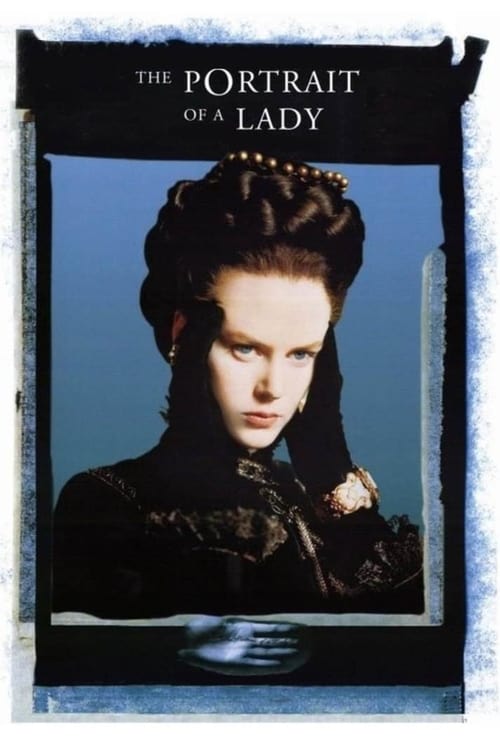
The Portrait of a Lady
1996 · Jane Campion
For when you want a period piece with teeth — not a cozy romance but something dark, strange, and worth arguing about afterward. Reach for it when you're in the mood to be challenged rather than soothed.
What it's about
Isabel Archer, a spirited young American in Europe, unexpectedly inherits a fortune thanks to her devoted, ailing cousin — and with it, the freedom to live entirely on her own terms. From Henry James's novel: her independence draws suitors, schemers, and a charming aesthete whose taste masks something colder, and the film watches what the world does to a woman determined to choose for herself.
The experience
Chilly, sensuous, and deliberately unsettling — this is a costume drama that feels more like a psychological thriller of the drawing room, its beauty shot through with menace. It's slow-burning and demands patience, but the emotional undertow is powerful.
Performances
Nicole Kidman gives one of her most exposed early performances as Isabel, and John Malkovich is quietly terrifying as Gilbert Osmond — control masquerading as refinement. Barbara Hershey is superb as the worldly, wounded Madame Merle.
The craft
Jane Campion refuses the pretty-postcard approach to literary adaptation, shooting James's world with expressionist shadows, disorienting close-ups, and bold, dreamlike interludes that put you inside Isabel's desire and dread. The imagery is ravishing in an off-kilter way that rewards a big screen.
Why it matters
Arriving right after Campion's international breakthrough, it divided critics for subverting prestige-drama expectations — and has since been reappraised as one of the boldest literary adaptations of the 1990s and a key work in her study of women's inner lives.
Snapshot
Jane Campion's The Portrait of a Lady is the New Zealand director's adaptation of Henry James's 1881 novel, made immediately after the international triumph of The Piano (1993). It follows Isabel Archer (Nicole Kidman), a spirited young American who inherits a fortune through the intervention of her invalid cousin Ralph Touchett (Martin Donovan), and who then squanders her freedom by marrying the sterile, controlling aesthete Gilbert Osmond (John Malkovich), a match engineered by the worldly Madame Merle (Barbara Hershey). The film is at once a "prestige" literary costume drama and a characteristically Campion subversion of one — a study of female desire, autonomy, and entrapment rendered with a chilly, expressionist intensity that divided critics on release. It is best understood as the work of a major auteur testing whether her interior, erotically charged sensibility could be grafted onto canonical nineteenth-century material.
Industry & production
The film was produced under the PolyGram Filmed Entertainment umbrella through Propaganda Films, with Monty Montgomery and Steve Golin among the producers. It arrived as a heavily anticipated follow-up: The Piano had won the Palme d'Or at Cannes and three Academy Awards (including Best Original Screenplay for Campion), making her one of the most closely watched directors of the decade and one of very few women to command that level of attention. That success bought Campion the latitude to mount an ambitious international literary adaptation with a substantial budget, a starry transatlantic cast, and extended location work in Italy (Florence, Lucca, Rome) and England.
The casting reflected that prestige ambition. Kidman took the lead at a transitional point in her career, before her run of auteur collaborations later in the decade; the supporting ensemble assembled John Malkovich, Barbara Hershey, Martin Donovan (a Hal Hartley regular), Mary-Louise Parker as the journalist Henrietta Stackpole, Shelley Winters as Mrs. Touchett, Richard E. Grant as Lord Warburton, Viggo Mortensen as Caspar Goodwood, a young Christian Bale as Edward Rosier, Shelley Duvall as the Countess Gemini, and Sir John Gielgud in a brief turn as the dying Mr. Touchett. Commercially the film underperformed relative to expectations set by The Piano; precise box-office figures are not detailed here, but the consensus record is that it did not repeat its predecessor's popular success. It nonetheless earned two Academy Award nominations — Barbara Hershey for Best Supporting Actress and Janet Patterson for Best Costume Design.
Technology
The Portrait of a Lady is a conventionally photochemical mid-1990s production — shot on 35mm and finished photochemically, before the digital-intermediate workflows that would reshape costume-drama color grading a few years later. Its technical interest lies less in any novel apparatus than in Campion's deliberate stylistic appropriation of older cinematic technologies. The film opens with a contemporary prologue and later incorporates an extended faux-archival travel sequence shot to evoke early silent cinema — black-and-white, intertitles, and the iconography of turn-of-the-century actualités and trick films. This is technology used citationally: Campion reaches backward to the medium's infancy to dramatize Isabel's "journey" and awakening, rather than forward to any new tool.
Technique
Cinematography
Stuart Dryburgh, Campion's cinematographer on The Piano, shot the film, and the photography is among its most discussed elements. Where the conventional Merchant–Ivory mode of literary adaptation favored warm, sunlit, tasteful period beauty, Dryburgh and Campion pursue something colder and more claustrophobic — high-contrast interiors, pools of darkness, faces emerging from gloom, compositions that hem Isabel within doorways, columns, and shadow. The Osmond household in particular is rendered as a beautiful prison, its visual richness curdling into oppression. The camera is frequently close and subjective, attentive to Isabel's face and hands, privileging psychological interiority over architectural tourism.
Editing
Veronika Jenet, another Piano collaborator, edited the film. The cutting accommodates two registers: a relatively measured, classical rhythm for the dramatic scenes, and bursts of associative, even avant-garde montage for Isabel's subjective experience — most strikingly the black-and-white travel interlude and a fantasy sequence of erotic surrender. These ruptures are the film's signature editorial gesture, breaking the decorous surface of the period drama to externalize repressed desire and disorientation.
Mise-en-scène / staging
Janet Patterson's production and costume design is central to the film's meaning rather than mere ornament. Costume is dramatized as constraint and as instrument: the corsetry, veils, and dark fabrics visualize the tightening of Isabel's options as the narrative proceeds, the wardrobe growing more confining and funereal after her marriage. Interiors are staged as traps — Osmond's collector's rooms present art and beauty as expressions of a controlling, acquisitive will, with Isabel positioned as another object in his collection. Campion repeatedly blocks her characters across thresholds and behind framing devices to make the theme of enclosure spatial.
Sound
The Polish composer Wojciech Kilar — then internationally known for his score to Coppola's Bram Stoker's Dracula (1992) — provided the music, lending the film a dark Romantic, sometimes austere European sensibility distinct from the typical lush period-drama orchestration. The soundscape elsewhere favors the hush of grand interiors, footsteps, and silence, which Campion exploits for tension and for the sense of Isabel being watched and contained.
Performance
The acting is pitched away from genteel naturalism toward something more stylized and psychologically exposed. Kidman plays Isabel's arc from luminous independence to crushed, dawning awareness with considerable restraint, registering interior collapse more than melodramatic display. Malkovich's Osmond is a study in soft-spoken cruelty and condescension, his charm legible from the outset as menace. Hershey's Madame Merle — the role that earned the film's acting nomination — balances poise, complicity, and buried grief. Donovan's Ralph supplies the film's tenderness and tragic irony as the cousin whose generosity inadvertently funds Isabel's ruin.
Narrative & dramatic mode
The film preserves James's central tragic irony: Isabel is given freedom (in the form of money) precisely so that she may exercise her will, and she uses that will to choose her own cage. The dramatic mode is one of psychological realism shadowed by Gothic and expressionist inflection. Campion frames the whole with a contemporary prologue — voices and then faces of present-day young women speaking about kissing and desire over a dark screen — which reaches across a century to assert continuity between Isabel's predicament and modern women's. Within the period narrative, Campion punctuates realism with subjective fantasy: most famously a scene in which Isabel imagines her three suitors caressing her at once, an externalization of erotic feeling the social world forbids her to express. The film honors James's celebrated open ending, withholding resolution at the moment of Isabel's return and Goodwood's kiss, and freezing on ambiguity rather than closure.
Genre & cycle
The film belongs to the 1990s wave of literary heritage adaptations — a cycle that included numerous Austen, Forster, James, and Wharton films, among them Scorsese's The Age of Innocence (1993), Ang Lee's Sense and Sensibility (1995), and the contemporaneous James adaptation Washington Square (1997) and The Wings of the Dove (1997). The Portrait of a Lady participates in this costume-drama cycle while deliberately working against its grain. Where the dominant heritage mode offered comfort, visual pleasure, and reassurance, Campion's film is austere, eroticized, and unsettling — closer to psychological horror in its treatment of marriage as imprisonment. It is a heritage film at war with the heritage film's usual pleasures.
Authorship & method
The dossier's center of gravity is Campion's authorship and her near-intact transfer of her Piano creative team into a new register. The screenplay is by Laura Jones, the Australian writer who had previously adapted An Angel at My Table (1990) for Campion; Jones's task was to compress James's long, interiorized novel into dramatic incident while retaining its moral architecture and its ambiguity. The key collaborators — cinematographer Stuart Dryburgh, editor Veronika Jenet, and designer Janet Patterson — carry over from The Piano, giving the film stylistic continuity with Campion's breakthrough even as the subject matter changes. Kilar's score is the notable new element, importing a European Romantic darkness.
Campion's method here is interpretive and revisionist rather than reverent. She treats James not as a museum object but as raw material for her abiding preoccupations: female desire, the costs of autonomy, and the punishment visited on women who want. The contemporary prologue, the silent-cinema interlude, and the erotic fantasy sequences are all authorial impositions absent from James, signposts that this is an adaptation filtered through a strongly personal sensibility. The result is a film whose "betrayal" of decorous adaptation conventions is precisely its authorial signature.
Movement / national cinema
Campion is a foundational figure in the international emergence of Australasian cinema. A New Zealander trained at the Australian Film, Television and Radio School, she came to prominence within the Australian film culture of the 1980s, and her career is often discussed alongside the broader Australian New Wave and the visibility of women directors it afforded. The Portrait of a Lady, though an international co-production shot in Europe with a largely Anglo-American cast, remains stamped by that lineage — an "outsider's" reading of the European and transatlantic milieu, consistent with Campion's recurring interest in displaced or expatriate women (the Scottish settler of The Piano, the New Zealand writer of An Angel at My Table). It also belongs to the history of feminist auteur cinema, in which Campion is a central name.
Era / period
The film is set in the 1870s–80s world of James's novel — the era of leisured Anglo-American expatriates touring and settling in Europe, of inherited and married wealth, and of a rigid marriage market in which a woman's fortune determined her value and her vulnerability. The period setting is not nostalgic backdrop but thematic engine: Isabel's tragedy is only possible in a world where an unmarried woman's independent inheritance is an anomaly that powerful interests immediately move to capture. Campion's contemporary prologue explicitly insists that this period material speaks to the present, collapsing the historical distance the costume genre usually maintains.
Themes
The governing theme is the paradox of freedom: Isabel is granted the means to live as she chooses and is destroyed by the choice she makes, raising the question of whether autonomy is real when it is exercised within a society that has rigged the terms. Money is figured as both liberation and curse — the very inheritance meant to free Isabel makes her prey. Marriage is anatomized as a structure of ownership and confinement; Osmond's connoisseurship of beautiful objects extends seamlessly to his wife. Female desire — its reality, its suppression, and its punishment — recurs throughout, given visual form in the fantasy sequences. And the film returns to Campion's persistent concern with the gap between a woman's inner life and the narrow social roles permitted her, with seeing and being seen, possessing and being possessed.
Reception, canon & influence
Critical reception was sharply divided, and remains so. Admirers praised the film's psychological darkness, its refusal of heritage-genre comforts, the boldness of its formal interpolations, and the performances — particularly Kidman's interior arc and Hershey's nominated supporting turn. Detractors found it cold, airless, or willfully alienating, faulting it for sacrificing emotional access in pursuit of austerity, and some felt the modern framing devices sat uneasily against James. The two Academy Award nominations (Hershey for Best Supporting Actress; Patterson for Best Costume Design) mark the limit of its major awards recognition, and it did not achieve the popular or sweeping critical success of The Piano.
Looking backward, the film's influences are layered: James's novel above all, but also the broader tradition of female-centered literary adaptation, the dark-Romantic European art cinema legible in Kilar's involvement, and the history of early silent cinema that Campion quotes directly. Looking forward, its legacy is more critical than commercial. It stands as a key text in reassessments of the 1990s heritage cycle, frequently cited as the cycle's most subversive and formally adventurous entry, and as an important chapter in Campion's auteur trajectory between The Piano and her later work, up through The Power of the Dog (2021). It also belongs to the scholarly conversation about feminist adaptation — about what it means to read a canonical male author's heroine through a woman director's lens. Its critical standing has, on balance, risen over time, as the very qualities that alienated some 1996 viewers — its coldness, its refusal of consolation, its insistence on female interiority and desire — have come to look like prescient strengths. Where the broader scholarly record on the film's production specifics remains comparatively thin, its place in Campion studies and in debates over the politics of period adaptation is secure.
A Deleuzian reading
Watch where Campion puts Isabel Archer in the frame.
The full Deleuzian reading of The Portrait of a Lady →
Reception
Landing three years after The Piano's Palme d'Or, it was widely received as a cold, airless disappointment — but decades of reappraisal (accelerated by Campion's Power of the Dog renaissance) have recast it as one of her most daring, misunderstood films.
How The Portrait of a Lady was received, from release to now →
Influences: the films it descends from and the films it influenced
- The Piano (1993) — Transferred the entire craft team intact — Dryburgh's hemmed-in framing, Jenet's elliptical cutting, Patterson's costume-as-corset — and the governing device of female desire registered through bodily restraint rather than dialogue.
- An Angel at My Table (1990) — Established the Laura Jones adaptation method of externalizing a heroine's interior literary narration into spare dramatic incident while preserving the source's ambiguity, the template Jones reused for the James compression.
- Bram Stoker's Dracula (1992) — Direct collaborator debt: Wojciech Kilar's surging European-Romantic gothic scoring, imported wholesale to give James's drawing-room cruelty a register of supernatural dread.
- The Innocents (1961) — Model of the gothic anti-heritage James adaptation — deep-focus claustrophobic framing that converts a decorous period interior into a psychological trap rather than a tourist tableau.
- A Room with a View (1985) — The decorous Merchant-Ivory heritage grammar of sunlit literary good taste that Campion deliberately inverts; her coldness and refusal of consolation only legible against this house style.
- The Age of Innocence (1993) — Period adaptation staging repressed desire through thresholds, gloves, and fabric as social shackle, with editorial interpolation (irises, inserts) that estranges the costume drama from within.
- Letter from an Unknown Woman (1948) — Ophülsian threshold-blocking — women framed and circled at staircases and doorways — encoding female longing and entrapment as a function of architecture and the camera's movement.
- Persona (1966) — The austere close-up montage of women's faces and the refusal of emotional access that Campion adopts for Isabel's interiority, including the avant-garde rupture of the film's own surface.
- The Power of the Dog (2021) — Campion's own extension of restrained interiority and repressed desire, again rendered through slow threshold blocking and an open, withholding structure.
- Bright Star (2009) — Campion descendant rendering female desire through tactile fabric and doorway/window framing, with the heroine's longing staged at the threshold of forbidden rooms.
- Marie Antoinette (2006) — Deploys anachronistic interpolation (pop scoring, modern framing) exactly as Campion's contemporary prologue and silent-cinema interlude do — estranging the heritage period from inside.
- Lady Macbeth (2016) — Austere anti-heritage drama of a woman caged by the 19th-century marriage market, where costume is literal restraint and desire is transgression, extending Campion's freedom-as-entrapment.
- Portrait of a Lady on Fire (2019) — Female-gaze period film built on restrained interiority, the look itself as erotics, and a held open ending — the same feminist reading of a woman's desire through a woman director's lens.
- The Favourite (2018) — Formally subversive anti-heritage costume drama using wide and distorting lenses to make the period interior claustrophobic and cruel, weaponizing form against heritage comfort.
- The Wings of the Dove (1997) — Contemporaneous sensual, anti-heritage Henry James adaptation that likewise foregrounds female desire and moral compromise over period decorum.
- Washington Square (1997) — Sibling James adaptation reading the heroine's entrapment through the patriarchal marriage economy, the same feminist re-angling of James's plotting.
- The House of Mirth (2000) — Austere, cold staging of a woman destroyed by the marriage market, built on costume-as-constraint and freedom-as-entrapment, refusing consolation as Campion does.
- Sense and Sensibility (1995) — Stuart Dryburgh's desaturated silver-toned palette and Campion's restrained deployment of Wojciech Kilar's score represent the sibling approach to literary-adaptation mode: visual and acoustic understatement preserving the interiority of a protagonist whose primary action is perception rather than event.
Similar films
- The Piano (1993) — influence & lineage
- The Age of Innocence (1993) — influence & lineage
- Portrait of a Lady on Fire (2019) — influence & lineage
- The Favourite (2018) — influence & lineage
- Marie Antoinette (2006) — influence & lineage
- The Power of the Dog (2021) — influence & lineage
- An Angel at My Table (1990) — influence & lineage
- The Remains of the Day (1993) — shared sensibility