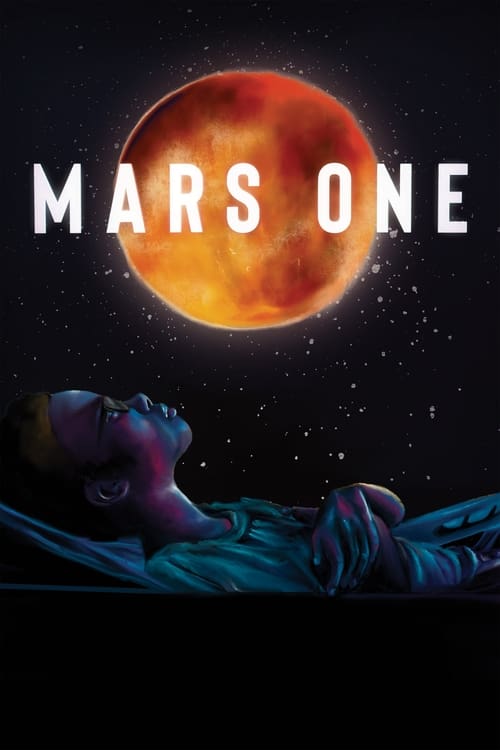
Mars One
2022 · Gabriel Martins
For when you want a gentle, humane film about family that still has real stakes — comfort viewing with a conscience, not a challenge. Reach for it when you'd rather spend time with characters than be put through a plot.
What it's about
On the eve of Brazil's 2018 election, as a far-right president rises, a Black working-class family on the edge of Belo Horizonte holds four dreams at once: a father who has staked everything on his son's football trials, a mother shaken by a premonition of ruin, a daughter edging toward new love and a life of her own, and a boy who looks past all of it toward the stars — a one-way mission to Mars. The politics stay at the margins of the frame, which is exactly where this family lives them.
The experience
Warm, unhurried, and quietly absorbing — it ambles like a long evening with people you come to love, letting tension and tenderness sit side by side. You leave feeling held rather than wrung out, with a lump in your throat you didn't see coming.
Performances
The ensemble works as a true unit — each of the four family members gets their own interior life, and the film's power comes from how naturally they orbit each other.
The craft
Gabriel Martins shoots the periphery of Belo Horizonte with neon-tinged night photography and a loose, generous rhythm that gives every character room to breathe. It's warmth without softness: handmade, patient, and lovely on a big screen at night.
Why it matters
A landmark for Filmes de Plástico, the Minas Gerais collective that spent a decade making tender films about Black Brazilian life far from favela clichés — and the film that carried that project to international audiences as Brazil's Oscar submission era-defining moment of 2022.
On the eve of Brazil's 2018 election, as a far-right president ascends, a Black working-class family on the Belo Horizonte periphery tends four separate dreams: the father stakes everything on his son's football trials, the mother fights off a premonition of ruin, the daughter edges toward a new love and a new life, and the boy himself stares past all of it toward the stars — specifically, the Mars One colonization project of the title. Gabriel Martins is a founding member of Filmes de Plástico, the collective from Contagem, Minas Gerais, that has spent a decade making tender, unhurried films about Black life far from Rio's postcards and favela clichés. His signature is warmth without softness: neon-tinged night photography, an ambling ensemble rhythm, politics held at the edge of the frame — which is where families actually experience it. Brazil chose it as its Oscar submission, a small, pointed act of national self-description in a bruising year.
A Deleuzian reading
A boy looks up.
The full Deleuzian reading of Mars One →
Reception
Premiered quietly at Sundance 2022, then kept leveling up: Brazil picked it as its Oscar entry, Ava DuVernay's ARRAY scooped it up, and a Netflix release turned a small Belo Horizonte family drama into an international word-of-mouth discovery.
How Mars One was received, from release to now →
Influences: the films it descends from and the films it influenced
- Ela Volta na Quinta (2015) — Established the Filmes de Plástico method of casting non-professional family members as a domestic ensemble, the naturalistic performance grammar Mars One's household inherits.
- O Som ao Redor (Neighboring Sounds) (2012) — Model for the class-stratified multi-strand Brazilian ensemble in which political tension and menace are staged at the frame's edge rather than spoken.
- Killer of Sheep (1978) — Founding template for episodic neorealist portraiture of a Black working-class family, finding dignity and lyricism in unhurried domestic and labor routines.
- Vidas Secas (Barren Lives) (1963) — Cinema Novo's neorealist attention to a poor family's endurance and thwarted aspiration, the Brazilian social-realist tradition Mars One updates.
- Tokyo Story (1953) — Low-camera, elliptical family drama whose unhurried editing rhythm builds a portrait of generational aspiration and quiet disappointment.
- Do the Right Thing (1989) — Heat-saturated color and block-level ensemble staging in which everyday community life quietly carries a political charge that could ignite.
- No Coração do Mundo (2019) — Martins's own prior Filmes de Plástico feature using the same multi-strand ensemble structure to weave Black working-class lives across Contagem into a single social fabric.
- Temporada (2018) — Shares the collective's patient, near-documentary observational rhythm that lets long-held everyday scenes of Black civil-servant life accrue meaning without dramatic underlining.
- Bacurau (2019) — Extends the same practice of letting a national political backdrop (here Bolsonaro-era Brazil) seep into ordinary community life until it distorts the mundane.
- Moonlight (2016) — James Laxton's saturated neon-and-streetlight night palette that renders Black interior and familial life with tenderness rather than grit—the same chromatic night photography Mars One favors.
- Medicine for Melancholy (2008) — Low-key Black-led relationship realism built from small quotidian encounters, using muted daytime tones against pockets of urban neon.
- Roma (2018) — Latin American domestic-and-labor family portrait that pushes political unrest to the literal edges of the frame while foregrounding household intimacy.
- The Florida Project (2017) — Social-realist ensemble of economically precarious lives filtered through a child's aspirational fantasy set against candy-neon exteriors.
- Atlantics (2019) — Braids working-class aspiration with premonition and the uncanny over a political-economic backdrop, wrapped in atmospheric neon night imagery.
- Fish Tank (2009) — Intimate handheld social realism organized around a working-class teenager's aspiration (dance) as an escape route from a constrained household.
- Pariah (2011) — Bradford Young's expressive neon and colored-gel night cinematography deployed over a Black family drama of a young person's self-becoming.
Similar films
- Moonlight (2016) — influence & lineage
- Bacurau (2019) — influence & lineage
- Roma (2018) — influence & lineage
- The Son of a Thousand Men (2025) — shared sensibility
- I'm Still Here (2024) — shared sensibility
- Minari (2021) — shared sensibility
- The Metamorphosis of Birds (2021) — shared sensibility
- Tótem (2023) — shared sensibility
All the films related to Mars One →