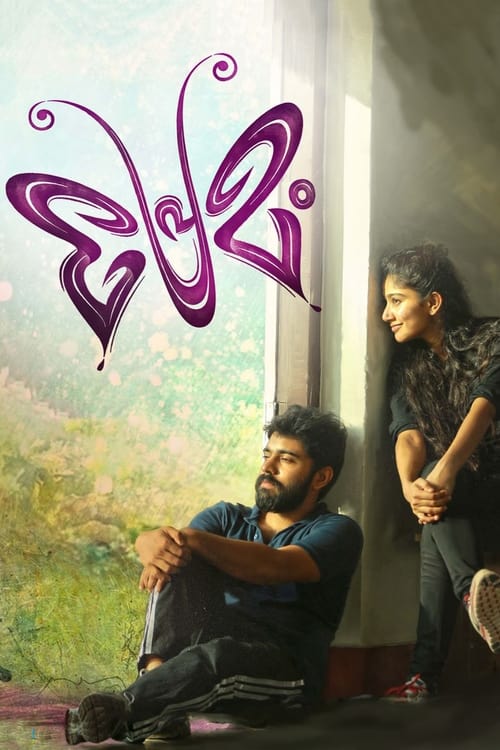
Premam
2015 · Alphonse Puthren
For when you're feeling nostalgic about who you used to be — first crushes, college friends, the loves that didn't work out — and you want to laugh about it before it makes you a little sad. Pure comfort, even in its melancholy.
What it's about
George David grows up in three chapters — schoolboy, college student, settled café owner — and in each one there's a different woman: Mary, Malar, Celine. Set in small-town Kerala, it's less a love story than three of them stacked into one life, with the friendships, crushes, local rivalries, and slow drift of years filling the space between. What it's really about is how the people who shape you don't always stay.
The experience
Warm, funny, and unhurried, with an ache underneath — it plays like flipping through someone's old photo albums while the songs from those years still work on you. The nostalgia sneaks up; you're laughing with George's gang for an hour before you notice how much the film has made you miss your own version of these people.
Performances
Nivin Pauly carries George convincingly across a decade and a half of life, shifting posture, swagger, and softness from lovesick teenager to guarded adult; the role made him a generational star in Kerala.
The craft
Alphonse Puthren wrote, directed, and edited the film himself, and it shows in the loose, observed rhythm — scenes breathe like remembered moments rather than plot beats. The soundtrack is doing half the storytelling, and it became a phenomenon in its own right; watch it with good speakers and let the songs date-stamp each chapter of George's life.
Why it matters
One of the defining cultural events of 2010s Malayalam cinema — extended theatrical runs, a soundtrack everyone knew, and a template for a decade of nostalgic youth films that followed. It turned a regional coming-of-age comedy into a generational touchstone.
Snapshot
Premam is a Malayalam-language romantic comedy that became one of the defining cultural events of 2010s Kerala cinema — less a film than a generational touchstone for young Malayali audiences. Structured as a triptych, it follows George David (Nivin Pauly) across three chapters of his life — schoolboy, college student, and settled adult café owner — each anchored by a different woman: Mary, Malar, and Celine. Directed, written, and edited by Alphonse Puthren, it distilled the textures of small-town Kerala youth culture — the friendships, the crushes, the casual violence of local rivalries, the drift of years — into a work that felt observed rather than manufactured. Its blend of naturalistic performance, contemporary music, and unhurried coming-of-age melancholy produced a phenomenon: extended theatrical runs, a soundtrack that saturated the region, and a lead actress, Sai Pallavi, whose unglamorous, freckle-faced screen presence quietly rebuked the industry's cosmetic conventions.
Industry & production
Premam was produced by Anwar Rasheed under Anwar Rasheed Entertainment, a banner associated with ambitious, director-driven Malayalam projects. It arrived at a moment often described as the "New Generation" phase of Malayalam cinema — a loose wave, roughly from the early 2010s, in which younger filmmakers foregrounded realism, urban and small-town contemporary settings, technical polish, and a break from the star-vehicle grammar of the preceding decades. Puthren came to the project off the success of his 2013 debut Neram, a bilingual Malayalam-Tamil caper that had already marked him as a stylist with a distinctive sense of rhythm and music.
The film's commercial performance was extraordinary by Malayalam standards. It enjoyed unusually long theatrical runs, remaining in cinemas for months, and became a word-of-mouth juggernaut whose reach extended across the Malayali diaspora. Precise, verified box-office figures for Malayalam films of this period are notoriously difficult to authenticate, so specific revenue claims should be treated with caution; what is well documented is that the film was among the most commercially successful and widely discussed Malayalam releases of its year. Notably, its success survived significant online piracy — a high-quality copy leaked during its run — which became part of the film's lore rather than its undoing, an early case study in how a beloved theatrical experience could withstand digital leakage.
Technology
Premam was made in the digital-cinematography environment that had, by 2015, become standard across Indian regional filmmaking. The film's visual approach depended on this infrastructure: naturalistic available-light aesthetics, mobile handheld and Steadicam-style camera movement, and the color latitude in post that allowed its images to feel both lived-in and quietly stylized. There is no substantial, well-documented record of the film pioneering novel camera or post-production technology; rather, it exemplifies the confident deployment of then-current digital tools in service of a naturalistic, contemporary look. Its most consequential relationship to "technology," arguably, was cultural — its circulation through YouTube, social media, and file-sharing, where its songs and clips propagated at a scale that amplified the theatrical phenomenon.
Technique
Cinematography
The cinematography is credited to Anend C. Chandran, and it is central to the film's identity. The camera favors a warm, sun-soaked palette and an intimate, mobile relationship to its young ensemble — following characters through campus corridors, roadside gatherings, and domestic interiors with a fluidity that reads as observational rather than choreographed. The much-celebrated introduction of Malar (Sai Pallavi) as a college lecturer, and the visual staging around the song "Malare," are frequently singled out for how the camera lingers, softens, and romanticizes without resorting to conventional glamour lighting. The overall look privileges texture — skin, sweat, the specific quality of Kerala daylight — over gloss, reinforcing the film's realist ambitions.
Editing
Editing is one of the film's genuine authorial signatures, because Puthren cut the film himself, as he had done on Neram. The tripartite structure — school, college, adulthood — demands elisions across large spans of time, and the film manages these transitions with a rhythmic, sometimes playful sensibility. The cutting is attentive to music and to comic timing, and it is willing to hold on quiet, ambient moments as readily as it compresses years. This director-as-editor control is a defining trait of Puthren's method: the film's tempo, its blend of humor and wistfulness, and its distinctive song-integrated montages all bear the mark of a single organizing sensibility working across writing, direction, and the cut.
Mise-en-scène / staging
The film is grounded in the specific geography of Aluva and its environs, and its staging draws heavily on recognizable, unglamorous locations — homes, colleges, roadsides, a café. The production design and costuming deliberately avoid the polished artifice of star vehicles: the young characters look like actual students, dressed plainly, moving through spaces that feel real. This commitment to the ordinary is itself the aesthetic argument — the film stages romance and youth not as fantasy but as something proximate to its audience's own experience. The casual, ensemble-filled frames, crowded with George's friends, build a texture of male friendship and small-town social life that is as much the film's subject as the three romances.
Sound
Sound and, above all, music are inseparable from Premam's impact. Rajesh Murugesan composed the score and songs, and the soundtrack became a cultural artifact in its own right. "Malare," performed by Vijay Yesudas, emerged as one of the most beloved Malayalam film songs of its era, and up-tempo numbers such as "Rockaankuthu" and the campus-energy tracks embedded themselves in the regional soundscape. The music does not merely decorate the film; it structures emotional memory across the three chapters, and the film's song sequences are integral to how audiences experienced and re-experienced it. The sound design more broadly supports the naturalistic register, favoring ambient realism over heightened effect.
Performance
Performance is where the film's realism most fully registers. Nivin Pauly anchors the film as George across three life stages, and his ability to modulate from adolescent awkwardness to adult reserve is fundamental to the film's coherence; the role consolidated his standing as a leading figure of the New Generation wave. The most discussed performance, however, is Sai Pallavi's debut as Malar — a portrayal celebrated precisely because it refused conventional heroine glamour, with visible skin texture and an unaffected naturalism that audiences found startling and endearing. The three principal actresses — Anupama Parameswaran as Mary, Sai Pallavi as Malar, and Madonna Sebastian as Celine — each define a distinct chapter, and the broad supporting ensemble of George's friends supplies much of the film's comic energy and lived-in social texture.
Narrative & dramatic mode
The film's defining formal choice is its three-part structure, mapping George's romantic life onto three stages of maturation. This episodic architecture is also its dramatic argument: love here is not a single destined arc but a series of encounters, each shaped by the person George is at that moment. The first chapter, schoolboy infatuation with Mary, plays as broad comedy and adolescent bravado; the central college chapter, the romance with Malar, shifts into a tenderer, more melancholic register and is widely regarded as the film's emotional core; the final adult chapter, with Celine, resolves into a quieter, more grounded conception of partnership. The mode is fundamentally comic and nostalgic, punctuated by moments of sudden violence tied to campus and local-gang rivalries, and shadowed throughout by an awareness of time passing. The film's willingness to let its protagonist simply age — to let love be interrupted, deferred, and redefined — is what lifts it above conventional romance.
Genre & cycle
Premam sits at the intersection of the coming-of-age film and the romantic comedy, inflected by the campus-movie and friendship-ensemble traditions strong in South Indian cinema. Within Malayalam cinema specifically, it belongs to the cycle of New Generation youth films that renovated the romance genre through realism, contemporary settings, and music-forward storytelling. It participates in a broader South Indian fascination with college life, nostalgia, and male friendship as narrative engines, while distinguishing itself through its structural ambition and its refusal of glamour. Its enormous success helped consolidate the naturalistic youth-romance as a commercially dominant mode in the region.
Authorship & method
The film is, to an unusual degree, the work of a single controlling author. Alphonse Puthren wrote, directed, and edited it, and his sensibility — the marriage of music and cutting, the tonal shifts between comedy and melancholy, the fondness for ensemble texture — pervades every level. This concentration of roles, already evident in Neram, marks Puthren as an auteur of tempo and mood rather than of theme alone. His key collaborators shaped the film's most celebrated elements: cinematographer Anend C. Chandran, whose warm, mobile imagery defined its look; composer Rajesh Murugesan, whose songs became inseparable from the film's memory; and producer Anwar Rasheed, whose banner enabled the project's realist ambitions. The ensemble cast, led by Nivin Pauly and introducing Sai Pallavi, completed the method — a film built less on individual set-pieces than on cumulative, observed texture. Puthren's subsequent filmography has been notably sparse, which has only heightened Premam's status as a singular achievement; readers should note that the record on his later career is comparatively thin and marked by long gaps.
Movement / national cinema
Premam is a landmark of Malayalam cinema and of the New Generation movement that reshaped it in the 2010s. Malayalam cinema has a long, distinguished tradition — from the parallel-cinema auteurs of earlier decades to a robust mainstream — and the New Generation wave represented a youthful, technically confident reorientation toward contemporary realism, urban and small-town settings, and a break from formulaic star vehicles. Premam is often cited as one of the wave's commercial high-water marks, demonstrating that a realist, ensemble-driven youth film could achieve mass success. Its impact also crossed India's linguistic boundaries, making it a reference point in broader South Indian and pan-Indian conversations about the youth romance.
Era / period
The film is a document of its exact moment — mid-2010s Kerala, in the age of smartphones, social media, and digital distribution. Its story spans an internal timeline of George's youth into adulthood, and part of its nostalgic pull derives from how precisely it captures the sensory world of contemporary Malayali youth: the fashion, the music, the campus rituals, the friendships. It arrived at a period when Indian regional cinemas were increasingly reaching diaspora and cross-lingual audiences through digital platforms, and its circulation — theatrical, but also viral online — is characteristic of how films of this era achieved and sustained cultural saturation.
Themes
At its heart, Premam is about the passage of time and the mutability of love. Its three-part structure argues that romantic longing is inseparable from the self one happens to be — that the boy who loves Mary, the young man who loves Malar, and the adult who marries Celine are not the same person, and that love changes shape as we do. Nostalgia is a governing mood, but the film complicates sentiment with loss, interruption, and the ordinary disappointments of growing up. Male friendship is a second major subject, rendered with warmth and comic detail as the constant against which the romances come and go. The film also, through Sai Pallavi's Malar, stages a quiet argument about beauty and authenticity, valorizing the unglamorous and the real over the cosmetic ideals of commercial cinema.
Reception, canon & influence
Critically and popularly, Premam was received as a phenomenon. Audiences embraced it with an intensity — repeat viewings, extended theatrical runs, mass adoption of its music and dialogue — that transcended ordinary success, and critics broadly praised its naturalism, its music, its ensemble, and the freshness of its performances, while some noted the episodic structure's uneven tonal shifts and the familiarity of its romance beats. It rapidly entered the canon of essential 2010s Malayalam cinema and became a career-defining work for Nivin Pauly and a star-making debut for Sai Pallavi.
Looking backward, the film's influences lie in the New Generation wave's realist turn and in Puthren's own Neram, which had already established his music-and-editing-forward method; it also draws on the long South Indian tradition of campus, friendship, and coming-of-age storytelling. Looking forward, its legacy is substantial. It helped cement the naturalistic youth romance as a commercially dominant Malayalam mode and influenced a wave of ensemble campus films. Its cross-lingual reach produced remakes — most prominently a Telugu version — extending its story to audiences beyond Malayalam, and Sai Pallavi's naturalistic debut opened a significant pan-South-Indian career. Perhaps its most lasting cultural imprint is musical: songs such as "Malare" entered the permanent repertoire of Malayalam popular music, ensuring that the film endures not only as a movie but as a shared soundtrack of a generation's youth.
Reception
A monster hit on release — it ran for months in Kerala and Tamil Nadu and turned Nivin Pauly into a superstar — and a decade on it's settled in as a defining film of the Malayalam new wave, the one people cite as their gateway into Kerala cinema.
How Premam was received, from release to now →
How to watch Premam: what to notice on a first viewing
- Watch the camera follow George through campus corridors. Chandran's camera moves with the young ensemble through roadside gatherings and classrooms with a loose, observational fluidity, rather than choreographed, static coverage. The camera feels like it's tagging along with these friends, not staging them for you.
- Notice how plainly dressed and ordinary the students look. The film is shot in recognizable, unglamorous Aluva locations, homes, colleges, roadsides, with costuming that deliberately avoids the polished artifice of a typical star vehicle. The ordinariness is the point. It's what makes the romance feel close to the audience's own life.
- Watch Sai Pallavi's introduction as the college lecturer, Malar. Her screen presence is unglamorous by design, visible skin texture and unaffected naturalism standing against the industry's usual cosmetic heroine conventions. The refusal of glamour is itself the film's quiet argument about what beauty actually looks like.
- Listen for how the songs carry entire stretches of story. Rajesh Murugesan's music, cut by Puthren himself, compresses years of George's life into song-led montage while still holding on quiet, ambient moments. The songs aren't breaks from the story. They're doing the actual work of moving time forward.
The whole guide to watching Premam, with the keys for a rewatch →
Influences: the films it descends from and the films it influenced
- Neram (2013) — Puthren's own debut established his director-as-editor method — cutting scenes to a pop-scored internal tempo rather than dramatic beat — which Premam scales up into feature-length song-integrated montage.
- Autograph (2004) — Pioneered the Tamil three-loves-across-life-stages structure — a man revisiting successive romances as discrete life chapters — the exact triptych architecture (schoolboy/college/adult) Premam adopts.
- Subramaniapuram (2008) — Built its world from available-light shooting in unglamorous small-town streets with a cast of non-stars, modeling the location naturalism and male-friendship ensemble texture Premam relocates to Aluva.
- Classmates (2006) — Codified the Malayalam campus-nostalgia template — friendship, rivalry, and lost love recalled through a class reunion — the coming-of-age register Premam inherits and de-melodramatizes.
- Thattathin Marayathu (2012) — Established Nivin Pauly as a soft, naturalistic small-town romantic lead shot in real Kerala locations, the star persona and unstarry romance mode Premam builds on directly.
- Traffic (2011) — Launched the New Generation wave's editing-forward realism — kinetic cross-cutting and unglamorous contemporary settings replacing star-vehicle staging — the aesthetic climate that licensed Premam's approach.
- Ustad Hotel (2012) — Anwar Rasheed's producing/directing sensibility for warm naturalist ensemble drama on his banner underwrote Premam's realist ambitions and observed-texture (rather than set-piece) construction.
- Malarvaadi Arts Club (2010) — An ensemble male-friendship debut vehicle centered on a group of small-town youths, prefiguring Premam's reliance on cumulative gang chemistry over an individual hero arc.
- Bangalore Days (2014) — Contemporaneously perfected the multi-character youth-ensemble realism — naturalistic performances, lived-in friendships, integrated songs — that Premam pursues in a more episodic key.
- Premam (2016) — The Telugu remake transplants the triptych structure, song placements, and naturalist blocking wholesale, extending Puthren's template to a new language market.
- Fidaa (2017) — Written expressly to extend Sai Pallavi's anti-glamour, un-made-up naturalism debuted in Premam, foregrounding her spontaneous, dance-and-dialect-rooted screen presence.
- 96 (2018) — Structures mutable first love around the passage of time and uses its score to encode memory — the 'music-structures-memory' and time-across-phases devices Premam popularized in the Tamil sphere.
- Hridayam (2022) — Explicitly three-phase campus-to-adulthood coming-of-age with song-integrated time jumps, the most direct structural heir to Premam's triptych of maturing love.
- Kumbalangi Nights (2019) — Extends the New Generation available-light ensemble realism into a study of male-bond texture in an unglamorous backwater locale, the observed-community craft Premam advanced.
- Maheshinte Prathikaram (2016) — Doubles down on available-light naturalism rooted in a single unglamorous hill-town, letting mundane local detail carry the film — the anti-set-piece method Premam helped normalize.
- Manjummel Boys (2024) — Codifies the Malayalam male-friendship nostalgia ensemble — a loose, affectionate hangout register — that Manjummel Boys deploys before its tonal turn.
- Ohm Shanthi Oshaana (2014) — A same-moment naturalistic Kerala youth romance driven by an unaffected central performance and everyday rural texture, sharing Premam's anti-glamour casting instinct.
- Sairat (2016) — Deployed available-light naturalism and non-professional-feeling youth performances to render first love, a parallel realist-romance craft emerging in Marathi at the same juncture.
Similar films
- Bangalore Days (2014) — influence & lineage
- 96 (2018) — influence & lineage
- Kumbalangi Nights (2019) — influence & lineage
- Meiyazhagan (2024) — shared sensibility
- C/o Kancharapalem (2018) — shared sensibility
- Vaaranam Aayiram (2008) — shared sensibility
- Maheshinte Prathikaaram (2016) — shared sensibility
- Ee.Ma.Yau. (2018) — shared sensibility