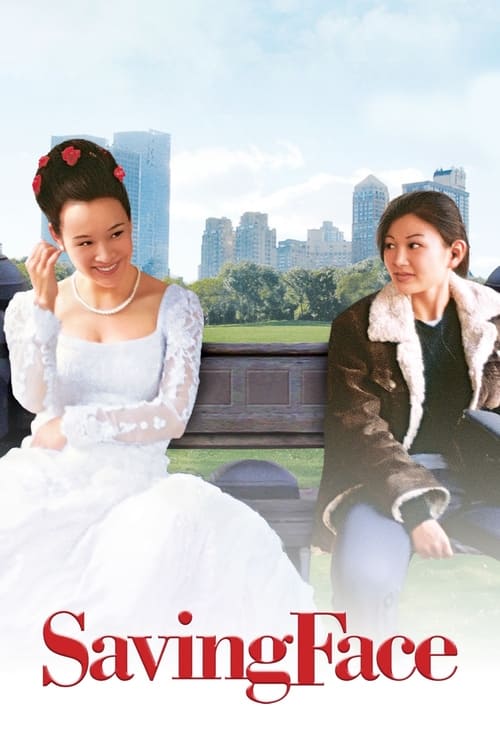
Saving Face
2004 · Alice Wu
For a cozy night in when you want to fall in love — a feel-good romance with real cultural texture, comfort viewing that still has something honest to say about family.
What it's about
A young Chinese-American surgeon in Flushing, Queens is falling for a dancer — a romance she can't bring home, because her community expects a nice husband. Meanwhile her widowed, tradition-minded mother turns up pregnant and refuses to name the father, landing on her daughter's couch in disgrace. Mother and daughter, each hiding a love the community won't sanction, have to figure out honesty at the same time.
The experience
Warm, wry, and genuinely romantic — a screwball comedy of concealment where the laughs come from recognition rather than mockery. It's light on its feet but sneaks up on you emotionally.
Performances
Joan Chen is the standout, cast delightfully against type as the scandalous pregnant mother — wry, wounded, and quietly hilarious — with Michelle Krusiec and Lynn Chen bringing an easy, believable chemistry to the central romance.
The craft
Alice Wu, a former software engineer who left tech to write this script, builds an elegant mirrored structure — daughter and mother concealing parallel secrets — and lets Mandarin-and-English dialogue carry the generational friction with rare naturalism. The Flushing setting feels lived-in rather than exoticized.
Why it matters
Essentially without precedent in 2004 — a studio-backed lesbian romantic comedy centered on Chinese-American women — it became a touchstone for a generation of queer Asian-American viewers and a cult classic whose reputation has only grown.
Alice Wu's debut is a screwball romance built on a double secret: a Chinese-American surgeon in Flushing falling for a dancer while her widowed, tradition-bound mother turns up pregnant and unwilling to name the father. Wu, a former Microsoft software engineer who left tech to write the script, structures the film as a mirrored comedy of concealment — daughter and mother each hiding a love the community won't sanction — and lets the Mandarin-and-English dialogue carry the generational friction with unusual naturalism. Released in 2004, when a studio-backed lesbian romantic comedy centered on Chinese-American women was essentially without precedent, it starred Michelle Krusiec and Lynn Chen alongside a wonderfully wry Joan Chen, cast against type as the scandalous mother. The film earned devoted audiences but no immediate follow-up: Wu left the industry to care for her own mother and didn't direct again for sixteen years, until The Half of It. That long silence only deepened the film's standing as a small miracle — warm, unhurried, and decades ahead of the industry that didn't know what to do with it.
A Deleuzian reading
The question the whole neighborhood wants answered is one word long.
The full Deleuzian reading of Saving Face →
Reception
A quiet Sundance-and-Sony-Pictures-Classics-sized release in 2004-05 that barely made a ripple at the box office, it's since been reclaimed as a landmark queer Asian-American rom-com — a rediscovery that accelerated when Alice Wu finally returned with The Half of It in 2020.
How Saving Face was received, from release to now →
Influences: the films it descends from and the films it influenced
- The Wedding Banquet (1993) — Established the queer-Chinese-American farce blueprint in which a closeted protagonist and an anxious immigrant parent both perform 'face' across bilingual family gatherings, with the crisis and reconciliation staged at a banquet table.
- Eat Drink Man Woman (1994) — Lee's device of using shared meals as the staging ground for a widowed patriarch's own concealed late-life romance mirroring his children's love lives — a structure Wu inverts onto a pregnant widowed matriarch.
- The Joy Luck Club (1993) — Set the template for intergenerational Chinese-American mother-daughter storytelling built on parallel buried secrets, and for casting a marquee Chinese dramatic actress as the wounded immigrant mother (here Joan Chen).
- Dim Sum: A Little Bit of Heart (1985) — Model of quiet, naturalistic observation of a widowed Chinese mother and unmarried daughter negotiating tradition versus American life in a code-switching bilingual register.
- Moonstruck (1987) — The ethnic screwball comedy that runs a middle-aged widowed parent's romance in counterpoint to the young lovers, powered by an overbearing family's marriage expectations — the same dual-romance engine Wu borrows.
- Bringing Up Baby (1938) — Supplies the screwball grammar of overlapping rapid-fire dialogue and a rigid professional undone by an irrepressible pursuer, which Wu revives for the Wil–Vivian courtship.
- Double Happiness (1994) — Chinese-Canadian daughter caught between an aspiring artistic life and traditional parents, told through bilingual naturalism and comedic generational friction over dating and duty.
- Go Fish (1994) — Pioneered the indie lesbian romantic comedy's naturalistic, community-embedded courtship — low-key performances and everyday texture rather than melodrama — that Wu adopts for Wil and Vivian.
- Crossing Delancey (1988) — Transposes the shadchan structure to Flushing — a mother arranging matches at community dances while the daughter's real attachment is elsewhere — and stages the courtship in the same threshold spaces (shop counters, apartment doorways) that mark the border between community and self.
- The Half of It (2020) — Wu's own sixteen-years-later return that extends her queer Asian-American romance craft: bilingual longing across cultural and class difference, and desire routed through the obligations of family and community.
- The Farewell (2019) — Bilingual Chinese-American family organized around a collectively maintained secret, with naturalistic ensemble playing and a diaspora daughter caught between two cultures' competing notions of saving face.
- Crazy Rich Asians (2018) — Mainstreams the Asian-American romantic comedy that pivots on a formidable disapproving Chinese matriarch and the performance of family face as the central obstacle to the lovers.
- Bend It Like Beckham (2002) — Contemporaneous immigrant-daughter comedy in which the heroine's forbidden passion collides with traditional parents' marriage-and-propriety expectations, played for warm cross-cultural comedy.
- Real Women Have Curves (2002) — Same 2000s indie register of immigrant mother-daughter generational friction and a young woman's fight for bodily and life autonomy against maternal expectation.
- Better Luck Tomorrow (2002) — Peer film of the early-2000s Asian-American indie wave that centered naturalistic second-generation characters as protagonists rather than sidekicks, opening the festival space Saving Face entered.
- Imagine Me & You (2005) — Lesbian romantic comedy that likewise grafts the falling-in-love-against-an-obligation plot onto polished mainstream rom-com conventions and a happy-ending arc.
- Kissing Jessica Stein (2001) — Indie queer romantic comedy foregrounding a woman's late discovery of same-sex desire negotiated against family and social expectation, in the same talky character-comedy mode.
- Cloud (2007) — Lesbian romance structured as a constrained-love-obstacle melodrama against family and social expectation, a diaspora cousin to Cloud's two-hander.
Similar films
- The Wedding Banquet (1993) — influence & lineage · same viewing thread
- Eat Drink Man Woman (1994) — influence & lineage · same viewing thread
- The Joy Luck Club (1993) — influence & lineage · often watched together
- The Farewell (2019) — influence & lineage
- Farewell My Concubine (1993) — same viewing thread · often watched together
- In the Mood for Love (2000) — same viewing thread · often watched together
- Comrades, Almost a Love Story (1996) — same viewing thread
- Lust, Caution (2007) — same viewing thread
All the films related to Saving Face →
Watch it with: curated runs of related films
- Love Against the Grain — A run of films where desire refuses the shape its world demands — opera stages, drought-struck Taipei, an honor-bound Lahore household, drenched Buenos Aires — and burns brighter, and more dangerously, for the refusal.