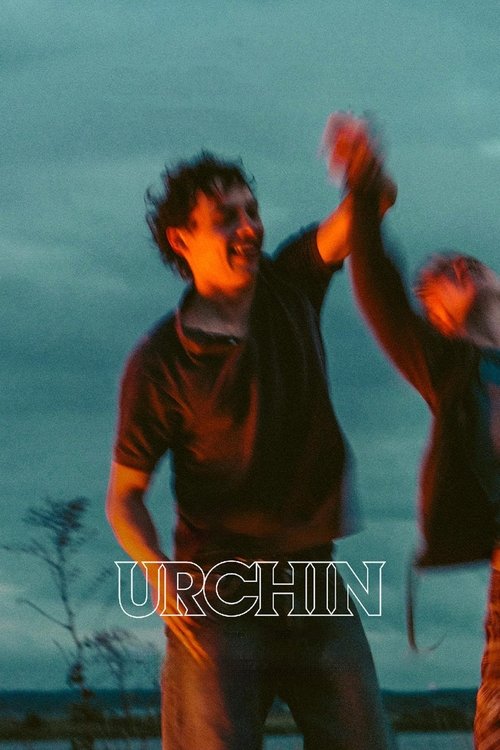
Urchin
2025 · Harris Dickinson
For when you want something real and unvarnished — a film that earns its heartbreak instead of forcing it. Definitely a challenge rather than a comfort, but the compassionate kind that leaves you more tender toward strangers.
What it's about
Mike is a young rough sleeper in London, caught in a loop of addiction, petty crime, and short-lived fresh starts. The film follows him through hostels, jobs, jail, and the kindness and indifference of strangers as he keeps trying — genuinely trying — to turn his life around, and keeps colliding with himself. It refuses to make him a case study or a saint; he's just a person you can't stop rooting for.
The experience
Understated and quietly devastating, with unexpected flickers of surreal beauty that lift it out of pure grit. It's tense in a low, human way — every good day feels fragile — and it stays with you long after.
Performances
Frank Dillane won the Un Certain Regard performance prize at Cannes for this — a live-wire, wholly unsentimental turn that makes Mike charming, maddening, and heartbreaking, often within a single scene.
The craft
Harris Dickinson, best known as an actor, writes and directs with striking assurance: the film grounds itself in British social realism, then slips into subjective, dreamlike passages that put you inside Mike's head rather than just watching him from across the street. It's lean at 99 minutes and never wastes a scene.
Why it matters
Premiering at Cannes to a rare double of acting and critics' prizes, it announced Dickinson as a serious filmmaker in his own right and gave British social realism a fresh, more subjective pulse.
Snapshot
Urchin is the feature writing-directing debut of the British actor Harris Dickinson, a 99-minute drama tracing a young rough sleeper named Mike (Frank Dillane) through the recursive grooves of addiction, petty crime, incarceration and half-grasped recovery on the streets of London. It premiered in Un Certain Regard at the 78th Cannes Film Festival on 17 May 2025, where Dillane took the section's performance prize and Dickinson received the FIPRESCI critics' award — an unusually emphatic pair of laurels for a first-time director better known on the other side of the camera (Beach Rats, Triangle of Sadness, The Iron Claw, Babygirl). The film sits at the intersection of two traditions: the British social-realist account of poverty and the welfare state's failures, and a more subjective, art-cinema register that periodically breaks naturalism with reverie and cosmic imagery. Critics received it warmly (95% on Rotten Tomatoes from a substantial sample; a Metacritic average in the high 70s), reading it as a confident, compassionate, formally curious debut rather than a piece of miserabilism. It is a small film by industrial measure — a reported worldwide gross around $1.1 million following a UK release through Picturehouse Entertainment on 3 October 2025 — but a conspicuous calling card for an actor-turned-author.
Industry & production
Urchin is a British independent production assembled from the country's characteristic patchwork of public and private finance. The credited backers include BBC Film and the BFI — the two pillars of subsidized British feature production — alongside the production companies Devisio Pictures, Tricky Knot, and Somesuch, with Archie Pearch and Scott O'Donnell producing. The Somesuch involvement is worth dwelling on: the company, rooted in music video and commercials, has become one of the more distinctive incubators of British and Irish auteur cinema, associated with the kind of authored, texturally adventurous work exemplified by Charlotte Wells's Aftersun and Andrea Arnold's projects. That lineage situates Urchin less in the lineage of grant-funded issue drama and more in a contemporary strain of personally voiced British filmmaking.
Principal photography took place in London in May 2024, and the film was edited and finished in time for a Cannes berth a year later. The production scale is modest and the exact budget has not been publicly disclosed; nothing in the record indicates anything other than a lean independent shoot. The Cannes premiere functioned, as it often does for first features, as the film's primary marketplace and validation event: the Un Certain Regard performance prize for Dillane and the FIPRESCI award gave the film critical standing that translated into festival travel (Calgary, London and other autumn festivals) and distribution. Picturehouse Entertainment handled the UK theatrical release on 3 October 2025; North American rights were taken by the distributor 1-2 Special for a fall 2025 rollout. The film subsequently accumulated awards-season attention, including multiple British Independent Film Award nominations spanning Best British Independent Film, lead performance, casting and music supervision, and the Douglas Hickox Award for debut direction.
Technology
The film's precise technical specifications — camera system, capture format, aspect ratio — are not detailed in the publicly available record, and rather than guess I will flag that gap directly. What can be said is grounded in the work itself and in the practice of its cinematographer, Josée Deshaies, who favours a controlled, painterly handling of light over the run-and-gun handheld grammar that "homelessness film" might lead one to expect. Critics noted an image built on minimal camera movement and clean, legible framing — an approach more compatible with deliberate lighting setups than with documentary improvisation. The film also makes pointed use of contemporary aural technology as texture and theme: a guided-meditation tape (voiced by Ruth Wilson) recurs as a kind of synthetic, commodified self-help apparatus, and the score leans on electronic, techno-inflected synthesis rather than orchestral scoring. In other words, the most legible "technology" in Urchin is diegetic and cultural — the apps, tapes and synth textures of a precarious modern life — more than any disclosed novelty of capture.
Technique
Cinematography
Josée Deshaies is the film's most significant formal asset and its clearest statement of intent. A French cinematographer best known as Bertrand Bonello's long-term collaborator (Saint Laurent, Nocturama, The Beast), she brings an art-cinema sensibility to material that British convention usually shoots in jittery, sweaty close-up. Reviewers singled out her "uncluttered" visual language: a measured alternation between intimate framings of Mike and wider compositions that hold him within the larger architecture of the city, with restrained camera movement that lets the eye take in a whole moment rather than being shoved through it. The effect is to grant the protagonist observational dignity — to refuse both the pity and the adrenaline that typically frame screen depictions of the unhoused. Crucially, this same controlled grammar is what makes the film's departures from realism land: when the image tips into reverie, the stylization reads as authored rather than arbitrary.
Editing
Rafael Torres Calderón's cutting is praised for momentum and economy. The film opens in a near-documentary observational mode, then accelerates through institutional beats — arrest, incarceration, release — that a more conventional treatment would dwell on, keeping the emphasis on the cyclical pattern of relapse rather than on any single station of suffering. The editing's most distinctive task is tonal modulation: managing the transitions between grounded street-level naturalism and the surreal interludes, so that the slippages feel like incursions of Mike's interior life rather than ruptures in the film's logic. That control of register — brisk through the expected, patient in the moments that matter — is central to the film's refusal of misery-drama rhythm.
Mise-en-scène / staging
The staging is rooted in a specific, lived-in London: hostels, day centers, shop doorways, low-wage workplaces and the bureaucratic interiors of the recovery system. Dickinson, who has spoken about the film growing out of his own engagement with community work in East London, stages the social world with attention to the textures of institutional life — the waiting, the forms, the small humiliations and small kindnesses of services stretched thin. Against this realism, the film places its eruptions of the uncanny: a recurring vision of an enigmatic woman, and passages that open onto a void-like, cosmic space. The mise-en-scène thus operates on two planes at once, the documentary-municipal and the oneiric, with the everyday rendered precisely enough that the dream imagery reads as pressure escaping from a real life rather than as decoration.
Sound
Sound design and music carry much of the film's subjectivity. Alan Myson's score is electronic and techno-driven, supplying propulsion in the film's high-energy passages and a sense of internal churn elsewhere; period synth-pop and the recurring meditation-tape voiceover round out a soundscape that keys us into Mike's shifting mental states — escape, craving, fragile calm. The meditation tape in particular does double duty as sound and as theme: a soothing, commodified voice promising self-mastery, ironised against the chaos it cannot reach. The film earned a BIFA music-supervision nomination, a sign of how much its needle-drops and sonic texture contribute to its effect.
Performance
The film is built around Frank Dillane's lead performance, and it largely succeeds on the strength of it — the Un Certain Regard prize was, in effect, recognition of that fact. Dillane plays Mike with a nervy volatility undercut by charm and humor: an intelligence and capability that flicker visibly beneath the self-sabotage, so that the character reads as someone failing himself rather than as a case study. Reviewers consistently praised the performance for refusing to romanticize addiction while still locating the person inside it, modulating between helplessness, menace and disarming likeability. The supporting ensemble — Megan Northam, Karyna Khymchuk, Shonagh Marie, Amr Waked, and Dickinson himself in a small role — populates Mike's orbit; the casting drew its own BIFA nomination.
Narrative & dramatic mode
The dramatic mode is the cycle rather than the arc. Urchin's synopsis — a man trapped in self-destruction who keeps encountering chances at a fresh start — describes a structure that is deliberately recursive: progress and relapse, release and re-offence, the system extending a hand and the protagonist's own compulsions slapping it away. This is the classic shape of the addiction narrative, but Dickinson resists both the redemption curve and the purely fatalistic descent. The film's late turn toward surreal, increasingly unsettling fantasy — the void, the visions of a woman read by several critics as a figure of absent or biological motherhood — pushes the storytelling from external social drama into something closer to psychological portraiture, locating the engine of the cycle inside Mike's interior wounds as much as in his circumstances. The result is a hybrid dramatic mode: observational realism braided with a subjective, expressionist strand that the film escalates rather than resolves.
Genre & cycle
Urchin belongs to the British social-realist drama — the cinema of poverty, addiction and the welfare state's failures — while consciously straining against its defaults. It is recognizably part of a long line of films about marginal urban lives, and part of a more recent cycle of authored British debuts that bring art-house form to social material (the Aftersun / Somesuch milieu is the relevant contemporary cluster). Within the broader genre of the addiction film it leans toward the subjective, drug-as-interiority tradition rather than the procedural or the cautionary tale. The defining generic gesture of Urchin is its grafting of magical realism onto kitchen-sink terrain — a move that marks it as a deliberate evolution of, rather than a straightforward entry in, the social-realist cycle.
Authorship & method
The authorship story here is twofold: a first-time director and an unusually accomplished set of collaborators who shape the debut's voice.
Dickinson (b. 1996) arrives as a director carrying a decade of work in front of the camera with auteurs and provocateurs — Eliza Hittman, Ruben Östlund, Sean Durkin, Halina Reijn — and Urchin reads as the work of someone who has absorbed those sets. He wrote as well as directed, and has framed the project around mental health, "people who fall between the cracks," and the ways systems fail the vulnerable; the film's grounding in his own East London community engagement is part of its claimed method. The crucial authorial decision was to pair social material with art-cinema craftsmen rather than documentary-style ones.
Chief among them is Josée Deshaies, whose association with Bertrand Bonello imports a continental, controlled image-making sensibility that is the film's signature departure from British naturalism. Rafael Torres Calderón as editor governs the film's tonal architecture and its modulation between realism and reverie. Alan Myson supplies an electronic score that externalizes the protagonist's psychology; the public biographical record on Myson is thin, and I won't pad it, but his contribution is integral to the film's interior, present-tense feel. Producers Archie Pearch and Scott O'Donnell, working within the BBC Film / BFI / Somesuch ecosystem, complete the authorial picture: a debut deliberately resourced to look and sound more like authored art cinema than like a public-service issue film.
Movement / national cinema
This is firmly a work of contemporary British cinema, in dialogue with its national tradition of social realism — the lineage running from the Free Cinema and kitchen-sink era through Ken Loach and Mike Leigh to Andrea Arnold. But Urchin's grain belongs to a more transnational, festival-oriented strand of that cinema, signaled most concretely by its French cinematographer and its art-house formal ambitions. It is the British social film as reconceived by a generation steeped in European auteur cinema and in the Somesuch house style, and it should be read at that hyphen — national-realist subject matter, cosmopolitan-arthouse treatment.
Era / period
The film is contemporary, shot in London in 2024 and set in a recognizable present of austerity-era services, recovery apps, meditation tapes and precarious low-wage work. It speaks to a specific post-2010s British moment: visible street homelessness, an addiction-and-recovery infrastructure under strain, and the cultural ubiquity of commodified self-help. The meditation-tape motif in particular roots the film firmly in the 2020s, when the language of wellness sits awkwardly atop conditions of genuine deprivation.
Themes
The film's central theme is the cycle — the way addiction, poverty and trauma reinforce one another into a loop that "fresh starts" cannot easily break. Around this cluster several others: the failure of systems and institutions to hold the people who most need holding; the tension between individual responsibility and structural abandonment, which the film stages without flattening into either blame or absolution; mental health and inheritance, dramatized through the recurring maternal vision and the void imagery; and the gap between the language of self-improvement (the meditation tape, the recovery script) and the lived reality it claims to address. Underlying all of it is a humanist insistence on the personhood of the marginalized — the refusal, enacted formally through Deshaies's dignifying framing and Dillane's textured performance, to reduce Mike to a symptom.
Reception, canon & influence
Critical reception was strongly positive and centered on the achievement of the debut and the lead performance. The film carried a very high Rotten Tomatoes score across a wide critic sample and a Metacritic average in the high 70s; The Guardian's Peter Bradshaw awarded four stars and called it a terrific directorial debut, and reviewers across the trade and broadsheet press praised Deshaies's restrained imagery, the film's refusal of miserabilism, and Dillane's nervy, un-romanticised lead. The Cannes prizes — the Un Certain Regard performance award for Dillane and the FIPRESCI award for Dickinson — anchor its early canonical standing, supplemented by a clutch of BIFA nominations including the Douglas Hickox debut-director category.
On the question of influence backward — what shaped the film — critics repeatedly invoked the British social-realist masters (Ken Loach's unvarnished observation, Mike Leigh's harder edge) alongside the subjective American cinema of Gus Van Sant, and the film's transnational arthouse texture is inseparable from Deshaies's Bonello pedigree; these are critics' framings and Dickinson's own, not documented adaptations, and should be read as the film's evident affinities rather than as proven sources. Influence forward — its legacy — is necessarily provisional for a 2025 release: its most concrete near-term effect is to establish Harris Dickinson as a director of consequence and Frank Dillane as a newly serious lead, and to add a prominent, prize-winning example to the contemporary case for treating British social subject matter in an authored, art-cinema register. Any larger claim about what Urchin shaped would be premature, and I'll mark it as such rather than overstate a legacy the historical record cannot yet support.
A Deleuzian reading
A tape plays.
The full Deleuzian reading of Urchin →
Reception
It premiered at Cannes 2025 under the usual 'actor-turned-director' suspicion and flattened it on contact — a five-minute ovation, the FIPRESCI Prize, and a 95% Rotten Tomatoes score later, it's cited as the proof-of-concept that Harris Dickinson is a filmmaker, full stop.
How Urchin was received, from release to now →
How to watch Urchin: what to notice on a first viewing
- Listen for a calm meditation voice returning throughout. A soothing recorded voice keeps guiding Mike to breathe and notice his body, the same commodified self-help tape resurfacing again and again against very different scenes. The gap between what the voice promises and what is actually happening on screen is doing real work, every time it returns.
- Notice how still and composed most shots of Mike are. Deshaies keeps the camera restrained and legible, alternating close framings of Mike with wider shots that hold him inside the larger city, rather than shaking or crowding in on him. The controlled camera gives him a kind of visual dignity most films about homelessness don't bother with.
- Track how quickly arrest and release scenes go by. The film speeds through the usual stations of the system, arrest, a cell, release, rather than lingering on any single one, keeping the emphasis on the pattern repeating. You feel the cycle itself, not any one crisis inside it, because the editing refuses to slow down for individual suffering.
- Follow the everyday as it suddenly tips into a dreamlike image. In the middle of ordinary scenes, hostels, day centers, waiting rooms, the film occasionally opens onto a recurring vision of a woman or a void-like cosmic space. The strangeness never gets explained. It arrives like pressure escaping a life the ordinary scenes alone can't hold.
- Watch Mike's charm flicker under his own self-sabotage. Dillane plays Mike with real intelligence and humor visible just beneath the moments where he wrecks his own chances, so he reads as failing himself rather than as a case study. You see a whole person the whole time, which makes each relapse land as a loss rather than a lesson.
The whole guide to watching Urchin, with the keys for a rewatch →
Influences: the films it descends from and the films it influenced
- Kes (1969) — Establishes the unvarnished observational grammar of British social realism — non-professional-feeling performance, institutional neglect filmed without editorial pity — that Urchin inherits and then refuses to leave in pure naturalism.
- Naked (1993) — Leigh's harder-edged London drift built around a volatile, magnetic, self-destructing male lead (David Thewlis) is the direct template for Dillane's nervy, un-romanticised charm carrying the film.
- My Own Private Idaho (1991) — Van Sant's subjective American cinema — dreamlike fugue/narcoleptic interludes erupting out of street-hustler realism — models Urchin's pairing of lived deprivation with oneiric cosmic ruptures.
- Drugstore Cowboy (1989) — The addiction film rendered from inside the user's subjectivity, with floating surreal hallucination inserts puncturing the procedural grind of scoring and using.
- Trainspotting (1996) — Fuses an electronic/techno-driven score and stylized magical-realist set-pieces (the carpet-dive, baby-on-ceiling) onto grim addiction realism — the same realism-to-reverie modulation Torres Calderón cuts in Urchin.
- Ratcatcher (1999) — Poetic realism that lets oneiric escape-imagery bloom out of estate squalor through controlled, painterly framing rather than handheld vérité — the art-cinema-over-naturalism choice Urchin makes.
- Saint Laurent (2014) — Josée Deshaies's own painterly controlled-light, minimal-movement image-making here is the literal pedigree she imports into Urchin as its signature departure from British naturalism.
- Christiane F. (1981) — Models the recursive relapse cycle of youth addiction scored with pop-electronic music (Bowie) and shot in lived-in institutional/urban spaces rather than melodramatic abstraction.
- Beach Rats (2017) — Hittman's set — where Dickinson learned as an actor — supplies the intimate, close-bodied subjective treatment of marginal youth that informs Urchin's wide-vs-intimate framing logic.
- Shame (2011) — London addiction (compulsion) staged as authored art cinema — minimal camera movement, sustained controlled framing, and a score externalizing the protagonist's interior present-tense state.
- Tyrannosaur (2011) — An actor's social-realist directorial debut centered on volatile working-class masculinity — the precise career move and register Dickinson executes here.
- The Selfish Giant (2013) — Updates the Loach lineage with lyrical, composed imagery over lived-in institutions and scrap-economy margins, holding realism and lyricism in the same frame as Urchin does.
- Aftersun (2022) — A prize-winning British debut built on elliptical-momentum editing and strobe/rave oneiric interludes that externalize psychology — the same elliptical-plus-reverie architecture.
- Bird (2024) — Explicitly grafts literal magical-realism onto British social realism in East-London/estate texture — the exact magical-realism-hybrid genre move Urchin attempts.
- The Outrun (2024) — Structures an addiction-recovery narrative as a recursive cycle threaded with landscape/cosmic oneiric interludes and electronic-tinged scoring of the recovering mind.
- How to Have Sex (2023) — Treats austerity-2020s British youth subject matter in a deliberately authored, art-cinema register — debut-director craft resourced to look like art cinema, not a public-service issue film.
Similar films
- Naked (1993) — influence & lineage
- Trainspotting (1996) — influence & lineage
- Sirāt (2025) — same viewing thread
- The Kid with a Bike (2011) — same viewing thread
- My Own Private Idaho (1991) — influence & lineage · often watched together
- Drugstore Cowboy (1989) — influence & lineage · often watched together
- Christiane F. (1981) — influence & lineage · often watched together
- Close (2022) — often watched together
All the films related to Urchin →
Watch it with: curated runs of related films
- Grief with Nowhere to Land — Watch these together when you can sit with loss — widows, addicts, and lost children drifting through worlds that refuse to hold still.