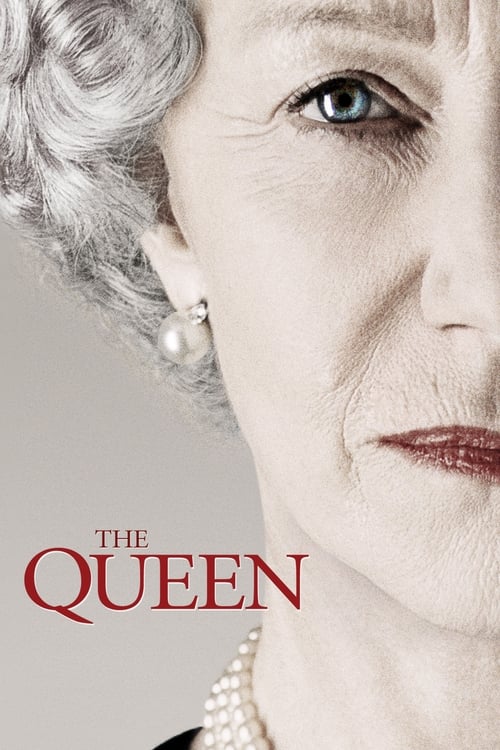
The Queen
2006 · Stephen Frears
For when you want smart, grown-up drama that makes recent history feel like a chess match — engaging without being heavy, perfect with a cup of tea and someone to discuss it with after. Comfort viewing for the politically curious.
What it's about
The week between Princess Diana's death and her funeral, seen from inside Balmoral and Downing Street. A newly elected Tony Blair, fluent in the public mood, pushes a monarch trained in lifelong restraint toward an unprecedented display of open mourning — a quiet duel between two ideas of duty, dignity, and what a nation needs from its leaders.
The experience
Absorbing and surprisingly funny in flashes, it turns a week of protocol and phone calls into genuine drama — you watch two shrewd people read each other across a widening cultural gap. It's talky, precise, and unexpectedly moving.
Performances
Helen Mirren won the Oscar for a performance of astonishing containment — a queen whose feelings surface in flickers she instantly masters. Michael Sheen's Tony Blair is uncanny, capturing the eagerness and calculation without tipping into impression.
The craft
Peter Morgan's screenplay is the engine: it imagines private conversations behind public events with such plausibility that the speculation feels like reporting. Frears shoots the royal and political worlds in subtly different textures, and the whole thing runs on the tension between broadcast footage we remember and the closed rooms we never saw.
Why it matters
It defined the modern behind-the-palace-doors drama, won Mirren the Academy Award, and launched screenwriter Peter Morgan's career-long excavation of the British monarchy that reshaped how film and television dramatize living public figures.
Snapshot
The Queen reconstructs the seven days between the death of Diana, Princess of Wales, on 31 August 1997 and Elizabeth II's televised address to the nation on the eve of Diana's funeral. Working from Peter Morgan's screenplay, Stephen Frears stages this brief, intensely scrutinized week as a duel of temperaments and institutions: a newly elected, modernizing Prime Minister, Tony Blair, against a monarch whose instinct for private restraint collides with an unprecedented public demand for visible grief. The film's wager — and the source of its lasting reputation — is that the most consequential political drama of the period happened not in crowds or cabinet rooms but in the silences of Balmoral and the careful management of a single broadcast. Anchored by Helen Mirren's Oscar-winning performance, it became the rare contemporary "biopic of the living" to win near-unanimous critical respect, and it seeded a body of work — Morgan's royal and political dramas culminating in Netflix's The Crown — that would define a whole mode of prestige docudrama for the following two decades.
Industry & production
The Queen was a transnational European co-production assembled around British public-service and commercial partners, including Pathé, Granada (ITV's production arm), BBC Films, the French broadcaster Canal+, and Future Films, with Pathé handling UK distribution and Miramax releasing the film in North America. Its producers — Andy Harries, Christine Langan and Tracey Seaward — came substantially out of the British television tradition, and the project's roots lie there: it extends the creative partnership of Frears, Morgan and actor Michael Sheen that had begun with the 2003 Channel 4 television film The Deal, about the Blair–Brown leadership pact. The Queen was conceived on a modest budget (reported in the region of $15 million, a figure that should be treated as an approximation rather than an audited number) and shot largely in Britain, with Scottish locations and English country houses standing in for Balmoral and the royal interiors that no production could access directly.
The film premiered in competition at the Venice Film Festival in late summer 2006, where Mirren took the Volpi Cup for Best Actress and Morgan's screenplay was also recognized — an early signal of the awards momentum that would carry the picture through the season. It went on to a strong international theatrical run that vastly outstripped its cost, and to six Academy Award nominations, including Best Picture, Director, and Original Screenplay, converting one — Mirren's Best Actress. Commercially and reputationally, it confirmed that small-scale, dialogue-driven British dramas about recent public life could command an international art-house and crossover audience.
Technology
Technically the film is built on a deliberate hybrid of materials. Its defining strategy is the integration of genuine archival broadcast footage — news coverage of Diana, the floral tributes outside Kensington Palace, the public mood — with newly shot dramatic scenes, so that the historical record and the imagined private moments are woven into one continuous texture. This places real demands on grading and matching: the dramatized material has to sit convincingly alongside grainy, time-stamped 1997 video.
The production has frequently been described as differentiating its two narrative worlds through film format, with the royal scenes captured on 35mm for a more classical, composed register and the Blair/Downing Street material shot on grainier Super 16mm to feel more immediate and contemporary; readers should treat the precise format attribution as a widely reported account of the film's craft rather than a technical certainty. Whatever the exact stocks, the principle is plainly legible on screen — the monarchy is rendered in a smoother, more formal idiom, New Labour in a rougher, more journalistic one — and the archival inserts form a documentary third texture between them.
Technique
Cinematography
The cinematography is by the Brazilian-born Affonso Beato, a versatile cameraman best known internationally for his collaborations with Pedro Almodóvar. His work here is restrained and functional in the best sense: the film is shot to observe rather than to editorialise. Interiors at Balmoral and Buckingham Palace are lit with a cool, contained naturalism, favouring the muted greens and grays of Highland weather and the heavy fabrics of royal rooms; the camera tends to hold at a respectful, slightly formal distance from the Queen, mirroring the deference the institution commands. The Scottish exteriors — moor, river, hillside — open the frame at key moments, most importantly in the encounter with the stag, where the landscape briefly becomes expressive rather than merely descriptive.
Editing
Lucia Zucchetti, a frequent Frears collaborator, edits the film, and the cutting carries much of its argument. The central task is to braid three strands — the Queen's world, Blair's world, and the archival public sphere — into a single escalating week, using the gathering crowds and lowering headlines outside as a clock ticking against the royal family's stillness. The intercutting between the warmth and informality of the Blair household and the chilly procedure of the palace does structural work, dramatizing a clash of cultures through rhythm and juxtaposition rather than speeches. The pacing is taut for a film with so little overt action; tension is generated almost entirely through the management of pressure and delay.
Mise-en-scène / staging
The staging is precise about the semiotics of institutions. Protocol, furniture, dress and spatial hierarchy are used to characterize the monarchy — who stands, who is announced, how a room is entered — while the Blairs are introduced amid domestic clutter and shirtsleeves. The film's most celebrated piece of staging is the stag sequence at Balmoral: alone after her Land Rover stalls, the Queen comes upon a magnificent "imperial" stag, is moved by it, warns it away, and later learns it has been wounded and killed by a paying guest on a neighboring estate. Frears stages it quietly, without underlining, yet the scene functions as the film's emotional and symbolic hinge — the hunted, dignified creature standing in for both Diana and the Queen herself, a being of great stature brought down by forces it cannot control.
Sound
The sound design works largely in the service of contrast: the hush of royal interiors against the swelling noise of the public — news anchors, crowds, the rustle of cellophane on bouquets. Real broadcast audio threads through the film as a kind of Greek chorus of public sentiment. Alexandre Desplat's score is used sparingly and tactfully; it does not push the audience toward judgment but lends the Queen's predicament a restrained, melancholy dignity.
Performance
Performance is the film's center of gravity. Helen Mirren's Elizabeth II is a study in interiority — a portrait built from minute adjustments of posture, glance and timing rather than impersonation, conveying a woman whose entire training is the suppression of visible feeling, and whose tragedy is that this discipline is suddenly read by her people as coldness. Michael Sheen's Tony Blair (a role he had already played in The Deal and would reprise in The Special Relationship) is its energetic counterweight: ambitious, intuitive about public emotion, and gradually, unexpectedly protective of the monarch he is pressuring. The supporting ensemble is sharply drawn — James Cromwell as a brusque Prince Philip, Sylvia Syms as the Queen Mother, Alex Jennings as Prince Charles, and Helen McCrory as a skeptical Cherie Blair — each calibrated to the film's restrained register.
Narrative & dramatic mode
The dramatic mode is intimate political reconstruction: the film takes documented public events and imagines the private conversations behind them. Morgan's structural device is the two-hander across an institutional divide — the weekly audience and telephone call between monarch and Prime Minister become the spine of the story, with their relationship evolving from wary formality toward a guarded mutual respect. The film is built on a clear dramatic question with a known answer (will the Queen bend to public feeling, lower the flag, return to London, and speak?), which means its suspense is psychological rather than factual; we watch how and at what cost an immovable figure is moved. Crucially, the screenplay refuses to caricature either side: the monarch's reticence is presented as principle as much as failing, and Blair's instinct for the public mood is shown as both genuine and self-serving.
Genre & cycle
The Queen belongs to the docudrama or "dramatized recent history" cycle, and more specifically to the contemporary biopic of living public figures — a riskier proposition than the period biopic because its subjects can contest it. It sits adjacent to, but distinct from, the British heritage film: where heritage cinema typically looks back on the monarchy and aristocracy with nostalgic distance, The Queen trains the same prestige craft on the very recent past and on a sitting institution, treating the throne as a contemporary political actor. Within Peter Morgan's own filmography it forms the middle panel of an informal "Blair trilogy" alongside The Deal (2003) and The Special Relationship (2010), and it stands as a key entry in a 2000s wave of British and Anglo-American films dramatizing real political power.
Authorship & method
Stephen Frears is among the most genre-mobile of major British directors, with a body of work spanning My Beautiful Laundrette, Dangerous Liaisons, The Grifters, High Fidelity, Dirty Pretty Things and, later, Philomena and Florence Foster Jenkins. He is often described as a director without a fixed visual signature — an "invisible" craftsman whose method is to serve the script and, above all, the actors, a sensibility rooted in his formation in British television. That self-effacement is precisely what The Queen needs: the film's restraint is an authorial choice, a refusal to impose stylistic commentary on figures the audience already holds strong opinions about.
His key collaborator here is screenwriter Peter Morgan, whose method — imagining the closed-door human exchanges behind documented public events — defines the film as much as Frears's direction. Morgan's broader output, including The Last King of Scotland, Frost/Nixon and The Damned United, established him as the pre-eminent dramatist of recent power; The Queen is arguably his definitive statement of that approach. The other essential authorial voices are composer Alexandre Desplat, for whom this was a significant step in his rise to international prominence, editor Lucia Zucchetti, whose intercutting structures the drama, and cinematographer Affonso Beato.
Movement / national cinema
The film is a product of British national cinema at the intersection of two traditions: the socially observant realism of British television drama, in which Frears and his producers were trained, and the export-facing prestige picture aimed at the international art house and awards circuit. It reflects the particular ecology of mid-2000s British production, in which broadcasters (BBC Films, Granada/ITV) and pan-European partners (Pathé, Canal+) co-financed mid-budget, talent-driven films. In this sense The Queen is less an avant-garde statement than an exemplary instance of a well-functioning national industry turning its own recent history into globally legible drama.
Era / period
The Queen is doubly dated: made in 2006, it looks back nine years to the late summer of 1997, the dawn of New Labour and the so-called "people's princess" moment. The film is acutely attuned to that historical threshold — the collision between an ancient institution and a rapidly modernizing, media-saturated, emotionally expressive public culture. The Diana mourning phenomenon is treated as a genuine rupture in British public life, the point at which deference gave way to demonstrative collective feeling, and the monarchy was forced to negotiate with a 24-hour news cycle. Viewed from 2006, the events already carry the weight of a turning point; viewed today, the film is also a document of Blairite optimism before its later complications.
Themes
The film's governing theme is the tension between private feeling and public performance — duty versus display, dignity versus visibility. It dramatizes a clash of two value systems: an older ethic of stoic restraint and an emerging culture that reads the public expression of emotion as the proof of sincerity. Closely tied to this is the question of the monarchy's survival through adaptation: the Queen's eventual capitulation (the flag, the walkabout, the broadcast) is framed not as defeat but as the institution's characteristic gift for bending in order not to break. Other persistent threads include the loneliness of command, the generational divide within the royal family, and the moral ambiguity of a media-driven democracy in which a leader's authority rests on his sensitivity to public mood. The stag, as noted, gathers these themes into a single image of besieged grandeur.
Reception, canon & influence
Critically, The Queen was received as one of the most accomplished British films of its decade, with consensus praise for Morgan's intelligent, even-handed screenplay and near-universal acclaim for Mirren's performance, which swept the major acting awards of the 2006–07 season — culminating in the Academy Award for Best Actress — and effectively became the definitive screen portrait of Elizabeth II. The film's restraint, its refusal to lampoon or sanctify, was widely cited as its central virtue.
Looking backward, the film draws on the British television docudrama tradition and on the immediate precedent of Frears and Morgan's own The Deal; it also depends, unusually, on the real archival record of 1997 as raw material woven into its fabric. Looking forward, its influence has been substantial and is still unfolding. It cemented the Frears–Morgan–Sheen partnership and validated the commercial and critical viability of dramatizing living public figures. Most consequentially, it is the clear creative ancestor of Peter Morgan's The Crown, the long-running Netflix series that expanded The Queen's method — imagined private drama behind documented royal history — into a multi-season institution, and which revisits the very same Diana material from within its own continuity. Through that lineage, and through the broader prestige-docudrama wave it helped legitimize, The Queen shaped a dominant mode of twenty-first-century screen storytelling about power. Where the historical record of the actual private events remains, by nature, unknowable — the real conversations between monarch and minister are not documented, and the film is explicit that it is offering an informed dramatic imagining — its achievement is to have made that imagining feel both plausible and humane.
A Deleuzian reading
The Land Rover stalls in the river.
The full Deleuzian reading of The Queen →
Reception
An instant prestige hit in 2006 — Helen Mirren swept essentially every Best Actress prize going — and it's only grown in stature as the origin point of Peter Morgan's royal-obsession universe that became The Crown; Elizabeth II's death in 2022 sent a new wave of viewers back to it.
How The Queen was received, from release to now →
Influences: the films it descends from and the films it influenced
- The Deal (2003) — The direct prototype from the same Frears–Morgan–Sheen team: it reconstructs an undocumented private political bargain (the Granita pact) as an intimate two-hander, establishing the method of dramatizing the closed-door exchange behind a public event.
- A Question of Attribution (1991) — Alan Bennett's teleplay had already put invented private dialogue into Elizabeth II's mouth (her sparring with Anthony Blunt), modeling the precise tactic of imagining the unrecorded interior speech of a living monarch.
- Culloden (1964) — Invented the British docudrama grammar of shooting staged historical events with handheld newsreel realism and faux-reportage immediacy, the formal lineage Frears's documentary-textured strands descend from.
- Cathy Come Home (1966) — The landmark of the BBC social-realist docudrama tradition Frears was trained in, where observational restraint and refusal of editorial flourish serve the subject directly.
- The Naked Civil Servant (1975) — A pioneering British TV biopic of a still-living subject (Quentin Crisp), legitimizing the dramatization of a real person who could watch and contest his own portrayal.
- Nixon (1995) — Interweaves multiple film stocks and genuine archival footage with dramatized scenes to portray a real head of state under siege — the dual-format/archival-integration technique The Queen deploys far more soberly.
- The Madness of King George (1994) — Stages the British monarchy as institution-in-crisis through the gap between the sovereign's frail private body and the machinery of ceremonial role — the institutional semiotics The Queen formalizes.
- The Gathering Storm (2002) — Extends the same prestige model of catching a public figure at an unguarded private juncture, with self-effacing direction serving an actor's interior study of duty under strain.
- Frost/Nixon (2008) — Morgan's next institutional two-hander, again building imagined human stakes and private rehearsal around a single documented public confrontation (the broadcast interviews).
- The Damned United (2009) — Morgan applies the same empathetic interior-imagining to a recent real figure (Brian Clough), dramatizing the unrecorded private bitterness behind a documented public career.
- The Special Relationship (2010) — Morgan and Sheen extend the Blair cycle directly, reprising the role in another power two-hander (Blair–Clinton) built on imagined closed-door diplomacy.
- The Crown (2016) — The explicit serial expansion of The Queen's method — imagined private drama threaded through the documented royal record — by the same screenwriter, even re-staging the Diana material from within its continuity.
- The Iron Lady (2011) — A prestige docudrama of a recent living/recent PM that fuses archival footage with a single bravura, award-sweeping lead performance, following the Mirren template of definitive impersonation.
- Harry Potter and the Deathly Hallows: Part 1 (2010) — Showcases Alexandre Desplat's restrained, melancholic scoring method — sparse, mournful motifs over swells — that he carried into Part 1's elegiac, grief-forward score.
- Brexit: The Uncivil War (2019) — Instant-history dramatization of barely-cooled events fused with sympathetic-yet-critical impersonation of a living figure — the legitimizing precedent for dramatizing the referendum 'too soon.'
- Rush (2013) — Peter Morgan's signature dialectic of opposed temperaments and refusal of villains, the two-hander screenwriting method that shapes Rush at conception.
- Philomena (2013) — The direct model — a Frears film built on a great actress's minutely calibrated withholding opposite a screenwriter's argument about a British institution, scored by Desplat in small-ensemble strings and piano that comment on decorum rather than emotion; Dench's flattened affect is Mirren's method transposed downward in class.
- The King's Speech (2010) — A royal-institution two-hander turning on the sovereign's private impediment versus the demand of public broadcast performance — the same private-feeling-vs-public-duty axis.
- Jackie (2016) — Anatomizes a woman's private grief against her public performance of mourning inside an institution during a documented historical moment, with a deliberately restrained, foregrounded score.
- Spencer (2021) — Reworks the same royal milieu through institutional semiotics and Diana's interiority, imagining unrecorded private anguish within the documented machinery of the Windsor court.
- United 93 (2006) — A contemporaneous docudrama reconstructing a recent documented event with near-real-time procedural realism and a refusal of editorializing — the restraint-as-respect strategy applied to catastrophe.
- The Last King of Scotland (2006) — Peter Morgan's parallel political screenplay deploys the identical dramaturgical strategy: a liminal viewpoint character accesses a real public figure's private management of power, distributing moral accountability across both while refusing to flatten the real figure into a villain—written simultaneously with LKOS in the same year.
- De Gaulle: Liberté (2026) — Peter Morgan's method of rendering high statecraft as intimate, non-hagiographic character drama built on restraint rather than impersonation, a template for the non-mimetic de Gaulle.
- Harry Potter and the Deathly Hallows: Part 2 (2011) — Alexandre Desplat's restrained, motif-driven scoring that underlines emotion through economy rather than bombast, the same compositional approach he brings to Part 2's elegiac cues.
- Enola Holmes 2 (2022) — Costume designer Consolata Boyle's period-precise, character-revealing costuming — carried into both Enola films — gives the historical world its tactile authority.
Similar films
- The Iron Lady (2011) — influence & lineage
- The King's Speech (2010) — influence & lineage
- Frost/Nixon (2008) — influence & lineage
- The Madness of King George (1994) — influence & lineage
- Marie Antoinette (2006) — shared sensibility
- The Hours (2002) — shared sensibility
- The Last King of Scotland (2006) — shared sensibility
- Philomena (2013) — shared sensibility