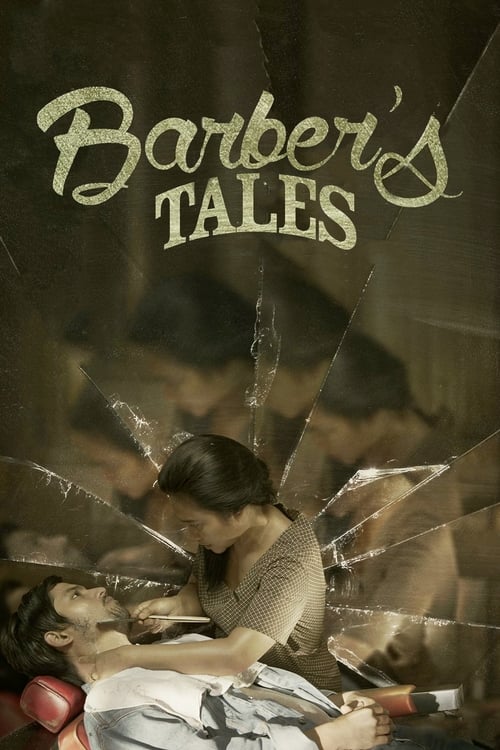
Barber's Tales
2013 · Jun Robles Lana
For when you want an underdog story with substance: comforting in its craft, quietly steely in its politics, and satisfying without being sugary.
What it's about
In a remote Philippine village under the Marcos dictatorship, a widow named Marilou inherits her husband's barbershop — the village's male sanctum — and becomes the local joke for daring to run it. Learning the razor means learning the town's secrets, from the mayor's mistress in the chair to an activist priest and rebels in the surrounding hills. What begins as a widow's survival becomes a quiet reckoning with everything the men, and the regime, expect her to endure.
The experience
Measured and warm on the surface with a slow political burn underneath — the tenderness of a small-town character study gradually gathering real weight. It sneaks up on you.
Performances
Eugene Domingo, beloved in the Philippines as a broad comedienne, plays Marilou with startling stillness — a performance that won Best Actress at the Tokyo International Film Festival.
The craft
Jun Robles Lana threads martial-law history through domestic detail — curfews, the radio's official lies, gossip in the barber's chair — so the politics arrive through texture rather than speeches. The barbershop itself becomes the film's stage: one room where a whole society passes through.
Why it matters
A key film of the Philippine indie resurgence and part of Lana's loose trilogy about provincial lives, it helped carry stories of the Marcos era — and one of the country's most prominent openly gay directors — to international festival audiences.
In a remote Philippine village during the Marcos dictatorship, a widow inherits her husband's barbershop — the village's male sanctum — and with it, scissors in hand, access to its secrets. Eugene Domingo, beloved at home as a broad comedienne, plays Marilou with a startling stillness; the performance won Best Actress at the Tokyo International Film Festival, where the film premiered in 2013. Jun Robles Lana, among the most prominent openly gay filmmakers in Philippine cinema, made this as the second panel of a loose trilogy about provincial lives, after Bwakaw, and he threads martial-law politics through domestic detail: curfews, an activist priest, rebels in the hills, the radio's official lies, the mayor's mistress in the chair. Liberation here is a matter of craft — learning the razor, earning the trade, claiming a room. The barber's chair itself becomes the film's sharpest image: a place where men always talked freely because a woman was never supposed to be listening, until one is.
Reception
It premiered to festival acclaim — Eugene Domingo's Best Actress win at Tokyo made headlines — though some critics at the time ranked it below Lana's breakout Bwakaw; since then it's settled in as one of the quiet treasures of 2010s Philippine cinema, steadily discovered by international viewers.
How Barber's Tales was received, from release to now →
Influences: the films it descends from and the films it influenced
- Maynila sa mga Kuko ng Liwanag (1975) — Founds the template Barber's Tales works in — smuggling anti-Marcos political critique past the censors by embedding it in intimate, character-scale domestic realism rather than open agitation.
- Insiang (1976) — Establishes the confined domestic single-location as a pressure chamber for a woman's constrained agency, the staging logic Lana compresses into the barbershop.
- Himala (1982) — Centers a whole provincial community's political and moral crisis on one quiet woman's transformation, using slow-burn restraint over melodramatic peaks — the register Domingo's Marilou inherits.
- Manila by Night (1980) — Maps power and repression through gendered social space, reading a regime's texture off who is allowed to occupy which rooms — the spatial politics Lana localizes to a men-only barbershop.
- Sister Stella L. (1984) — Dramatizes a woman's political awakening entirely as personal transformation — a passive figure radicalized by proximity to injustice — the exact arc of Marilou finding her voice.
- Batch '81 (1982) — Uses a sealed microcosm as martial-law allegory, letting an enclosed institution stand in for the authoritarian nation, a containment strategy Lana echoes in the shop-as-town.
- Oro, Plata, Mata (1982) — Renders political upheaval through the decorum and decay of a provincial household, tracking history via changes in domestic ritual rather than battle — Lana's 'political detail through domestic' method.
- Orapronobis (1989) — Sharpens the period-political drama into an indictment of state and vigilante violence through one protagonist's ordinary entanglement, the personal-scale reckoning with dictatorship Barber's Tales quietens.
- Ang Babae sa Septic Tank (2011) — Weaponizes Eugene Domingo's comic star persona by making her play against and around it — the against-type restraint calibration that Barber's Tales converts into full straight drama.
- Dekada '70 (2002) — Tells the entire martial-law period through a mother's domestic vantage and gradual politicization inside the home, the 'political detail through domestic life' framing Lana miniaturizes.
- Anino sa Likod ng Buwan (2015) — Extends Lana's single-setting chamber-drama-under-political-terror into its most rigorous form — one location, dialogue-driven, the regime felt as offscreen pressure on a confined room.
- Babette's Feast (1987) — The purest model of 'liberation through craft' — a woman's silent mastery of a trade becomes the instrument that frees a repressed provincial community, exactly Marilou's barbering.
- Antonia's Line (1995) — Builds female emancipation as a matriarchal succession within a small rural community, women inheriting and remaking a domestic-economic space across a hostile social order.
- Water (2005) — Dramatizes the widow's socially-erased status and her carefully staged emancipation against a period-political backdrop, sharing the gendered-space confinement and widow-inheritance spine.
- Bwakaw (2012) — The immediately prior panel of Lana's loose trilogy: a single provincial protagonist's late-life reawakening told through understated character observation instead of plot mechanics.
- Thy Womb (2012) — Locates a provincial woman's interiority and dignity through her hands-on craft (weaving) and quiet ethnographic restraint, the same craft-as-emancipation observational patience.
Similar films
- Manila in the Claws of Light (1975) — influence & lineage
- Antonia's Line (1995) — influence & lineage
- Miracle (1982) — influence & lineage
- Moral (1982) — shared sensibility
- Leila and the Wolves (1986) — shared sensibility
- From What Is Before (2014) — shared sensibility
- There's Still Tomorrow (2023) — shared sensibility
- Emitaï (1973) — shared sensibility