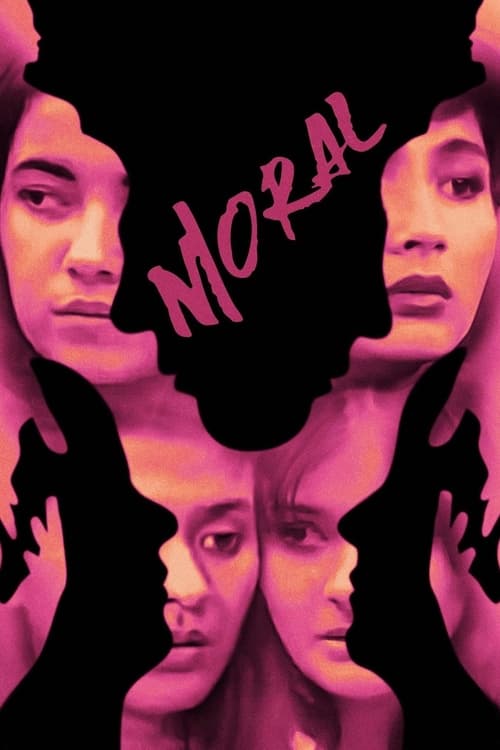
Moral
1982 · Marilou Diaz-Abaya
For when you want a rich, grown-up ensemble drama about friendship and what it costs to want things — a film to sit with and talk about after, especially with the women in your life.
What it's about
Four college friends drift through Manila in the early years of martial law under Marcos, each trying to figure out what she's allowed to want: the activist, the singer chasing a career, the wife, the woman who wants a child on her own terms. Told episodically over several years, it follows their careers, lovers, families and, above all, their hold on each other.
The experience
Intimate, frank and quietly bracing — it moves at the rhythm of real lives, funny and painful in turn, and refuses to judge or rank any woman's choices. What sneaks up on you is the political weight underneath the everyday texture.
The craft
Directed by Marilou Diaz-Abaya — one of the few women working in the Second Golden Age of Philippine cinema — from a script co-written with the great Ricky Lee, it smuggles its politics into daily life rather than speeches: made under martial law, it says what it means by showing what ordinary wanting costs. Long available only in degraded prints, it was restored in the 2010s and plays beautifully now.
Why it matters
A quiet feminist landmark of Philippine cinema's Second Golden Age, sitting at the center of Diaz-Abaya's loose trilogy of women pressing against Filipino patriarchy, and rediscovered by new audiences through its restoration.
Marilou Diaz-Abaya was one of the few women directing during the Second Golden Age of Philippine cinema, and this ensemble drama — written with the great screenwriter Ricky Lee — is her movement's quiet feminist landmark. Four college friends drift through Marcos-era Manila, negotiating careers, lovers, family, and each other across an episodic structure that refuses to rank their choices: the activist, the singer, the wife, the woman who wants a child on her own terms. Made under martial law, it smuggles its politics into the texture of daily life — what it costs simply to want something, as a woman, in a country holding its breath. The film sits at the center of Diaz-Abaya's loose trilogy with Brutal and Karnal, three studies of women pressing against Filipino patriarchy. Long circulating in degraded prints, it was restored in the 2010s and found a new international audience astonished at how contemporary its conversations sound. Its warmth is the radical part: solidarity, here, is a form of survival.
Reception
At the 1982 Metro Manila Film Festival it placed second for Best Picture and won Ricky Lee Best Screenplay — respectable, but hardly a coronation. The 2017 4K restoration by ABS-CBN (scanned at L'Immagine Ritrovata in Bologna) sent it back out to festivals worldwide, and it's now routinely called one of the peaks of Philippine cinema's Second Golden Age.
How Moral was received, from release to now →
Influences: the films it descends from and the films it influenced
- Brutal (1980) — The first Diaz-Abaya/Ricky Lee women's-trilogy entry that fixes their signature device — a female observer anatomizing another woman's ordeal to interrogate autonomy — the framing method Moral redistributes across four friends.
- Manila by Night (City After Dark) (1980) — Bernal's interlaced multi-protagonist mosaic of Marcos-era Manila is the structural model for Moral's episodic braiding of separate lives into one collective social portrait rather than a single plotline.
- Maynila sa mga Kuko ng Liwanag (1975) — Brocka's founding Second Golden Age social realism — location shooting and neorealist everyday-texture observation — is the documentary-grained staging vocabulary Moral inherits.
- Insiang (1976) — Its unsentimental melodrama of a woman boxed in by economic and sexual constraint sets the template for Moral's clinical study of how limited women's real choices are.
- The Group (1966) — Its structure of tracking a cohort of college-educated women friends into disillusioning adulthood is the direct forerunner of Moral's four-graduates-navigating-the-real-world design.
- The Big Chill (1983) — Extends the generational-cohort ensemble form, reuniting a friend group to reckon with abandoned ideals — the same friends-as-a-collective-protagonist device.
- Steel Magnolias (1989) — Builds a female-solidarity ensemble in which women sustain each other through successive life crises, elaborating Moral's sisterhood-as-support-network structure.
- Waiting to Exhale (1995) — Four women friends negotiating men, careers, and independence — a near beat-for-beat structural descendant of Moral's quartet-of-friends architecture.
- Four Sisters and a Wedding (2013) — Carries the Ricky Lee-style dialogue-driven domestic ensemble into contemporary Philippine cinema, letting overlapping women's arcs collide in confrontation scenes descended from Moral's method.
- Karnal (1983) — Closes the same Diaz-Abaya/Ricky Lee trilogy, carrying over the trilogy's fixed craft of dissecting female desire against patriarchal violence with the same restrained, texture-first staging Moral uses.
- Himala (1982) — Shares screenwriter Ricky Lee, whose talky, socially diagnostic dialogue and woman-at-the-center architecture drive both films in the same year.
- Salome (1981) — Co-scripted by Ricky Lee, it deploys the same multi-perspective, female-centered narrative dissection that runs parallel to Moral's episodic anatomy of women's lives.
- Girlfriends (1978) — A contemporaneous indie feminist study built on the same episodic, naturalistic observation of female friendship and a young woman's fight for self-definition.
- An Unmarried Woman (1978) — Dramatizes women's self-determination after separating from men — the autonomy question Moral splits across four characters instead of concentrating in one.
- Diner (1982) — A same-year, gender-flipped structural analog: an ensemble of friends at the threshold of adulthood told as loosely linked vignettes rather than a driving plot.
Similar films
- Manila in the Claws of Light (1975) — influence & lineage
- Insiang (1976) — influence & lineage
- Barber's Tales (2013) — shared sensibility
- Evolution of a Filipino Family (2004) — shared sensibility
- Sambizanga (1973) — shared sensibility
- 4 Months, 3 Weeks and 2 Days (2007) — shared sensibility
- Kisapmata (1981) — shared sensibility
- From What Is Before (2014) — shared sensibility