Sightlines · a mini film course
Sequels, Spectacle, and the Art of Going Bigger: How Hollywood Learned to Follow Its Own Hits
Introduction
There is a particular kind of pressure that descends on a film the moment it becomes a phenomenon. The audience that loved it wants more — more of the world, more of the feeling, more of the thing they couldn't quite name but recognised instantly when they felt it. But "more" is one of the most treacherous words in filmmaking. More of what, exactly? More spectacle? More story? More sensation? The films in this course are united by a single, deceptively simple challenge: they are all sequels, or they are films that themselves generated sequels, and they are all grappling, in different ways, with what it means to return to a world the audience already loves. What do you owe that audience? What do you owe yourself? And what happens to the craft — the camera work, the sound design, the visual effects, the storytelling grammar — when the stakes are no longer just "will this work?" but "will this work again, on people who remember the first time?"
What makes this particular sequence of films so instructive is that each one approached that pressure differently, and each one left a mark on how Hollywood would answer the question for decades to come. Steven Spielberg, the director who arguably invented the modern blockbuster with Jaws in 1975, returned to his own creation in Jaws 2 (though as producer rather than director) and had to watch someone else try to recapture a lightning bolt he'd caught almost by accident. He then spent years evolving, and when he came back to Jurassic Park with The Lost World in 1997, he brought a darker eye, a new cinematographer, and a determination to make something meaner and stranger than a simple repeat. James Cameron took a different path entirely with Avatar in 2009: rather than revisiting an existing franchise, he spent a decade building entirely new tools, new technology, a new grammar of image-making, so that when the audience arrived, they were walking into a world that simply had not existed before — not just as a story, but as a visual and physical experience. And George Lucas, with Attack of the Clones in 2002, took the audacious step of using a beloved legacy to test the absolute limit of what computer-generated imagery could carry, betting that the audience's emotional investment in the Star Wars universe was strong enough to support a film that was, in large portions, a painting rather than a photograph.
By the time you move through these four films in order, you will have learned to see something that is easy to miss when you watch each one alone: a kind of relay race. Each film picks up a problem the previous one left unsolved, or inherits a technique the previous one pioneered, and either refines it, explodes it, or deliberately turns away from it. You will start to notice the difference between spectacle that pulls you in and spectacle that holds you at arm's length. You will hear how sound design and musical scoring change when a franchise is in its confident prime versus when it is feeling its way forward nervously. You will learn to watch for the moment in each film when the technology reveals itself — when you can see the seam — and you will start to understand why, in some films, that seam is the most interesting thing on screen. This is a course about sequels and scale, but underneath that, it is a course about ambition: what filmmakers risk when they try to go bigger, and what they sometimes lose, and occasionally gain, in the attempt.
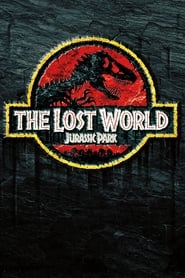
The Lost World arrives as a kind of corrective. Spielberg's original Jurassic Park (1993) had been a film of wonder — a movie genuinely in love with the idea that you could stand in a field and watch a brachiosaurus eat leaves, that the impossible could be rendered with such photographic conviction that the audience would simply believe it. The wonder was the point. Dean Cundey's cinematography for that film was warm, clean, and golden-toned, built to make you feel the sunlight on a prehistoric landscape. For the sequel, Spielberg replaced Cundey with Janusz Kamiński, who had shot Schindler's List for him in 1993 and would become his near-exclusive cinematographer for the next three decades. The swap is not cosmetic. Kamiński shoots The Lost World in a way that feels bleached, overexposed in its daylight sequences and dangerously murky in its night and rain scenes. The wonder is largely gone. What replaces it is threat. This is a film that has decided the most interesting thing about dinosaurs is not that they are magnificent but that they are lethal — and that the most interesting thing about human beings is how quickly they forget the second thing when they're busy pursuing the first.
The film was Spielberg's first-ever sequel to one of his own movies, and the weight of that distinction is visible in how hard it works to establish a different mood. It made a colossal amount of money — breaking the opening-weekend box office record in 1997 — and was then promptly filed away by critics as a disappointment, the lesser follow-up to a genuine classic. But that verdict has been slowly revising itself. There is a vocal and growing contingent of film lovers who will tell you that The Lost World is secretly one of Spielberg's most interesting studio pictures: precisely because it is angrier, more cynical, and more willing to be uncomfortable than the crowd-pleasing machine that preceded it. The San Diego sequence in the film's final act — a sequence that is frankly, joyfully absurd, a full-scale Godzilla homage dropped into a Spielberg film like a hand grenade — is either the moment the film falls apart or the moment it reveals its true nature, depending on who you ask. The gymnastics-kick raptor scene remains the fandom's favourite lightning rod for the debate. What is not debatable is that Spielberg's set-piece engineering — a trailer dangling over a cliff edge in driving rain, raptors hunting through tall grass at night, a city block waking up to something it cannot process — is operating at a level of technical mastery that few directors of any era could match.
Watch for —
- Notice how Kamiński's lighting drains the warmth from the palette compared to the first film. In the original Jurassic Park, the outdoor sequences have a golden, almost documentary naturalism — you feel the sun. Here, even daytime scenes are cooled and bleached, as if the colour has been slightly leached out. This is a deliberate signal: this is not a film about wonder. Keep your eye on how the light shifts when things go wrong, deepening into a dangerous blue-grey murk.
- The trailer-over-the-cliff sequence is a clinic in how Spielberg creates geometry out of danger. He establishes the space with great precision — where the cliff is, how far the trailer overhangs it, who is where inside — and then systematically compromises every element of safety one piece at a time. Notice the way the cracks spread across the glass underfoot. This is where the film turns from a monster movie into something closer to a puzzle, and the puzzle is entirely spatial.
- Watch how Jeff Goldblum changes from the first film. In Jurassic Park he was an eccentric supporting presence, fizzing with nervous theory. Here, moved to the centre of the film, he becomes a different kind of hero — reactive, sardonic, operating almost entirely through eye-rolls and dry alarm rather than through action. This is unusual for a blockbuster protagonist. Notice how much screen time passes without Goldblum's character doing anything, in the conventional hero sense, and how Goldblum makes that watchable anyway.
- Listen to John Williams' score in the tall-grass raptor sequence. Where the original film's score was full of soaring, awe-struck themes, the music here is percussive, rhythmic, almost predatory itself. The sound design — grass parting, breath held — does as much work as the visuals. This is worth experiencing on the best speakers you have access to.
- The San Diego sequence is a deliberate genre citation. When the T. rex appears in a suburban street, Spielberg is consciously and almost playfully reaching back to King Kong (1933) and the Godzilla tradition — the idea of a creature from the wild world loose in the civilized one. Watch for how the film's tone shifts in this sequence: it becomes almost giddy, and that tonal shift is either a liberation or a stumble depending on your taste. But it is not accidental. It is Spielberg, twenty years into his career, allowing himself to love the B-movie ancestry of the whole enterprise openly.
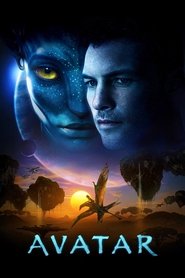
If The Lost World was about a filmmaker going darker and angrier with his own material, Avatar represents something categorically different: a filmmaker who spent roughly a decade not making a film in order to build the instruments that would allow him to make it. James Cameron's gap between Titanic (1997) and Avatar (2009) is one of the more unusual silences in the history of mainstream cinema. He was not, as some assumed, resting. He was developing technology — specifically, two things that did not yet adequately exist. The first was a performance-capture system refined enough to preserve the subtlety of an actor's facial performance, the micro-expressions that make human faces readable and emotionally alive, when that performance was being translated into a fully computer-generated character. The second was a practical system for stereoscopic 3D filmmaking at the scale of a major Hollywood production, coupled with what Cameron called the "virtual camera" — a device that allowed him to move through the computer-generated world of Pandora in real time, pointing a camera at his digital environment the way a conventional director of photography points a camera at a physical set. The result was a film in which roughly sixty percent of what you see on screen was, in the most literal sense, painted rather than photographed — and in which Cameron's goal was that you would not be able to tell.
Whether he fully achieved that goal is still argued over. What is not argued over is the scale of the achievement, or the scale of the impact. Avatar was a phenomenon in 2009 in a way that very few films in the sound era have been: people queued for hours, saw it multiple times, bought expensive new television sets specifically to experience it in the best possible 3D at home. It dethroned Titanic as the highest-grossing film ever made. And then something strange happened. Within a few years, a narrative had solidified in the culture that Avatar was somehow forgettable — a technical marvel with no emotional hook, a film nobody could actually remember in the way you remember a line of dialogue or a character's face. This became one of the most reliable talking points in film-criticism culture: how could the most successful movie ever made have such a shallow footprint? The argument ran for over a decade, right up until The Way of Water made two point three billion dollars in 2022 and forced the conversation to restart from scratch. The audience, it turned out, had never actually left. They were just waiting for somewhere to go back to.
The craft of Avatar is inseparable from its technological context, and to watch it without thinking about what Cameron built is to miss half of what is on screen. But there is something in the film that no technology explains, which is Cameron's instinct for the physical sensation of a world. The Na'vi are photorealistic in ways that performance-capture characters had not been before, which matters because the film is fundamentally a story about embodiment — about what it feels like to be in a body, to feel ground under feet, to move through space with sensory information flooding in from all sides. The film's themes are not subtle: anti-colonial critique, ecological interconnection, the violence of extractive capitalism, the seductiveness of becoming someone else. Cameron states them plainly, almost defiantly. But the technology and the theme rhyme in a way that is worth sitting with: this is a film about the experience of inhabiting a world that feels more real and more alive than the world you came from, and it was made with tools designed to produce exactly that sensation in the audience.
Watch for —
- The first time Jake Sully runs in his avatar body. This is one of the film's most important moments and one of its quietest. He swings his legs off the gurney and bolts bare-footed across dirt, and Cameron holds on it — the toes curling into soil, the pure physical joy of movement in a body that works. Everything the film cares about thematically is in that shot. Notice how Cameron frames it, how long he lets it breathe, and how it sets up every scene in which Jake moves through Pandora thereafter.
- The bioluminescence design of Pandora at night is worth examining as a piece of world-building craft. Every plant, creature, and surface in the night sequences has its own internal light logic — species illuminate differently, and the colour palette shifts in a way that is internally consistent. This took years of design work. Notice how Cameron uses the night sequences not just for beauty but to make the world feel knowable, as if it has rules you could learn.
- The performance-capture faces are doing something new. Compare any close-up of a Na'vi character to performance-capture work from the decade before — films like The Polar Express (2004) — and you will see the distance Cameron and Weta Digital travelled. Look specifically at the eyes. In earlier performance capture, the eyes had a stillness that read as uncanny. Here, they are alive in a way that is difficult to articulate but immediately felt. This is where performance capture crossed a threshold it had been approaching for fifteen years.
- Keep your eye on the contrast between the human and Na'vi worlds in terms of colour temperature and production design. The human installations are grey, angular, cool-lit, industrial — deliberately ugly in a functional way. Pandora is curved, warm, bioluminescent, and saturated. Cameron is making an argument through production design, and he is not being subtle about it. Notice which world the camera moves more fluidly through.
- The 3D is doing specific narrative work in the flight sequences. Cameron designed the film's stereoscopic photography not as a gimmick — things flying at the audience — but as a way to create a sensation of depth and altitude. The sequences on the flying banshees are designed so that the sense of height and open air below is felt in the body. If you are watching on a flat screen, try to notice where Cameron frames these shots and how he uses empty space beneath the characters. He is engineering a physical feeling.
Jaws 2 (1978)
Jaws 2 arrives in this sequence as the film that exists in the shadow of a colossus, and the shadow is so enormous that the film has spent decades being almost invisible inside it. The original Jaws (1975) did not merely succeed — it reorganised the film industry. It created the summer blockbuster as a commercial and cultural form, it demonstrated that a film could play on thousands of screens simultaneously and generate previously unimaginable sums of money, and it did all of this while also being, by nearly universal agreement, a masterpiece of sustained dread and human characterisation. The dolly zoom on Roy Scheider at the beach, John Williams' two-note theme, Robert Shaw's Indianapolis monologue — these are not just famous moments; they are part of the common language of film. The question of what comes next, of who climbs back into that world and how, was never going to have a comfortable answer.
The answer, as it turned out, was Jeannot Szwarc, a television director who replaced Spielberg when Spielberg declined to return. Szwarc was a competent craftsman working in a situation that was, structurally, almost impossible to navigate. The studio wanted the brand, the characters (Scheider returned, though reportedly under duress), and the premise. The audience wanted the feeling — that particular combination of escalating dread, human texture, and earned shock that Jaws had produced. What neither the studio nor the audience could provide was the creative pressure and happy accident that had produced the original: the malfunctioning mechanical shark that forced Spielberg to withhold the monster, the location shooting on Martha's Vineyard that gave the film its documentary grain, the chemistry between three actors who happened to be perfect together, and a young director working at the absolute top of his instincts with everything to prove. Jaws 2 has a working mechanical shark, or at least a more reliable one. It is, in some ways, better equipped than the original. And that is precisely the problem.
The reception of Jaws 2 on release was not catastrophic — it was in fact a significant commercial success, the biggest sequel in Hollywood history to that point — but it was received as what it was: a competent, sometimes effective, structurally shallow repetition of a film that had succeeded in large part through resistance to formula. Critics were kind enough but clear-eyed. The film's lasting cultural footprint is, in an interesting way, almost entirely negative: it is the thing that proved the original was not repeatable, the first data point in the long history of diminishing franchise returns, the film that gave us the phrase "just when you thought it was safe to go back in the water." That tagline is now more famous than anything in the film itself. Jaws 2 is taught less as a film and more as an object lesson in what is lost when the creative conditions that produced a masterpiece cannot be reproduced by commercial mandate. But that makes it an extraordinarily instructive object lesson — and there are things in it, particularly in the sequences shot on open water, that are better than its reputation suggests.
Watch for —
- Notice what happens when the shark is actually shown — and compare it to the restraint of the original. Where Spielberg famously and largely involuntarily withheld the shark because the mechanical prop kept malfunctioning, Jaws 2 shows its monster with considerably more frequency and directness. Pay attention to how this changes the feeling of the sequences. The dread in the original came from what you couldn't see; what you imagined was always more frightening than what the camera could show you. Here, the visible shark is undeniably impressive as a practical effect, but something in the tension dissolves the moment it appears. This is a living lesson in why great horror filmmakers talk about withholding as a technique.
- Roy Scheider is doing genuinely interesting work here under difficult conditions. He reportedly took the role under contractual obligation rather than creative enthusiasm, and there is a quality to his performance of a man who knows something is wrong before anyone will believe him — a paranoia and isolation — that is more psychologically complex than the film's surface gives it credit for. Watch how he plays Brody's credibility crisis: the way his face registers the exhaustion of being right and disbelieved.
- The open-water sequences with the teenagers on the sailboats are where the film finds its most independent footing. These sequences owe less to the original and more to the tradition of survival films, and there is a genuine physicality to the boat work — ropes, sails, bodies in the water — that gives them a texture the studio-bound sequences lack. Keep your eye on how Szwarc uses the geography of the clustered boats and how he builds the shark's approach across open water.
- Listen for how John Williams' score is used differently here. Williams returned to provide the music, and his themes are present. But notice how the two-note motif, which in the original was used with great precision and was sometimes withheld entirely until maximum effect, is deployed here. The restraint has changed. In the original, the theme was a tool of control; here it is more like a reflex. That difference in musical discipline tells you something about the difference in overall directorial approach.
- Watch for the moment where the film reveals its essentially different structural logic. The original Jaws built toward a three-character drama — a police chief, a scientist, a hunter — whose dynamic was as interesting as any monster in cinema. Jaws 2 replaces that intimate pressure with a larger group of younger characters. Notice how this disperses the audience's investment and compare it to how the original focused and concentrated emotional attachment. This is a structural choice with enormous consequences, and it would become the template for the slasher film of the late 1970s and 1980s, where the shark becomes a knife and the group of teenagers becomes the genre convention.
Star Wars: Attack of the Clones (2002)
Attack of the Clones arrives in this sequence as both the most ambitious and the most contested film of the four, and the controversy surrounding it is inseparable from what it was actually attempting. George Lucas had returned to the Star Wars universe with The Phantom Menace in 1999 — an event of hysterical anticipation followed by a backlash whose bitterness had not been seen in popular film culture before and has rarely been matched since. Attack of the Clones, released three years later, was Lucas's response to that backlash, and his response was not to retreat but to accelerate. Where The Phantom Menace had been approximately half shot on film and half on digital cameras, Attack of the Clones was the first major studio feature shot entirely in high-definition digital video — no film stock, no grain, no photographic emulsion of any kind. Lucas was making a bet that the entire industry would eventually have to follow, and he was making it publicly, defiantly, with one of the most famous brands in entertainment history as his testing ground. He was right about the industry. The personal cost was the film itself, which arrived into a culture that was already primed to be suspicious of everything Lucas touched, and which made aesthetic choices that many viewers found alienating precisely because they were so new and so deliberately, confrontationally synthetic.
The look of Attack of the Clones is unlike almost anything in mainstream cinema that preceded it. Digital video in 2002 captured light differently from film — it was harder, colder, without the latitude that film negative has in its ability to render shadow and highlight simultaneously. Lucas and his director of photography David Tattersall worked within and sometimes against these limitations, and the result is a film that, depending on your response to it, either looks strikingly clean and precise or looks curiously flat and slightly unreal. That quality of unreality was not, in hindsight, entirely accidental. Attack of the Clones is a film that is asking the audience to inhabit a world that is profoundly digital — not just in its effects sequences, where ILM's computer-generated imagery reaches a density and scale that had not been seen before, but in its very texture and light. The arena battle sequence in the film's second half, for instance, is essentially a fully synthetic environment populated by hundreds of computer-generated characters engaged in combat, with human actors composited into it. Nothing like it had been attempted at that scale. Whether it fully succeeds as cinema — whether the audience feels in it rather than watching it — is the question the film's reception has never stopped arguing over.
Lucas's relationship to performance in this film is also worth examining as a craft question rather than simply as a failure, which is how it has most often been discussed. The performances in Attack of the Clones — particularly the scenes between Anakin Skywalker and Padmé Amidala — have become notorious for their perceived stiffness and artificiality. But Lucas's approach to performance was, at least in part, a deliberate stylistic choice rather than simple negligence. He was reaching for the formal, slightly heightened register of silent cinema and of 1930s serial adventure, a mode in which emotion is stated rather than implied and behaviour follows a schematic rather than a naturalistic logic. Whether this reads as an interesting formal experiment or as simply a director who had lost his feel for working with actors is, again, the argument the film's reception has been having for two decades. What is clear is that no other filmmaker of Lucas's stature and resources would have made the same choices in 2002, and that Attack of the Clones is, in this sense, one of the more genuinely strange and personal blockbusters of the era — a film whose oddness is the product of complete authorial control rather than the absence of it.
Watch for —
- This is where digital cinematography enters mainstream blockbuster filmmaking. There is no film grain in this movie — none. Notice the quality of the image in any sequence: the edges are sharp in a way that is slightly different from any film you have seen before 2002. The shadows either clip to black or hold detail in a way that feels different from photographic cinema. You may find this beautiful, or you may find it clinical. Either response is valid and both are instructive. You are watching the first major Hollywood feature to fully abandon film stock, and the aesthetic consequences of that decision are visible in every frame.
- The Coruscant rain-and-chase sequence in the film's early section is the film's most purely kinetic achievement. Watch how ILM constructs a three-dimensional urban space through which characters move at speed — the sense of depth in the rain, the layered architecture of a planet-city, the choreography of aerial pursuit. This is digital effects work at a level of environmental complexity that the original trilogy's optical effects could not have produced. Compare it mentally to the ILM work in The Lost World, made just five years earlier, and notice how far the tools had moved.
- Keep your eye on how Lucas frames the scenes between Anakin and Padmé. They have been criticised extensively and are genuinely awkward by naturalistic performance standards. But notice also how Lucas shoots them: in formal, symmetrical compositions, with characters placed very deliberately in the frame, often against painted or digital environments of almost mythological sweep. He is reaching for something like the visual register of Douglas Sirk or of classical Hollywood melodrama, where feeling is expressed through composition rather than through actorly subtext. Whether it works is your call, but it is worth knowing he is reaching for something rather than simply failing to control his performers.
- The arena battle is the sequence to watch for sheer scale of digital world-building. Everything in it — the sand, the columns, the crowd, the monsters, the geometry of the space — is computer generated except for the actors in the foreground. Nothing at this scale had been attempted before in a live-action context. Compare it to the Avatar sequences you have already seen and notice what Cameron's decade of additional development bought him in terms of integration — the way the human figures in Avatar feel embedded in their environment versus the slight visual separation that is sometimes visible here.
- John Williams' score is doing specific work in the transitions between storylines. The film cuts between three parallel narrative threads across its second half, and Williams' music is the primary instrument of tonal management between them. Notice how the romantic theme, the thriller theme, and the war theme are each given distinct musical identities and how Williams uses instrumental colour — strings versus brass versus choir — to signal which emotional register the film is asking you to occupy.
Closing: What the Arc Reveals
Move through these four films in order and you have traced, without quite intending to, the story of what happens to mainstream American cinema when commercial success becomes a machine with its own momentum. The Lost World shows you a master filmmaker returning to his own success with a degree of ironic distance — using a sequel's freedom from the pressure of originality to try something darker and stranger, and being punished commercially and critically for it before being slowly vindicated. Avatar shows you a filmmaker who understood that the only way to justify a return — or in his case, an enormous new entry into the genre of spectacle — was to actually invent something, to bring a tool into the world that had not existed before and to use it in service of ideas that were unmistakably his own. Jaws 2 shows you, with great clarity and some sadness, what happens when the commercial conditions that once produced a masterpiece are reassembled without the creative pressure that actually caused it — when the shark is more reliable but the film is less frightening, when everything works better except the thing that mattered most. And Attack of the Clones shows you a filmmaker who had so completely internalised the lesson that compromise produces mediocrity that he drove in the opposite direction with total force, betting everything on his own judgement in a way that produced something genuinely, fascinatingly strange, even if strange and successful are not always the same thing.
The through-line connecting all four is the question of what technology is for in a film. Each of these films was, at the moment of its release, pushing against the edge of what cinema could technically produce. Kamiński's bleached, anxious cinematography in The Lost World was a deliberate aesthetic argument made through craft choice. Cameron's virtual camera and performance-capture pipeline in Avatar were a decade in the making and changed what could be imagined as possible in a studio film. The more reliable shark in Jaws 2 was an attempt to solve the problem that had accidentally created the original's greatest effect. And Lucas's fully digital production of Attack of the Clones was a wager on where the industry was going, made with no safety net and complete conviction. What you have learned to see, by watching all four, is that technology in cinema is never neutral: it is always an argument about what a film should feel like, and the most interesting directors are always the ones who understand that the tool shapes the feeling as surely as any line of dialogue or performance choice. The sequels that endure are the ones that used their technology to say something — even if, in the moment, nobody was entirely sure what was being said.