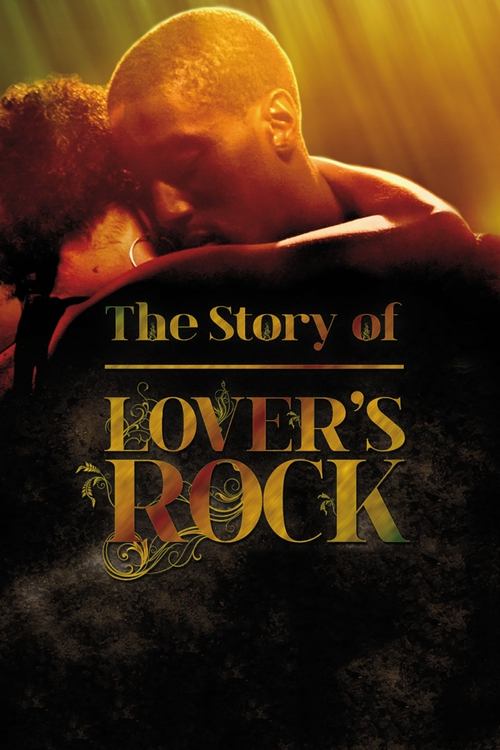
The Story of Lovers Rock
2011 · Menelik Shabazz
For a night when you want music, nostalgia and joy with some history folded in — put it on when you'd rather be swayed than shaken. Pure comfort, with substance.
What it's about
A documentary about lovers rock, the swooning, romantic strain of reggae born in 1970s Black London — sung largely by women, played at front-room blues parties and church-hall dances, and cherished by a generation of Caribbean-British youth facing police harassment and closed doors everywhere else. Through testimony, archive footage, live performance and playful comedy sketches, it traces how a slow dance became a culture, and how the sound traveled out into the world through artists like Janet Kay, Maxi Priest and UB40.
The experience
Warm, funny and quietly political — the reminiscences and reenacted dancefloor rituals keep it buoyant, while the history underneath gives every love song its weight. Mostly it just feels good: the music does half the talking.
The craft
Menelik Shabazz, a founding figure of Black British cinema, builds the film like the scene it documents: communal, mixing interviews, archive, live sessions and comedy sketches that recreate the etiquette of the slow dance. The songs are given room to play out, so good speakers pay off.
Why it matters
It preserved a scene mainstream pop history had skipped over, and its subject later reached a huge new audience when Steve McQueen devoted a film of his Small Axe series to a lovers rock house party.
Menelik Shabazz — a founding figure of Black British cinema, whose Burning an Illusion (1981) was among the first British features directed by a Black filmmaker — turns his camera on lovers rock, the swooning, female-voiced strain of reggae that flowered in 1970s London. Born in front-room blues parties and church-hall dances, sung by artists like Janet Kay whose 'Silly Games' improbably conquered the pop charts, the music offered Caribbean-British youth something the wider culture refused them: tenderness, intimacy, a slow dance at the end of a week of police harassment and shut doors. Shabazz assembles the story from testimony, archive footage, live performance and, unexpectedly, comedy sketches that reenact the rituals of the dancefloor — a form as communal as its subject. When Steve McQueen devoted an entire Small Axe film to a single lovers rock house party in 2020, this documentary was the wellspring; Shabazz died the following year, his rebel generation finally on the record.
A Deleuzian reading
Two people in a front room, furniture pushed back against the wall, one low bulb, bass coming up through the floor.
The full Deleuzian reading of The Story of Lovers Rock →
Reception
A modest word-of-mouth theatrical hit in 2011 — one of the year's highest-grossing documentaries in UK cinemas — it found a whole new audience after Steve McQueen's Small Axe: Lovers Rock (2020) sent viewers hunting for the real history, and it now streams on the Criterion Channel.
How The Story of Lovers Rock was received, from release to now →
Influences: the films it descends from and the films it influenced
- Reggae (1971) — Ové filmed the 1970 Caribbean Music Festival at Wembley as an intimate concert-documentary of Black British reggae culture, establishing the performance-footage-as-community-portrait template Shabazz reworks with lovers-rock stages.
- The Harder They Come (1972) — Henzell let the reggae soundtrack drive narrative rhythm and cut scenes to song structure rather than plot beats — the music-as-organizing-principle logic Shabazz extends by building whole sequences around individual lovers-rock records.
- Pressure (1976) — Britain's first Black feature codified the domestic, kitchen-and-front-room realism of West Indian London that Shabazz's reenactments and testimony draw on for their intimacy of place.
- Rockers (1978) — Bafaloukos staged sound-system and dancehall interiors as social theater with non-actors playing themselves, a docu-fiction hybrid Shabazz echoes in his comedy-sketch reenactments of blues parties.
- Babylon (1980) — Rosso shot the blues-party and sound-clash as charged dramatic space lit by low domestic bulbs and bass — the physical grammar of the dancefloor Shabazz reconstructs to explain lovers rock's slow-wind.
- Burning an Illusion (1981) — Shabazz's own earlier feature centered Black British romantic and domestic intimacy from a woman's vantage, the same tender, female-centered gaze he brings to the lovers-rock 'racial tenderness' of this film.
- Jazz on a Summer's Day (1959) — Stern intercut performance with candid audience faces and off-stage texture to make a concert feel like a lived afternoon — the observational live-music editing Shabazz applies to reggae singers and dancers.
- Handsworth Songs (1986) — Akomfrah's Black Audio essay assembled archive footage, voice and music into associative collage rather than linear reportage — the collage-assembly method underpinning Shabazz's mix of archive, testimony and song.
- The Passion of Remembrance (1986) — Sankofa built Black British memory from layered oral testimony and staged vignette instead of a single narrator, prefiguring Shabazz's chorus of first-person recollection about the scene.
- Rudeboy: The Story of Trojan Records (2018) — Davies combined stylized reenactment, period archive and singer testimony to tell a British reggae-label history, directly extending Shabazz's reenactment-plus-oral-history documentary form onto the same music world.
- Lovers Rock (Small Axe) (2020) — McQueen dramatized a single 1980 West London blues party in real time, turning Shabazz's documented accounts of the female-voiced lovers-rock dance into immersive fiction — the film's explicit debt in the influence/steve-mcqueen-small-axe facet.
- Young Soul Rebels (1991) — Julien treated the Black British dancefloor and pirate-radio soundtrack as the site where intimacy, style and politics converge — the same reading of party-as-social-text Shabazz documents for lovers rock.
- The Arbor (2010) — Barnard fused recorded verbatim testimony with staged reenactment performed to the audio, a documentary-drama hybrid running parallel to Shabazz's testimony-plus-reenactment construction.
- Stories We Tell (2012) — Polley assembled a community's overlapping oral accounts and blended real and restaged footage into one memory-mosaic, the same reliance on collective first-person voice that structures Shabazz's film.
- The Stuart Hall Project (2013) — Akomfrah scored a life of Black British thought entirely from archive collage and music cues, sharing Shabazz's method of narrating a cultural moment through assembled fragments rather than talking-head exposition.
Similar films
- The Black Power Mixtape 1967-1975 (2011) — shared sensibility
- Soundtrack to a Coup d'Etat (2024) — shared sensibility
- Bohemian Rhapsody (2018) — shared sensibility
- Moonage Daydream (2022) — shared sensibility
- Distant Voices, Still Lives (1988) — shared sensibility
- Leila and the Wolves (1986) — shared sensibility
- Sankofa (1993) — shared sensibility
- Michael (2026) — shared sensibility
All the films related to The Story of Lovers Rock →