Sightlines · a mini film course
Watchers at the Edge: Eleven Films About Seeing Without Saving
There's a moment in nearly every thriller when the hero sees the danger, acts, and the world bends to the act. The films on this list are all built on that machinery — chases, investigations, missions, sieges — and every one of them, in its own way, tampers with the engine. Again and again, these movies put someone right at the center of the action and then quietly reveal that seeing clearly and being able to do something about it are two very different things. A camera that watches instead of chases. A protagonist parked in a doorway while the real decisions happen down the hall. Blood on the lens that nobody wipes away. Watch these films for the gap between what characters perceive and what they can actually change — that gap is where each of them lives.
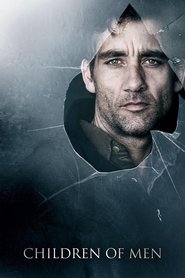
Children of Men (2006)
Watch for the long, unbroken shots — especially the ones that arrive exactly where an ordinary thriller would cut away. Cuarón and cinematographer Emmanuel Lubezki work handheld and close, keeping the camera within arm's reach of the lead so his experience becomes yours, drawing on the near-documentary textures of The Battle of Algiers and the punishing intimacy of Come and See. At one point, blood spatters onto the lens and simply stays there — no cut cleans the view, and the film refuses to apologize. When the camera won't blink, time stops being something the plot spends and becomes something you feel passing.

You Were Never Really Here (2017)
Lynne Ramsay takes the traumatized-avenger picture — the Taxi Driver lineage, and she knows it down to the film grain — and quietly pulls the spark plugs. Watch how cinematographer Thomas Townend avoids the neutral "genre" camera position: instead you get extreme close-ups of hands and surfaces that give you only partial information, a technique inherited from Bresson, who trusted hands more than faces. Fragmentary images flare up without dates or explanations, and they never assemble into the tidy backstory a thriller usually owes you. Violence, meanwhile, often happens just out of frame, rendered through aftermath — a choice that makes it heavier, not lighter.
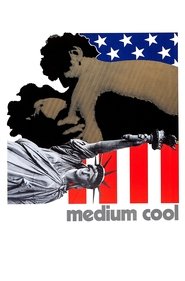
Medium Cool (1969)
The opening tells you everything: a car crash, and a TV cameraman who films the injured woman before calling an ambulance. Wexler — his own cinematographer — shoots in two registers, a composed and color-rich style for the fiction and a raw, reactive one for real documentary footage, and deliberately lets them bleed together until you can't be sure which is which. Watch the lead, who looks like an action hero — fast, competent, always moving toward the event — and notice what his "action" actually consists of: framing suffering rather than relieving it. It's a film about the camera's complicity, made at the exact moment American cinema stopped trusting that a decisive act could fix anything.
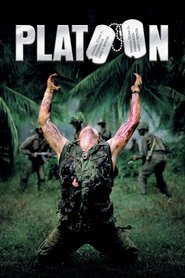
Platoon (1986)
Stone described his young narrator as "a partly passive vessel," and that's the key: this is a combat film about a soldier who watches and endures more than he decides. Watch how Robert Richardson's handheld camera stays embedded among the infantry, with partial sightlines and geography that dissolves into flares and muzzle-flash — you're never given the clean overview the classic war film promises. The picture keeps all the machinery of the genre (patrols, objectives, a perimeter to hold) while quietly cutting the wire between seeing a thing and being able to stop it. Its most famous image is precisely about that: witnessing from above, changing nothing.
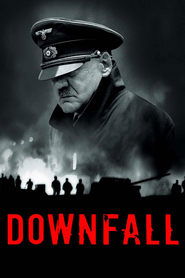
Downfall (2004)
A war film staged almost entirely in a bunker, where commands are issued to armies that no longer exist. Watch the map room: a hand moves pins across a table and the pins say the plan is working, while the street above says otherwise — the whole apparatus of decision-making grinding on after decisions have stopped connecting to anything real. Rainer Klausmann's handheld camera keeps the lens close to faces, trapping characters in shallow focus and narrow corridors; the effect isn't combat-journalism agitation but claustrophobia, a space that has become a trap. It's a landmark of German cinema's confrontation with its own past, and the confinement is the argument.
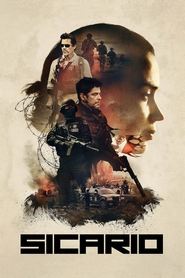
Sicario (2015)
Watch where Villeneuve keeps placing Emily Blunt's Kate: in a doorway as shooting starts, in the back seat of a convoy that won't say where it's going, at the edge of briefings where the real plan is decided somewhere she is not. She's a genuinely good agent who perceives everything — and the film's whole argument lives in that blocking. Roger Deakins shoots the border landscape geologically rather than picturesquely, wide frames dwarfing human figures, quoting the Western while refusing its mythology. The film borrows its procedural staging of state violence from The Battle of Algiers and its shut-out investigator from Chinatown, and smuggles an art-film's unease into a full-throttle studio thriller.
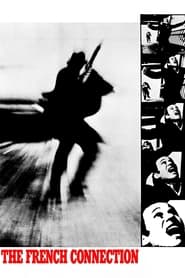
The French Connection (1971)
Friedkin's cop picture runs on the detective's native grammar: pull one small thread — a flashy spender at a nightclub — and each act of legwork lights up another inch of a hidden network. Watch Owen Roizman's winter palette (greys, browns, fluorescent greens) and his telephoto surveillance shots, an aesthetic descended from The Naked City's hidden street cameras and Breathless's handheld grain. And watch the scene where the detective stands freezing on a sidewalk, eating cold pizza, while his elegant quarry dines behind restaurant glass: no dialogue explains it, no cut editorializes. The film just leaves you on the cold side of the glass and trusts you to feel the asymmetry.
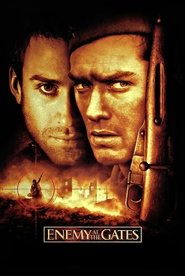
Enemy at the Gates (2001)
Here's the strange, wonderful paradox: a war film whose central action is stillness. Two snipers lie motionless across dead ground for hours, each waiting for the other to betray himself with a shifted boot or a fogged breath — pure watching, with a rifle attached. Watch how Robert Fraisse's camera keeps returning to a man whose entire being has narrowed to an eye at a lens. The desaturated winter palette — steel blues, ash greys — is punctured only by fire and muzzle flash, and the opening river-crossing assault delivers the visceral, embedded chaos the film's post-Saving Private Ryan generation made its signature, before everything contracts into that terrible patience.
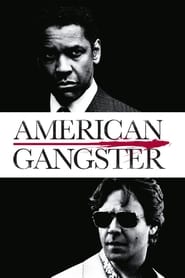
American Gangster (2007)
Read the whole film through one coat. Frank Lucas dresses like an accountant because invisibility is the first principle of his business — then he wears a chinchilla coat to a prizefight, and the camera finds the men watching him before he realizes he's been seen. Ridley Scott stages it not as a fall but as a clerical error. Watch how Harris Savides splits the film chromatically — the amber warmth of Lucas's world against the institutional grey of the detective's — and how Scott builds meaning from posture and arrangement: the gangster presiding over a Thanksgiving table, crime rendered domestic. The suit and the coat aren't psychology; they're two attitudes toward power, and the film's whole argument lives in the gap between them.
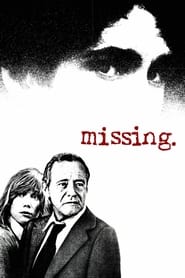
Missing (1982)
Costa-Gavras essentially invented the modern political thriller, and here he runs its engine in its most devastating register: not a hero remaking the world, but a father whose every small act — an interview, a demand, a requested document — discloses one more piece of a hidden situation. Watch Ricardo Aronovich's camera shift between two registers: mobile and embedded in crowds during the search, more composed elsewhere. Jack Lemmon plays an ordinary American who arrives in an unnamed country armed with total faith in his government's good will, and the film's suspense is built not from chases but from the slow, evidentiary accumulation of what that faith is worth.
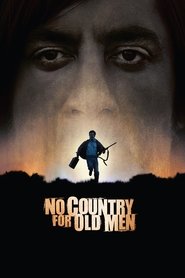
No Country for Old Men (2007)
The gas-station scene is the film in miniature: a coin on a counter, a proprietor who doesn't know what he's playing for, and nothing moving except the talk and the fluorescent hum. Roger Deakins builds tension through strategic restraint — long lenses compressing figures against featureless desert, the landscape as a participant rather than a backdrop. There is famously almost no score; like The Conversation before it, the film makes rustle, drone, and room tone do the work music usually does. The Coens honor every mechanic of the crime thriller — money found, killer hunting, lawman closing in — and watch closely for the ways they quietly decline to let the machine pay off the way you've been trained to expect.
Watched together, these eleven films become a conversation about what cameras owe us. Each one takes a genre built on decisive action — the war film, the cop procedural, the vigilante picture, the political thriller — and asks what happens when the person at the center can see everything and fix almost nothing. Some answer with a camera that refuses to cut away; some with a protagonist held at the threshold of the room where things are decided; some with a lens that films first and rescues second. The reward of watching them as a set is that your eye starts to change: you stop asking "what will the hero do?" and start noticing where the camera stands, what it withholds, how long it's willing to wait. That shift — from following the action to watching the watching — is one of the great pleasures cinema offers, and this list is a superb place to learn it.