Sightlines · a mini film course
When the World Stops Answering: A Course in Watching, Waiting, and What the Camera Refuses
Every one of these twelve films is built on the same simple engine — a person sees danger and tries to do something about it — and every one of them tampers with that engine in a different way. Some run it at full throttle. Some let it stall. Some cut the fuel line entirely and let their characters (and us) do nothing but look. Watched together, they become a course in the most basic grammar movies have: the chain that links seeing to doing. Notice when a film honors that chain, when it stretches it to breaking, and when it quietly unplugs it — when the camera watches rather than chases, when a hero's competence stops mattering, when a city or a screen or a stretch of desert becomes a space that no longer tells a body how to move through it. That's where these films live.
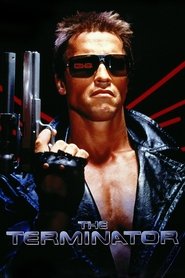
The Terminator (1984)
Start here, with the machine running perfectly. Cameron's film is the see-danger-act-on-it engine at full power: Sarah sees the machine, Sarah runs; Reese sees the machine, Reese fires. Nobody stands and contemplates — there is no dead time, and that's not a limitation, it's the design. Watch Adam Greenberg's nocturnal Los Angeles, all rain-slicked noir shadow and hard colored light, and how the Terminator is introduced through partial views — a silhouette, a hand, a red glint of eye — a slow striptease toward what's underneath.
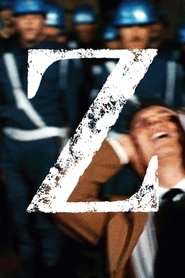
Z (1969)
Costa-Gavras shoots an assassination from ground level — in the legs, the panic, the bad angles — deliberately refusing the clean overhead shot that would tell you what happened. The confusion of the camerawork mirrors the confusion the state will manufacture: the image withholds the overview the way officials will withhold the truth. Watch how Raoul Coutard's restless handheld camera, inherited straight from the French New Wave, moves with purpose rather than flash, and how the film builds a propulsive investigation against that engineered chaos.
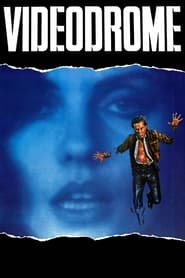
Videodrome (1983)
Cronenberg's masterstroke is a withheld cue: Mark Irwin shoots the impossible — a television screen that swells and gives like skin — in exactly the same cool, clinical, sickly institutional light as an ordinary office. Nothing in the film's grammar tells you when you've left the real. Watch the protagonist curdle from fast-talking opportunist into someone who can only watch and submit, and ask yourself at every moment: what is the camera not telling me about what's real?
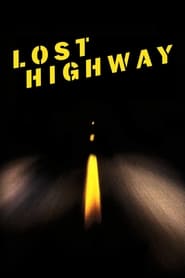
Lost Highway (1997)
Lynch melts the wall most films keep solid — the wall between what's happening and what's remembered, dreamed, or reflected. One actress plays two women (or one woman, twice), and the film refuses the cut that would settle it. Watch Peter Deming's engulfing darkness: rooms defined by what can't be seen, characters walking into blackness and dematerializing. This is a story shaped like a loop rather than a line, and the pleasure is in feeling the seam without being shown it.

Dark City (1998)
A metropolis with no sun, no edge, and no history you can trust — a sealed world where its citizens can't even form the thought of an elsewhere, except for one murmured place-name that works like a prayer. Watch how Proyas rebuilds the vocabulary of German Expressionism: painted shadow and silhouette as menace, canted angles, a vertical miniature-built city that bends on command. Space itself becomes the trap, and the film's mystery is architectural before it is narrative.
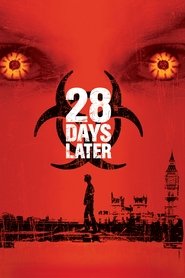
28 Days Later (2002)
The most frightening shot in the film may be one where nothing happens: a man in a hospital gown on an empty Westminster Bridge — real London streets, scrubbed of people by shooting at dawn — with nothing to fight and no errand that means anything. Boyle opens the film with a hero who can only look. Watch how Anthony Dod Mantle's raw consumer-grade digital video, carried over from his Dogme 95 work, makes the emptiness feel documentary-true, which is exactly why it terrifies.
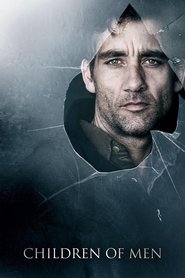
Children of Men (2006)
Cuarón's gambit: take the cut away in exactly the moments a thriller leans on it hardest. We're used to the cut as a kind of mercy — it wipes the lens clean, restores the sightline. Here Lubezki's camera stays within arm's reach of the actors through sustained, unbroken takes, and when blood spatters the glass between us and the fighting, it stays there. No reframe apologizes for it. Watch how the refusal to cut makes time itself something you feel rather than something the editing manages for you.
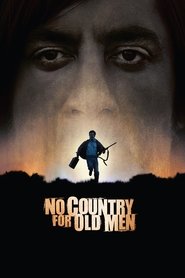
No Country for Old Men (2007)
The film honors every mechanic of the chase thriller and quietly unplugs it. Watch the celebrated gas-station scene: a coin on a counter, fluorescent light, talk — and a man watching, unable to act, exactly the way you are. Deakins's photography is strategic restraint: long lenses compressing figures against featureless desert, landscape as participant, emphasizing distance and exposure. Notice how much of the film's meaning lives in ambient sound — the rustle, the drone, the room tone — a grammar it inherits from The Conversation.
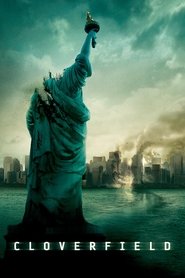
Cloverfield (2008)
A giant-monster movie with the heroic act amputated. The city-leveling genre normally runs on decisive counter-force; here the man holding the camera is an amateur who points it badly, loses the creature at the worst moments, and keeps filming anyway. What we get is not a hero's reaction but a recording of one. Watch the discipline of the form — the lurching frame, the exposure hunting, the partial glimpses — and how it turns catastrophe into something witnessed from below, understood only in fragments.
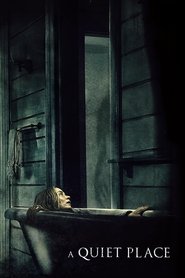
A Quiet Place (2018)
Watch the feet. Before any creature appears, the film teaches you to watch where a heel comes down — the raked sand path, the bare sole testing a floorboard. Krasinski's engine isn't the monster; it's the half-second between noticing a danger and finishing the decision about what to do, pried open and inhabited for two hours. Notice the planted-payoff craft inherited from Jaws — props and sounds set up early to detonate late — and how the texture and absence of sound becomes the suspense instrument.
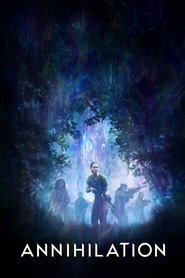
Annihilation (2018)
Two deer step from the brush moving in perfect mirrored unison, and the women just look — nobody explains it, nobody can do anything with it, and the looking is the whole event. Garland arms his protagonist with exactly the competence a thriller needs — soldier, scientist — then puts her somewhere that competence can't touch. Watch Rob Hardy's palette: greens pushed toward the toxic, water given an oily refraction, the Shimmer a soap-bubble membrane tinting everything inside it. The structural template is Tarkovsky's Stalker — a rule-governed zone whose logic warps as you go deeper.
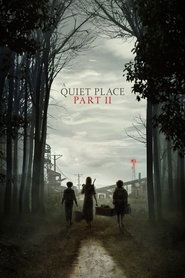
A Quiet Place Part II (2021)
The prologue is a clinic in comfort engineered to be removed: a pop fly into a gold Saturday afternoon, full bleachers, a sweating soda cup — Krasinski lingers in that warmth on purpose, borrowing Spielberg's family-in-peril grammar almost beat for beat. Then watch how the sequel deliberately shifts registers from the first film: creatures more visible, geography expanded, the machinery tilted toward action. That's not a lapse of nerve — it's the film choosing the mode it wants to live in, and seeing both back-to-back lets you feel the choice.
Watch these together and you'll start noticing something in every film you see afterward: the moment when a character stops being someone who acts and becomes someone who watches. Sometimes it's a gift (Lynch, Garland), sometimes a horror (Boyle, Reeves), sometimes a heresy against the genre itself (the Coens). And sometimes the deepest pleasure is the opposite — the pure, humming machine of cause and effect run flawlessly (Cameron, Krasinski). The through-line isn't a mood or a genre; it's a question every one of these directors answers differently: when the world stops responding to what people do, what is the camera for? Twelve films, twelve answers. Bring your patience, and watch the watching.