Sightlines · a mini film course
The Long Day Breaks: When the Camera Stays and the Clock Won't Stop
Every film on this list unfolds in a single, compressed stretch of time — one day, one night, one shift, one crisis — and almost all of them lock us into a single vantage point: a room, a car, a desk, a street, a kitchen. What connects them isn't just the ticking clock. It's what these filmmakers discovered you can do when you refuse to cut away. Deny the audience an overview, deny the characters an exit, and something remarkable happens: watching becomes an activity. We're no longer carried along by the story; we're locked in with it. Some of these films are about people acting brilliantly under pressure. The more haunting ones are about people who can see everything and can do almost nothing — and the camera stays with them anyway, because that, it turns out, is where the real drama lives.
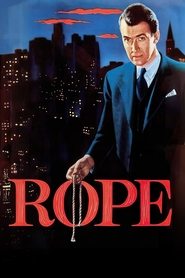
Rope (1948)
The grandfather of the whole experiment: Hitchcock builds a feature out of a handful of unbroken takes, the camera gliding through a Manhattan apartment on a set with walls that rolled away to let it pass. Watch how suspense here has nothing to do with surprise — you're given the crucial fact early, and the tension comes entirely from what you know against what the party guests don't. Notice how ordinary objects (a chest, a length of rope) accumulate charge simply by being in frame while everyone looks elsewhere. This is the film that proved a single room and a patient camera could out-thrill a chase.
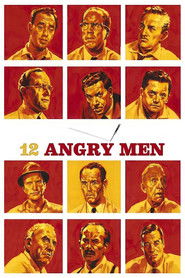
12 Angry Men (1957)
The crime is over before the film begins; it happened offscreen and can never be undone. All twelve men — and all of us — can do is interpret. Watch cinematographer Boris Kaufman (who shot Jean Vigo's poetic classics before emigrating) tighten the visual screws as the deliberation deepens: the room seems to close in, faces come nearer, the heat becomes something you can feel. Lumet built a thriller entirely out of inference, and the way each man's private wounds and prejudices leak into his reasoning is the true subject. Notice how one ordinary object, produced at the right moment, can rearrange an entire room.
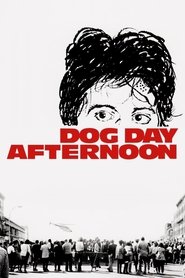
Dog Day Afternoon (1975)
A heist film where the heist stops mattering almost immediately — and what replaces it is stranger and richer. Watch the tension in Victor Kemper's camera: swinging, jostled, genuinely uncontained out on the Brooklyn street; pressed close and precise inside the bank, where the sweat is materially present. Lumet, following his own precedent from Fail Safe, uses no musical score — dialogue and silence carry everything. And watch the sidewalk scenes, where a man who came to do one thing discovers a crowd, and himself, in real time. It's a film about everything hidden being forced into the open at once, in a New York that feels documentary-real.
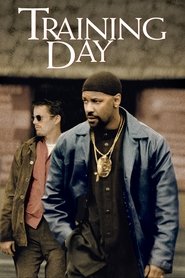
Training Day (2001)
The counterweight to the rest of the program: a film that runs the classic engine — see the situation, act, transform it — at full, confident roar, over one long day in Los Angeles. Watch how the Monte Carlo becomes the film's real location: Denzel Washington's Alonzo owns the wheel, the talk, the frame itself, and Ethan Hawke's rookie can't get out of any of them. Fuqua takes LA's actual racial and territorial geography seriously — this isn't backdrop, it's the machinery of the trap. Notice how corruption here works like an apprenticeship: each small compromise legitimizes the next.
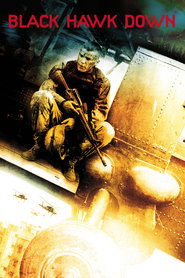
Black Hawk Down (2001)
Sold as the most kinetic war picture of its era, and secretly something stranger: watch how Ridley Scott spends two and a half hours dismantling the very action-movie engine he seems to be honoring. The pivotal image is a map dissolving into pure sensation — commanders reading clean blue icons on screens while the men on the ground can't tell you what street they're on. Sławomir Idziak, famous for lush, painterly work with Kieślowski, goes deliberately harsh and undersaturated here. Listen, too: the layered soundscape of rotors, radio chatter, and ambient dust descends directly from Apocalypse Now.
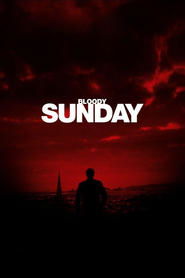
Bloody Sunday (2002)
Greengrass reconstructs 30 January 1972 as a thing going wrong in real time, shot as if a news crew happened to be there — jostled, late to the action, denied the orienting master shot. Watch for editor Clare Douglas's held blackouts between scenes: a second of nothing, no narration, no title, just you waiting in the dark like the gap between heartbeats. And watch James Nesbitt's Ivan Cooper begin the day certain his plan can shape events — and watch what the film does to that certainty. This is the template for a whole strand of modern cinema.
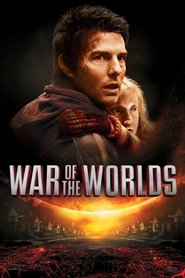
War of the Worlds (2005)
Spielberg, the great engineer of the heroic rescue, deliberately breaks his own machine. The design rule is total: the film never leaves Ray Ferrier's eye-line — no command center, no general at a map, no scientist explaining the threat. Watch Janusz Kamiński's drained, ash-grey palette, which carries the photographic memory of 9/11 into a science-fiction frame. And watch how Spielberg withholds the threat Jaws-style, staging terror through reaction shots and offscreen menace — while his hero, a failing father, is reduced to one animal imperative: keep the child alive.
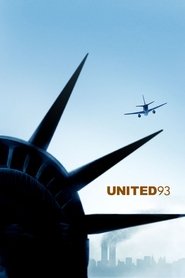
United 93 (2006)
Greengrass applies the Bloody Sunday method to 9/11: transcript-based dialogue, real participants playing themselves, Barry Ackroyd's camera behaving like an embedded observer rather than a storyteller. Watch the control rooms above all — trained, competent people with more screens and information than anyone in history, slowly discovering that none of their procedures describe what's happening. A green dot on a radar screen, a callsign repeated into silence: Greengrass builds dread out of hundreds of these small, undramatic moments, and the film feels less like a thriller than an instrument left running.
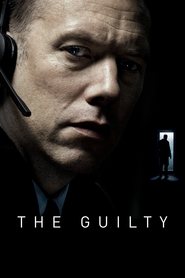
The Guilty (2018)
One man, one headset, one cool blue room — and an entire thriller you build by ear. Watch how strictly Möller holds the rule: we get exactly the sounds the dispatcher gets and not one image more, so every caller's world has to be assembled in your imagination from breath, road noise, and silence. The framing is relentlessly tight, the exterior world visible only as a window. And notice the film's quiet question about listening itself: whether hearing more would help, or whether the problem is what we do with what reaches us — how easily another person becomes a screen for the story we need them to be.
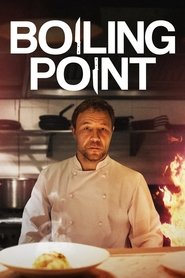
Boiling Point (2021)
Ninety-two minutes, one take, no cut — the camera meets head chef Andy Jones at the restaurant door and simply never leaves him. Watch what the unbroken shot does that editing can't: no cut ever arrives to spare him (or us) an inspection, a phone call, an old rival walking in with a critic. The swing door between the warm murmur of the dining room and the white fluorescence of the kitchen is the film in miniature. A kitchen is cinema's purest machine for competent action — ticket prints, hand reaches, plate goes up — and the film's subject is a man expected to be that machine's conductor while his own life comes apart.

Warfare (2025)
Watch for the withheld reverse shot. A soldier looks at something offscreen, and the camera — against every war-movie instinct — never swings around to show you what he sees. Mendoza and Garland inherit the eye-level, inside-the-chaos camera that Saving Private Ryan invented, then remove the thing that camera always provided: legibility. Built from the testimony and traumatic recall of the people who were there, the film treats memory's gaps as its very form. The most trained soldiers imaginable spend most of the runtime pinned, waiting, looking — and the film insists that this, not the highlight reel, is what combat actually consists of.
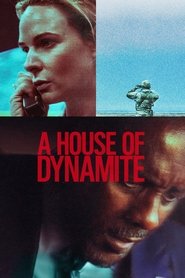
A House of Dynamite (2025)
Bigelow stages the nuclear-thriller tradition of Fail Safe and Dr. Strangelove — simultaneous institutional spaces, real-time compression, ensemble performance calibrated to professional function — around a single missing word. A point of light climbs a screen with a vector, an altitude, a countdown, and no name: and the most elaborate response apparatus ever built cannot act against an adversary it cannot identify. Watch her signature grammar — shoulder-mounted cameras, institutional spaces lit in their actual ugliness, no establishing-shot grandeur — applied here at the scale of the state itself.
Watch these together and a hidden history of the movies comes into view. The oldest engine of cinema — see the problem, act, solve it, cut to the next — runs at full power in Training Day and in Andy Jones's kitchen, and you can feel how satisfying that engine is. Then watch film after film jam it, on purpose: the controllers who can see everything and touch nothing, the dispatcher who can only listen, the soldiers who wait, the war room that cannot answer the one question that matters. What emerges is a lineage — Hitchcock's rolling walls begetting Lumet's locked jury room, Bloody Sunday begetting United 93 begetting Warfare — and a shared discovery: that when the camera watches rather than chases, when time is allowed to stretch and space becomes a trap, the audience stops being a passenger and becomes a participant. These films don't just show you people under pressure. They put the pressure on you — and that, watched attentively, is one of the great pleasures cinema offers.