Sightlines · a mini film course
The Art of Watching: Eleven Films Where Seeing Is the Story
Most movies run on a simple engine: a character sees a problem and acts to fix it, and the editing hurries us from cause to effect. The films on this list — spanning seventy years, five countries, and every register from slapstick to dread — all, in their different ways, unplug that engine. Their characters look at worlds they cannot change: homecomings, dying houses, boxed-in estates, villages full of secrets. And their cameras respond in kind — holding shots longer, keeping the whole depth of a room in focus, watching rather than chasing. What emerges is a different kind of pleasure: not "what happens next?" but "what am I being shown, and what does it ask me to notice?"
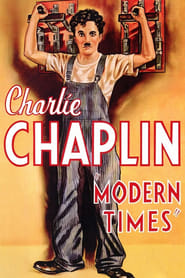
Modern Times (1936)
Start with the hands. Chaplin builds his comedy backwards from tiny gestures — the Tramp clocks off the assembly line but his hands keep twitching, still tightening bolts that aren't there — and lets a single failing body reveal the whole machinery of industrial life around it. He never shows you the Depression and then sends a hero to fix it; he gives you one undersized man out of step with a conveyor belt, and the world assembles itself as the consequence of the gag. Watch how the factory's rhythm is laid down first, patiently, so a body can expose it by breaking step.
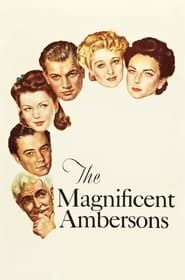
The Magnificent Ambersons (1942)
Watch the great dark staircase, where two people on different landings share one unbroken shot, both knife-sharp, as if living in different decades of the same house. Stanley Cortez's painterly, shadow-soaked photography keeps the full depth of every frame in focus, so nobody can be cut away from anybody — the living and the already-fading share a single breath of film. Notice too the mirrors at the ball, multiplying dancers into a vanished abundance: this is a film about a beautiful house slowly consuming itself, and the camera grieves accordingly.
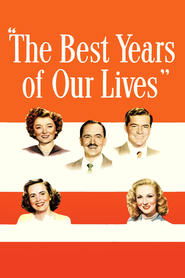
The Best Years of Our Lives (1946)
Three veterans ride home in the glass nose of a bomber — the one part of the aircraft built for nothing but looking down — watching golf courses and factory grids slide past in silence. That image is the film's whole method: men trained for years to act, handed back to a world that only asks them to look. Gregg Toland's deep-focus photography lets whole rooms play out in single shots, foreground and far background equally sharp — watch the famous drugstore scene, where two dramas unfold at opposite ends of one frame without a cut.

Pather Panchali (1955)
Two children push through a field of white grass, chasing a hum they can't yet name, until a train drags its smoke across the sky. They don't board it or run after it; they simply watch it pass — and that watching is the film's grammar. Ray, in his very first feature, made a movie out of a child's eyes taking in the world: weather, water, the small joys and indignities of poverty observed without a trace of condescension. Subrata Mitra, a still photographer with no film experience, shoots it all with a photographer's patience — rain on a pond, wind in the reeds, faces in soft natural light.
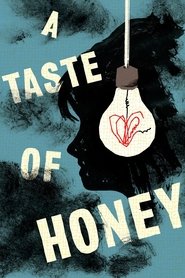
A Taste of Honey (1961)
Start with the walk: Jo drifting through Salford past canal water, latticed ironwork, fairground neon smearing against grey sky — heading nowhere in particular, and the film lets her. Walter Lassally finds real beauty in industrial desolation without ever prettifying poverty, and Rita Tushingham's performance is a marvel of quiet responsiveness: an intelligence making continuous small adjustments to conditions she did not choose. Watch how the film trusts these unhurried in-between stretches as much as any scene of "plot."
Weekend (1967)
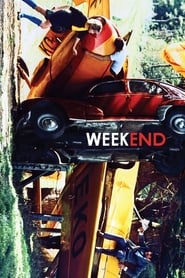
The shot everyone remembers: the camera glides sideways along a country road for seven or eight minutes, past stalled cars, picnickers, a sailboat on a trailer, kids playing ball — all filmed with the same even, indifferent slide, scored by nothing but honking horns. Nobody's honking changes anything, and that's the point: Godard sets up a perfectly conventional plot and then openly lets it rot away, cannibalizing the road movie, black comedy, and political essay as he goes. Watch how Coutard's tracking camera refuses to privilege anything — catastrophe and picnic get the same glide.

La Cérémonie (1995)
Chabrol's camera observes rather than editorializes: clean, frontal, patient compositions that place you at a slight clinical distance, like a cool surveillance of a comfortable household. Watch what happens every time someone hands the housekeeper Sophie a piece of paper — a list, a note, a schedule — and how carefully her face goes blank. This is a film built on surfaces that ask to be read: a well-appointed house full of books and records where everything is lit, visible, and quietly withholding, and where the real drama is in the decoding.
La Haine (1995)
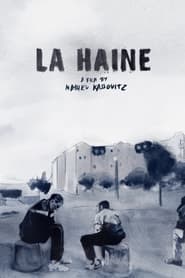
A voice tells a joke about a man falling past window after window, saying to himself: so far, so good. Everything in the film happens in that suspended interval — three friends drifting through twenty-four hours, clocked off in on-screen timestamps like a countdown, seeing an unjust situation from every angle and finding no action that bites. Pierre Aïm's black-and-white widescreen photography makes the concrete towers of the estate simultaneously harsh and monumental; watch for the mirror scene, where borrowed movie-tough-guy poses become a way of trying on a self.
Satantango (1994)
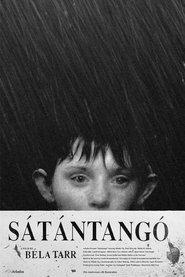
The film opens on cows: for several minutes the camera tracks a herd shuffling out of a collapsing farmyard into the grey, and by the time the take releases you, Tarr has taught you how to watch the next seven hours — not for what happens, but for time itself moving through a ruined place at the speed of an animal with nowhere to go. Shots routinely run five, eight, ten minutes; rain and mud become characters; the villagers wait, drink, and watch each other wait. Give yourself over to the duration and the film becomes hypnotic rather than punishing.
The Child (2005)
The camera stays a few feet behind Bruno's neck as he half-jogs through the grey Belgian city of Seraing — close enough to feel his gait, never far enough ahead to read his face. The Dardennes refuse, on principle, to tell you what he's thinking or why he is the way he is: no backstory, no music, no psychology, just hands, money, gestures. Watch the hands — everything the film knows about responsibility, debt, and what a person is worth, it tells through what the hands do.
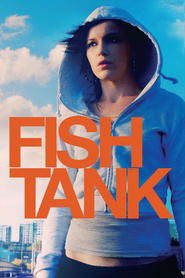
Fish Tank (2009)
The first time you really see Mia, she's alone in a gutted flat, headphones on, drilling the same eight counts of a dance routine into a concrete room nobody wants — no audience, no mirror. Arnold routes the girl's whole predicament through her body: the dancing says what the dialogue never could. Robbie Ryan shoots in a tall, narrow, nearly square frame that crops the wide world away, boxing Mia in exactly as the title promises — watch how the shape of the image itself becomes her situation.
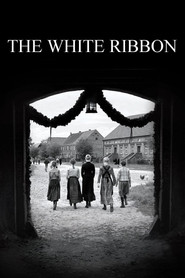
The White Ribbon (2009)
Start with the wire: strung between two trees, it brings down the doctor's horse — and we never see the hands that tied it. Haneke gives you injuries and withholds causes, for two and a half hours, across a village of pastors, barons, and disciplined children, until the not-seeing becomes the subject itself. The camera almost never moves, and the editing ends scenes just before their discharge — a punishment approaches and the door closes on it — leaving you, like the village schoolteacher, to look, infer, and endure.
Watched together, these films train the same muscle from eleven different angles. Chaplin and Welles build worlds in single deep frames; Wyler and Ray fill those frames with people who can only look at what they've lost or long for; Godard and Tarr stretch the shot until time itself becomes the drama; Kassovitz, Arnold, and the Dardennes strap the camera to bodies that keep moving because moving is all that's left; Chabrol and Haneke turn the clean, still image into a puzzle you must read. None of them will hand you resolution on the usual schedule — which is exactly why they reward the patient eye. Go in willing to watch the way their characters watch, and each film teaches you how to see the next one.