Sightlines · a mini film course
The Job: A Dozen Films About Craft, Code, and the Cost of Doing It Well
Every film on this list is, at heart, about people who are very good at something — planning a robbery, cracking a safe, running a con, working a case — and about what that excellence costs them. Across seventy years, these directors keep returning to the same fascination: the camera slowing down to watch skilled hands at work, often in silence, often at night, often in real time. Watch how each film treats the job itself — as ballet, as labor, as trap, as magic trick — and you'll see a whole tradition passing its tools from one generation to the next.
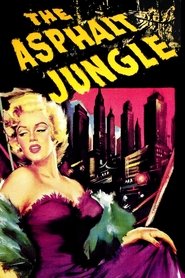
The Asphalt Jungle (1950)
This is the template so many later films borrow: the crew of specialists, the meticulous plan, the pressure of ordinary human wants pressing in on professional discipline. Watch Harold Rosson's cool, observational photography — deep shadow without showiness — and how Huston stages his dangerous men in tight conversational medium shots, letting positioning and eye-lines do the work. Notice how each criminal is defined by his competence, and how the film treats the city itself as a kind of jungle wearing an asphalt skin.
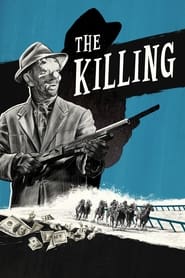
The Killing (1956)
Kubrick takes the doomed-heist blueprint and rebuilds it as a clock. The film's boldest move is its scrambled timeline: the same day replayed from different angles, each man's piece of the plan slotted in out of order, stitched together by a coolly confident narrator. Watch the tension between the plan's rational design and everything a plan can't account for — and enjoy the famous tracking shots gliding through apartment walls, which Kubrick fought his veteran cinematographer to get exactly his way.
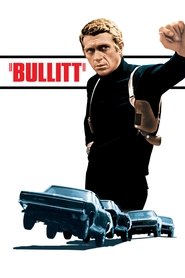
Bullitt (1968)
The revelation here is what Yates doesn't cut around: long stretches of a competent man simply working — driving, waiting in corridors, reading a room, buying frozen dinners at 2 a.m. Most thrillers treat that as filler; Yates treats it as the movie. Watch for the tiny, undramatic gesture just before the legendary car chase — a hand reaching down to buckle a seatbelt, no music, no dialogue — and notice how the real San Francisco streets give the whole film its documentary charge.
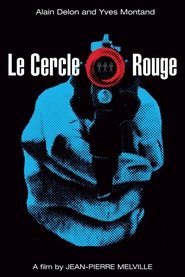
Le Cercle Rouge (1970)
Melville is the great poet of the professional code, and this is his cathedral. Henri Decaë's camera watches rather than chases — shots held long past where anyone else would cut, choices conveyed through timing and spatial arrangement rather than dialogue. The centerpiece heist runs roughly twenty-five minutes with no talk and no score, only breathing and the creak of metal. Sit with the patience; it's the point.
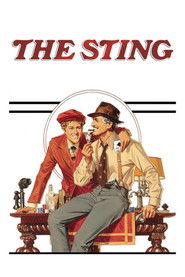
The Sting (1973)
Here the vault is replaced by a con, and the craft on display is deception itself — treated not as a moral failing but as skilled labor requiring nerve, timing, and teamwork. Watch Robert Surtees's deliberately old-Hollywood photography, all motivated light and classical grace, dressing a 1970s film in period clothes. Pay attention to who knows what at any moment; this film plays its audience like an instrument, and part of the pleasure is realizing you're part of the game.
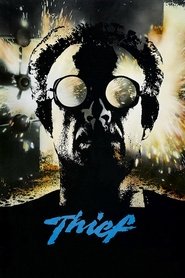
Thief (1981)
Mann's debut invents his nocturnal visual grammar: wet streets that throw back light, neon smearing across asphalt and car hoods, a Tangerine Dream score pulsing like machinery breathing. The safecracking centerpiece is shot like a documentary about a master craftsman — real tools, real heat, real duration, everything legible. Watch how the film prizes competence and then quietly asks what competence is actually worth to a man trying to buy back lost time.
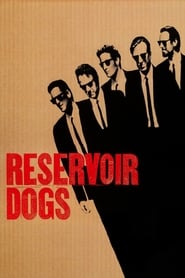
Reservoir Dogs (1992)
Tarantino's most radical move is an act of subtraction: this is a heist film that never shows the heist, only the before and the after, mostly in one warehouse. Watch how physical proximity encodes threat — the camera stays close enough to read faces but respects the charged space between bodies — and how the color-coded pseudonyms, meant to keep the men safe from each other, keep them strangers instead. A film about action built around a man who can only watch.
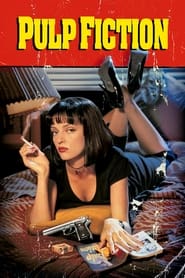
Pulp Fiction (1994)
Tarantino shuffles the deck: three chapters and a bookend deliberately out of sequence, so before-and-after become rooms you can enter in any order. Watch how restrained the camerawork actually is — long takes, low angles, static frames that let dialogue breathe — and how the film holds mortal violence and small talk about fast food in the same steady grip. Notice the hitman's preparation rituals, inherited straight from Melville.
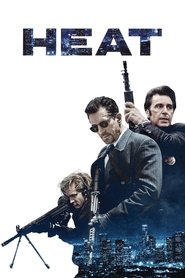
Heat (1995)
The summit of the cop-and-criminal mirror study: two masters, one on each side of the law, each having traded away everything else a life might contain. Dante Spinotti photographs Los Angeles not as noir myth but as pure function — freeways, glass towers, container terminals — in the blues and grey-greens of surveillance, with warm domestic interiors registering as fragile. The most famous scene is just two men talking over coffee, no music, and it's worth savoring why, in a nearly three-hour action film, that stillness lands hardest.
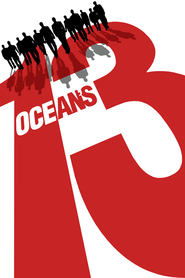
Ocean's Thirteen (2007)
The heist as pure pleasure, in mint condition. Soderbergh (shooting under his own pseudonym) works handheld and close, and his great visual trick is finding pockets of privacy inside the spectacle — one calm, working man standing still amid ten thousand gamblers on an amber-gold casino floor. Watch how loyalty, not greed, drives the machine: the crew answers an offense against one of their own as a matter of honor.
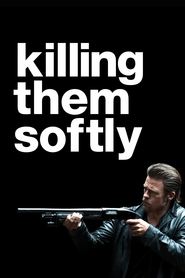
Killing Them Softly (2012)
Dominik works by negation: where the heist film celebrates competence, this one deromanticizes everything — the palette bilious and desaturated, the compositions trapping men across tables in cramped two-shots, because talk is the real currency here. Watch what happens when violence arrives: instead of resolving anything, it's slowed down and displayed like jewelry, gorgeous and meant to make you a little sick. The underworld runs exactly like a market — everyone underpaid, everyone squeezed.
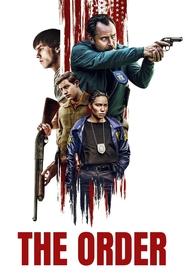
The Order (2024)
Kurzel's film openly inherits the Mann tradition — the mirrored cop-and-criminal two-hander of Heat, the process-fixated nocturnal craft of Thief — and turns it on the manufacture of a true believer. Adam Arkapaw renders the Pacific Northwest cold, wet, and depopulated, interiors lit by weak practical sources. Watch how calmly the film stages its most disturbing material: hatred delivered in the level voice of a reasonable man, at a family dinner table, with nothing in the frame asking you to flinch.
Why watch them together? Because these films are in open conversation — Kubrick inherits Huston's blueprint, Melville distills it, Mann electrifies it, Tarantino dismantles it, Soderbergh polishes it, Dominik indicts it, Kurzel weaponizes it. Watch in rough chronological order and you'll see techniques passed hand to hand: the silent real-time job, the crew of specialists, the wet night streets, the professional's thirty-second code. And you'll see one question asked twelve ways: when a person becomes nothing but their skill, what's left of them when the job is done? The films never answer the same way twice — which is exactly why the tradition keeps renewing itself.