Sightlines · a mini film course
Seeing Everything, Changing Nothing: Twelve Films About the Helpless Eye
Most movies run on a simple, satisfying promise: a person sees a problem and does something about it. The hero acts; the world bends. The twelve films on your list are all, in their different ways, about what happens when that promise breaks. Their protagonists are watchers — photographers, analysts, agents, parents, marchers — people who can perceive with terrible clarity and yet cannot act, or cannot act in time, or discover that acting changes nothing. Again and again, the camera in these films watches rather than chases. Space becomes a trap. Time is allowed to stretch. And the drama shifts from what will the hero do? to something stranger and more honest: what does it cost just to see?

Night of the Living Dead (1968)
Start here — the headwaters. Romero shot his siege in grainy, high-contrast black-and-white, borrowing the handheld immediacy of newsreel and war reportage, so the horror arrives looking like the evening news. Watch how the film stages the real battle inside the farmhouse: fear, ego, and division doing as much damage as anything at the windows. And notice the official broadcasts on the radio and TV — how reassurance itself becomes untrustworthy.
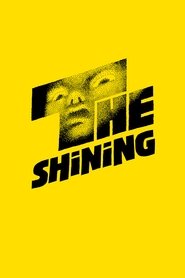
The Shining (1980)
Kubrick took the Steadicam, a brand-new rig built to smooth out shaky footage, and turned it into a way of thinking. Watch the low, gliding shots behind Danny's tricycle — and listen: carpet, hardwood, carpet, the sound bracing you before every corner. Notice too that the Overlook's geography quietly refuses to add up; you cannot draw a floor plan of this hotel, and that impossibility is the point. The building is less a setting than a mind the family is moving inside.
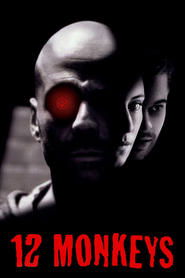
Twelve Monkeys (1995)
Gilliam casts an action star and then spends the film gently disabling everything that stardom promises. Watch how the tilted angles, distorting lenses, and crowded, vertiginous compositions keep pressing in on Cole, and how a single fragment of memory keeps returning, slightly different each time, refusing to be read. This is a thriller built on looping rather than momentum — let it loop.
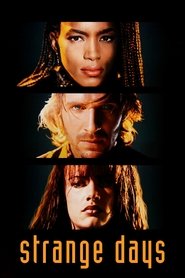
Strange Days (1995)
The opening sequence you don't watch — you wear. Bigelow built custom rigs to put you inside someone else's eyes and body, and the film maintains two distinct visual registers: the grimy, neon-soaked "real" Los Angeles, and the raw first-person clips that people buy and sell like contraband feeling. Notice how the film keeps asking what it means to relive someone else's experience — and whether watching implicates you.
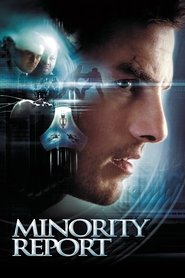
Minority Report (2002)
The film's truest image is a man standing at a wall of glass, sorting translucent fragments of a crime that hasn't happened — doing everything to an image except acting on it. Kamiński's bleach-bypass photography drains the color to cold blues and steel, giving the future the texture of a bad memory. Watch how Spielberg turns detection into reading: the visions arrive fragmented and out of order, and the whole thriller becomes an act of interpretation.
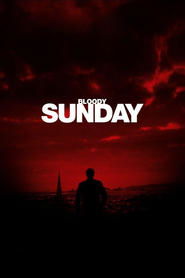
Bloody Sunday (2002)
Greengrass films one day, in real time, as a thing going wrong. The embedded handheld camera is jostled, late to the action, occasionally losing its subject behind a head or a wall — you're denied the orienting overview a classical film would give you. Watch especially for the cuts to black between scenes: a held second of nothing, like the pause between heartbeats, in which you're left to wait and dread.
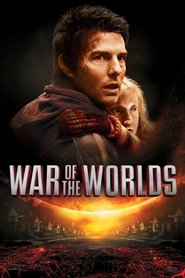
War of the Worlds (2005)
Spielberg's great refusal here: no generals at maps, no scientists naming the threat, no president. The film never leaves one father's eye-line, and Kamiński shoots it in bleached, ashen light — catastrophe as weather. Watch how the machines are withheld, revealed in glimpses and reaction shots, and how the awe-of-the-sky imagery of Close Encounters — upturned faces, light from above — is deliberately inverted from wonder into dread.

28 Weeks Later (2007)
The pre-credits sequence — a candlelit farmhouse at night, then a panicked flight across open country — is a small masterclass in moving from claustrophobia to exposure. Once the outbreak resumes, watch what the camera does during attacks: whip-panned, strobed, pushed toward abstraction, so that violence arrives as pure sensory overload. You never watch an infected person decide. There's nothing to read but drive — and the film asks whether the systems of control are any more legible.

Antichrist (2009)
Von Trier opens with a consciously beautiful overture — lustrous black-and-white slow motion, every droplet legible — which the rest of the film sets about corroding. Watch the war between that control and the restless handheld camera in the forest; listen to the acorns falling on the cabin roof all night, a sound that says what no line of dialogue can. This is a two-hander about grief in which nature itself becomes a pressure, not a backdrop.
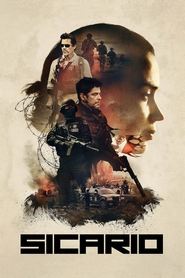
Sicario (2015)
Watch where Villeneuve puts Emily Blunt: in doorways, in back seats, at the edges of briefings where the real decisions are made somewhere she is not. The film's entire argument is encoded in that blocking — a capable, clear-eyed agent positioned as the person things happen near. Deakins's wide desert frames dwarf every human figure without romanticizing the land, and the film keeps converting what should be action into something you can only watch.

Civil War (2024)
The camera behaves like a fifth member of the press team — handheld, searching, sometimes caught flat-footed by violence erupting at the frame's edge. Then, mid-chaos, the motion stops: one perfectly composed still, a shutter click, and motion resumes. Watch your own body when the film does this. It's asking the photographer's question — when to shoot and when to intervene — and making you feel the cost of turning a living moment into an image.
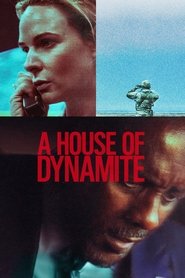
A House of Dynamite (2025)
Bigelow gives her characters the most elaborate apparatus ever built for seeing and responding — war rooms, secure terminals, every sensor reporting cleanly — and then watches, in real time, as the machinery seizes on one missing word: who. Notice her signature grammar: shoulder-mounted cameras at close quarters, institutional spaces lit in their actual ugliness, no grand establishing shots to make the machinery of violence beautiful. Everything hangs on a point of light that has a vector, an altitude, a countdown — and no name.
Watched together, these films teach you to notice something most cinema is designed to hide: the gap between seeing and doing. Each one finds a different formal invention for that gap — a freeze into a still photograph, a cut to black, a gliding camera in an unmappable building, a threshold a character can't cross. And each one implicates you, the viewer, in its central question, because watching is what you're doing too. By the twelfth film you'll find you've developed a new reflex: instead of asking what the hero will do next, you'll be asking where the camera has chosen to stand, what it's allowed to see, and what it — and you — are helpless to change. That reflex is the course.