Sightlines · a mini film course
Eyes Wide, Hands Tied: Twelve Films About Watching
There's a moment in nearly every film on this list where somebody sees everything and can do nothing. A photographer freezes a firefight into a still. A man scrubs through images of a crime that hasn't happened. A crowd swears nobody saw what they all saw. These twelve films — from a Paris café in 1966 to a war room in 2025 — are all wrestling with the same nerve: the gap between seeing and doing. Most of them shoot handheld, close, and rough, because the camera itself has become a witness rather than a storyteller: it watches, searches, gets caught flat-footed, holds a face longer than politeness allows. Watch them together and you'll start to feel how each film either mourns that gap, weaponizes it, or forges right through it.

Masculin Féminin (1966)
Godard builds whole scenes out of the interview: long handheld takes in grainy, high-contrast black-and-white, where a young man asks questions — about love, politics, America — and the camera holds the face of someone not-quite-answering. Notice how violence erupts at the edge of the frame and the conversation simply continues; nobody in this film can convert what they see into anything. Willy Kurant's photography fuses portraiture with documentary accident, and the "consumer survey" scenes borrow their form directly from real sociological filmmaking of the era. It's the youth film as inquiry — a generation examined like a specimen, tenderly.
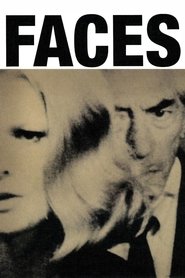
Faces (1968)
Start with the laughter — always too hard, a beat too long — and watch what the camera does with it. Al Ruban's handheld 16mm presses a foot from people's teeth and stays there, catching pores, sweat, and the small muscular betrayals of people performing emotions they don't feel. Classical movies use a close-up as a quick relay: register the feeling, then act on it. Cassavetes jams that relay open and refuses to let anything discharge, which is why the film feels less watched than endured — in the best way.
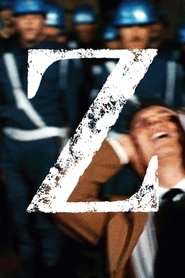
Z (1969)
When the violence comes, Costa-Gavras throws the camera into the legs and panic at ground level, cutting so fast you never get the clean overhead view — and this is the film's moral design, because officials will soon insist that nobody could possibly say what they saw. The chaos of the image mirrors the engineered chaos of the cover-up. Shot by Raoul Coutard, the New Wave's great handheld cameraman, it's the film that proved the political thriller could grip a mainstream audience — an investigation staged with the urgency of an action picture and the anger of an editorial.
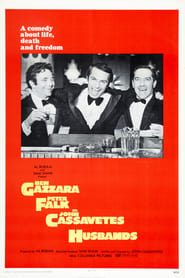
Husbands (1970)
Three middle-aged men bury a friend in the opening minutes, and everything after is flight from that grave. Watch the notorious bar scene where they bully a woman into singing "with feeling," again and again — they're auditioning an emotion they can't reach themselves. Victor Kemper's long lenses hunt faces and catch them off-balance, half-cut by the frame, held past comfort. It looks like a buddy comedy and behaves like an autopsy of one.

Full Metal Jacket (1987)
Kubrick splits the film into two visual registers, and the split is the argument. Boot camp is all geometry — symmetrical frames, drilling formations, long lenses flattening recruits into interchangeable ranks — the architecture of a machine for erasing selves. Then watch what the camera does with faces: it holds on them as pressure gathers in small ripples of expression, intensity climbing toward a threshold, and refuses to let you read it cleanly. An American war film made by an exile in England, it observes its subject from a cold, deliberate distance.
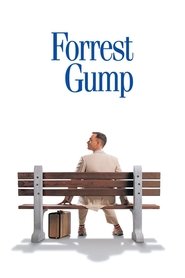
Forrest Gump (1994)
The famous trick — a fictional man composited seamlessly into real archival footage, shaking hands with presidents, dead men speaking new lines — is more radical than its warmth suggests. Documentary footage carries a promise: the camera was there. Zemeckis forges that promise, and Don Burgess's classically composed, golden-lit photography is disciplined precisely so the fakery stays invisible. Watch it as the sunniest possible film about how completely the recorded image can lie to you.
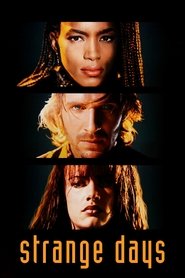
Strange Days (1995)
The opening puts you inside someone else's eyes before it tells you whose — a robbery lived through a borrowed body, recorded by a device that captures the full sensorium and plays it back inside your skull. Bigelow built custom rigs to sustain these unbroken first-person sequences, and sets them against a grimy, neon-soaked noir Los Angeles. Notice the two distinct ways of looking the film maintains, and how each implicates you differently. Made years before GoPro and bodycams, it saw first-person vision coming — as a product, and as an addiction.
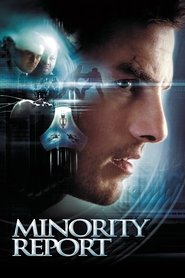
Minority Report (2002)
The film's truest image is a man before a wall of glass, conducting fragments of the future with gloved hands — reading, sorting, unable to act on what he sees. Spielberg and Janusz Kamiński drained the color through a bleach-bypass process, crushing the future into cold blues and steely grays: a detective story where detection means deciphering images that arrive out of order. Watch how it welds Hitchcock's innocent-man engine to science fiction's biggest question — if the future can be seen, is it still open?
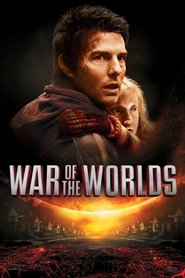
War of the Worlds (2005)
No generals at maps, no scientists naming the threat, no orienting overview: Spielberg locks the film to one man's eyeline for two hours of catastrophe. Kamiński shoots it in bleached, ash-choked light that carries the photographic memory of 9/11, and the great early set pieces work by withholding — the threat glimpsed, delayed, read off terrified faces. It's a blockbuster built by a master of the heroic rescue that deliberately refuses to let its hero's actions matter. Feel how strange that is from the inside.

28 Weeks Later (2007)
The pre-credits sequence is one of the great openings in modern horror: a candlelit farmhouse under siege, then a sprint across open English countryside — and a choice made in that sprint that the whole film scales up to the size of a civilization. Once the outbreak resumes, Chediak's camera goes violently subjective: whip-pans, strobing, violence rendered as pure sensory overload rather than legible action, because the infection itself skips thought entirely. Watch how every system of containment makes things worse the harder it clamps down.
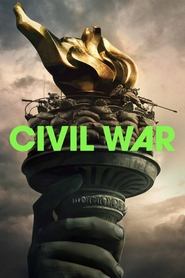
Civil War (2024)
Rob Hardy's camera behaves like a fifth member of the press team — handheld, searching, sometimes caught flat-footed by violence erupting at the frame's edge. Then, mid-firefight, motion stops: one perfectly composed still, a shutter click, and movement resumes as if nothing had been taken out of it. Watch your own body when the film does this. A British production looking at American catastrophe with an outsider's detachment, it descends from the great combat-correspondent dramas and asks their hardest question: is documenting suffering moral seriousness, or a sublimated thrill?
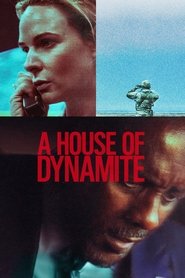
A House of Dynamite (2025)
A point of light on a screen has a vector, an altitude, a countdown — everything except a name, and everything hangs on that missing word. Bigelow applies her shoulder-mounted, unglamorous, real-time grammar to the nuclear command chain: institutional spaces shot in their actual ugliness, professionals whose entire apparatus is built for instant response, watching it seize up because retaliation needs an addressee. It's the Cold War procedural of Fail Safe revived for an era when the hardest intelligence problem is who.
Watched together, these films become a single long argument about the modern image. The Cassavetes and Godard films show you what it looks like when people lose the ability to act and cinema slows down to sit with them. Z and Civil War and Strange Days ask what a camera owes the violence it records. Gump and Minority Report probe whether an image can be trusted at all. And the Spielberg and Bigelow thrillers stage the same paralysis at the scale of families and nations. Almost all of them shoot handheld — not as a style, but as a stance: the camera as a body in the room, seeing what the characters see, no wiser than they are. Pay attention to when each film gives you the overview and when it withholds it. That choice, more than any plot, is where these twelve films are really talking to each other.