Sightlines · a mini film course
Watching and Enduring: Films That Ask Us to Bear Witness
There is a particular kind of cinema that refuses to let its characters save the day. Instead of building toward a decisive act that changes everything — the rescue, the revenge, the resolution — these films place a person inside an unbearable situation and ask them simply to look. The viewer is placed there too. What unites this remarkable group of films, spanning eight decades and half a dozen national cinemas, is that each one finds a different way to make witness the central human act. Some do it through comedy, some through formal austerity, some through sheer duration; all of them reward a viewer who is willing to trade the comfort of plot momentum for something deeper and stranger.
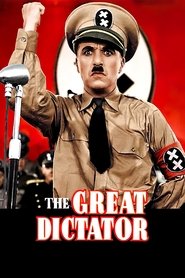
The Great Dictator (1940)
Watch for the moment when Chaplin stops moving. His whole career was built on a body in perpetual motion — dodging, threading, tumbling — but in one extraordinary sequence, Hynkel goes quiet and lets a balloon drift around him. The balloon happens to be painted like a globe. Notice how the comedy and the horror inhabit exactly the same image: the dance is genuinely beautiful, and the thing being danced with is the world. Karl Struss, who co-photographed this film, had worked with Murnau on Sunrise and brought a luminous closeness to the film's intimate scenes, while the rally sequences are built as a deliberate parody of Riefenstahl's Triumph of the Will — the same podium angles and crowd geometry, now made absurd. The film was independently produced and ends in a way no Hollywood studio would have approved. Let it surprise you.
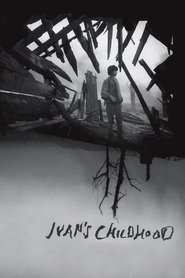
Ivan's Childhood (1962)
Tarkovsky's first feature is built across a hard seam between two completely different worlds, and the cut between them is the film's whole argument. Watch how abruptly the film moves between the wartime missions and the dreams — no dissolve, no warning chord, just a flat splice from one kind of reality into another. Cinematographer Vadim Yusov shoots the war in deep-focus night photography, pressing the boy's small figure against enormous threatening skies; the dreams are lit in something closer to radiance, white birch trees and bright water. These are not flashbacks explaining the plot. They are a lost country that the war has made unreachable. The film's sorrow lives entirely in that contrast, and in the hardness of the cut between them.
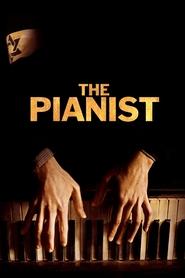
The Pianist (2002)
Polanski organizes this film around windows. Again and again Szpilman is pressed back into the dark of a room, watching something happen on the street below that he can do nothing about. Pay attention to how little the camera pushes you toward action — cinematographer Paweł Edelman keeps the palette cool and desaturated, the framing steady and observing, refusing both nostalgia and expressionist drama. Survival here is not presented as heroism or cunning; it is presented as luck and the arbitrary mercy of others. Polanski, who survived the Kraków ghetto as a child, declined to direct Schindler's List. This film is his answer to that choice: a portrait of witness rather than rescue.
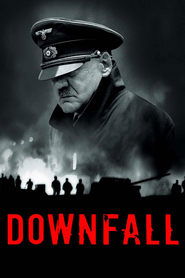
Downfall (2004)
The film takes place almost entirely underground, and Rainer Klausmann's camera stays close — handheld in the bunker corridors, trapping faces in shallow focus, never pulling back to give you a safe overview. Watch the map-room scenes with particular care: Hitler reads the situation and issues orders with complete confidence, moving pins across maps to represent armies that no longer exist. The terrible comedy of it — and it is a kind of comedy, though a harrowing one — is that the machinery of command keeps running long after it has lost any connection to reality. The film dares to show Hitler as a human being, with charm and tenderness toward his secretary, and refuses to let that humanization become either excuse or exoneration. Sitting with that discomfort is the experience the film is designed to create.
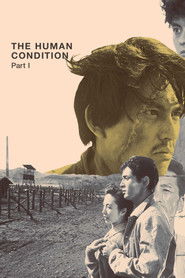
The Human Condition I: No Greater Love (1959)
Cinematographer Yoshio Miyajima uses the wide GrandScope frame to compose confinement: rows of labourers, fence lines, watchtowers, the receding geometry of the camp organized across the full width of the image. Notice how the frame itself argues against the hero — a single figure standing in that expanse looks like a comma in a sentence the world has already written without him. Kaji arrives believing that humane treatment and productive efficiency are the same argument, that conscience can survive inside a coercive system if it is practical enough. The film's first movement is the slow, meticulous demonstration of what happens to that belief. This is the first part of a nine-and-a-half-hour trilogy; watch it knowing that Kobayashi considered it one continuous work.

Salò, or the 120 Days of Sodom (1976)
Tonino Delli Colli's cinematography is deliberately, provocatively beautiful — cool, even light, polished floors, measured medium shots that hold everything at the same calm distance. The restraint of the image is the argument: Pasolini refuses close-up horror and refuses darkness, keeping the lens steady and the framing wide, so that what you see is always organized, architectural, procedural. The film structures itself as Dante structured the Inferno — explicit chapter headings, a graded descent — and the four masters who run the villa are presented not as monsters but as bureaucrats, their appetites administered with the same blandness as a committee meeting. What Pasolini is examining is the relationship between power, consumption, and fascism, and the form of the film is inseparable from the argument. Approach it as you would a piece of political philosophy that happens to be almost unbearable to sit through.
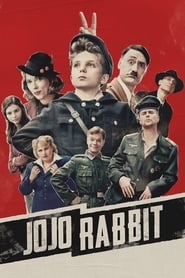
Jojo Rabbit (2019)
Mihai Mălaimare Jr.'s cinematography gives you bright colors, symmetrical framing, and a picture-book orderliness that renders Jojo's world as a toy version of history — a deliberate choice that mirrors the boy's own understanding of it. Watch the imaginary Hitler not as a joke about Hitler but as a portrait of how indoctrination works: the film's argument is that fascism reaches children not as ideology but as belonging, as a made-up friend who agrees with everything you need to believe. Waititi casts himself in the role and plays it as pure ten-year-old wish-fulfillment. The film sits in a line running directly from Chaplin's Great Dictator and Lubitsch's To Be or Not to Be — the tradition of deflating the tyrant through comedy — but adds something neither of those films quite managed: the interior view of a child who has been made to love the lie.
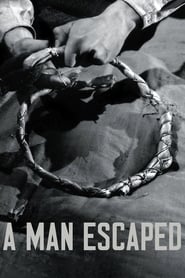
A Man Escaped (1956)
Bresson shoots this film in fragments. There is no establishing shot that gives you the architecture of the prison — instead, the camera stays close to Fontaine's hands: the wood of the door, the wire being braided, the spoon sharpening against stone. You come to know the prison the way a prisoner knows it, through touch rather than sight, surface by surface. Burel's grey, even light refuses all drama. The film tells you in its title that the escape succeeds, so suspense is deliberately emptied out — what remains is pure attention to process and patience, which Bresson treats as spiritual practice. Mozart's Mass in C minor plays at intervals, not to heighten emotion but to place the physical labor inside something larger. Notice how the voice-over often contradicts or runs parallel to the image rather than describing it: that gap between what we hear and what we see is where the film lives.
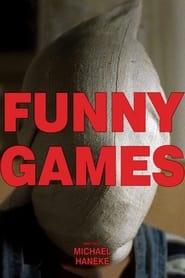
Funny Games (1997)
The camera is largely static, the light is flat and domestic, and Haneke and cinematographer Jürgen Jürges refuse every visual pleasure the thriller genre promises — no dramatic shadows, no propulsive cutting, no cathartic release of tension. Watch for the long takes that hold on empty or ruined spaces after something terrible has happened — the shot keeps going, past comfort, into a duration that feels like being made to sit with something you would rather escape. The film is aware of you. One of the two young intruders will, at a certain point, look directly into the camera and address the audience. This is not a gimmick; it is the film's thesis made visible. Haneke made this movie because he was angry at a kind of cinema, and he will tell you so, through his characters, while it is happening to you.
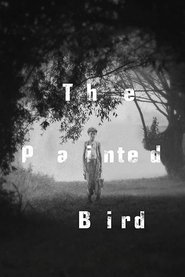
The Painted Bird (2019)
Vladimír Smutný's camera is static or nearly so, frequently placing the boy small within a wide anamorphic frame — the same compositional logic as Kobayashi's GrandScope compositions in The Human Condition, landscape as indifferent container. Watch how the film withholds reaction shots: the boy witnesses atrocity after atrocity and the camera does not cut to his face to guide your emotional response, does not offer music to tell you how to feel, does not provide an adult who intervenes and makes it right. The film is built from chapters, like Andrei Rublev, and each chapter is a new village, a new community, a new form that ordinary cruelty takes. The title sequence shows you the whole argument in miniature — a painted bird released back into its flock. You do not need to know what comes next to understand what the film will do with that image for the next three hours.
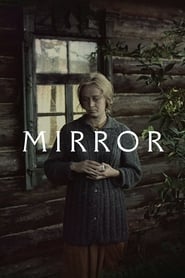
Mirror (1975)
The film has no conventional plot and its timeline does not move forward in any orderly way — memories, newsreel footage, dreams, and present moments are woven together so that past and present feel simultaneous rather than sequential. The key to navigating it is to stop trying to construct a chronology and instead pay attention to sensation: the quality of light through a window, the sound of rain in a room, the way a wind moves through a field of buckwheat with no plot reason to do so. Georgy Rerberg's cinematography shifts between color and black-and-white, between firelight-chiaroscuro and flat newsreel grain, and each register carries its own emotional temperature. The narrator never appears on screen. He can only speak and remember. Think of the film less as a story told and more as a consciousness experienced from inside — which is, Tarkovsky would argue, the only honest way to render a life.
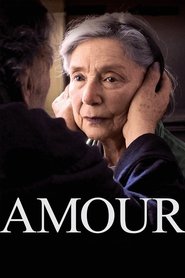
Amour (2012)
Darius Khondji's camera is almost always still, mounted at a middle distance, letting scenes run in something close to real time. Notice how rarely you are shown what characters are looking at: Haneke frequently holds on the face watching rather than cutting to the thing being watched, keeping you in the experience of witness rather than the experience of event. The film opens at a piano recital, and Haneke turns the camera on the audience — you see Georges and Anne in the crowd, watching a performance you never see. That setup is the whole film compressed into one image: people looking at something beautiful that cannot be held, that will end. The apartment becomes the film's entire world, and as it contracts around its two inhabitants, the long still takes and naturalistic lamplight make duration itself the subject — not what happens, but how long things take, and what it costs to stay.
Why Watch Them Together
These films span political satire, war drama, prison procedural, art cinema memoir, and horror — and yet watched in sequence they begin to feel like one long conversation about the same fundamental question: what does a person do when the situation exceeds them? Each director finds a different formal answer. Chaplin answers with comedy that turns back into anguish. Bresson answers with patience and the discipline of the hands. Tarkovsky answers with the dream — the unreachable country of what was. Haneke answers with the held shot that will not let you go. Marhoul and Kobayashi answer with the wide frame that dwarfs the human figure inside it.
None of these films are comfortable, and several are genuinely difficult. But watching them closely, noticing the particular techniques each director uses to place you inside an experience of helpless seeing, you begin to understand something that a single film cannot teach alone: that cinema at its most serious is not a machine for delivering outcomes, but a practice for enlarging attention. These are films that trust the act of looking to be enough — and they are, in different ways, right.