Sightlines · a mini film course
The Cinema of Watching: Eleven Films Where Time Does the Talking
Most movies hurry. Someone wants something, does something, gets or loses it — and the editing sprints alongside. The eleven films gathered here belong to a rarer tradition: films that slow down, hold still, and trust you to look. In each of them, characters find themselves in situations they cannot fix — grief, decline, creative paralysis, a vanished person, a dying farm — and so the films stop chasing plot and start dwelling in perception itself. The camera watches rather than chases. Rooms and landscapes become as expressive as faces. Time is allowed to stretch until an ordinary gesture — peeling a potato, carrying a candle, pouring tea — carries the weight most films reserve for gunfights. Watched together, these films teach you a different way of seeing, one that changes how you watch everything else.
The Passion of Joan of Arc (1928)
The oldest film here, and in some ways the boldest. Dreyer and cinematographer Rudolph Maté build almost the entire film out of extreme close-ups of the human face — shot on new film stock sensitive enough to read bare skin, without flattering makeup or soft light. Notice how you can never quite map the room: the usual rules of screen geography are deliberately suspended, so all the drama lives in what crosses Falconetti's face as she endures a trial she cannot escape. A film where a woman can do nothing, and yet you cannot look away.
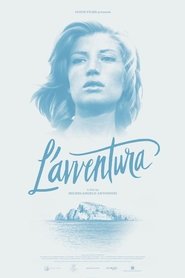
L'Avventura (1960)
Antonioni starts a mystery — a woman vanishes on a volcanic island — and then quietly declines to run the machinery of a mystery. Watch how the frame is composed: human figures drift to the edges, get obscured by walls and columns, are dwarfed by rock and sea until they read as incidental marks on stone. Two people can stand inches apart and remain unreachable. This is where landscape stopped being backdrop and became the emotional subject of the shot.
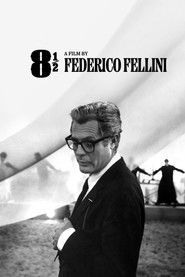
8½ (1963)
Fellini's great trick is the missing seam. Present, memory, and daydream are cut together with the same hard, matter-of-fact joins — no dissolves, no music cues, no change in the beautiful black-and-white photography to warn you that you've slipped from the world into a head. Watch for how Gianni Di Venanzo's camera lights the thermal spa like a purgatorial limbo and the fantasies with a theatrical brightness, and how you learn, scene by scene, to stop asking "is this real?" and start asking better questions.
Jeanne Dielman, 23, quai du Commerce, 1080 Bruxelles (1976)
Akerman was twenty-five when she made this, and its gamble is total: three days of a Brussels widow's domestic routine, filmed in fixed, frontal, head-on long takes from a low, seated eye level. Nothing is trimmed — meals are made whole, the elevator is ridden in real time. Watch how the film keeps every gesture but quietly removes its purpose, until the routine itself becomes gripping, and the smallest deviation from it lands like thunder. Housework, given the running time of an epic.
The Shining (1980)
Kubrick's horror moves like architecture thinking. Watch the Steadicam — brand new technology in 1980 — glide inches off the floor behind Danny's tricycle, and listen to the sound: carpet, hardwood, carpet, the wheels going loud and soft as each corner approaches. Notice too the one-point-perspective compositions, corridors receding to a single vanishing point, and how the hotel's geography famously refuses to add up. The Overlook isn't a setting the family moves through; it feels like a mind they're moving inside.
Nostalgia (1983)
Tarkovsky treats the long take as an act of faith. The film's most famous sequence — a man trying to carry a lit candle across a drained pool, the flame guttering, the shot unbroken for nine minutes — is real precariousness, not a simulation of it. Watch how "nothing happening" and "everything at stake" become the same thing, and how the film shifts between registers of color and monochrome to move between present and memory without announcing the crossing.
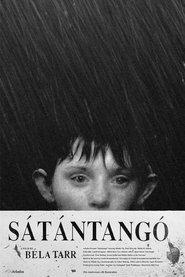
Satantango (1994)
Tarr opens on cows shuffling through a ruined farmyard for several unbroken minutes, and that opening teaches you how to watch the next seven hours. Shots routinely run five, eight, ten minutes; the black-and-white images are thick with rain, mud, and damp brick. Don't watch for what happens — watch for time itself moving through a collapsed place, and for how villagers who can only wait and observe each other become the film's true subject. The most extreme, and strangely hypnotic, expression of everything in this program.
Synecdoche, New York (2008)
Kaufman's innovation is deadpan impossibility: a house that is calmly, literally on fire, and a realtor talking up the closet space. Frederick Elmes — who shot Eraserhead and Blue Velvet — photographs the surreal with unhurried, autumnal naturalism, so the strange never gets flagged as strange. Watch what happens when a theater director builds a full-scale replica of his own life inside a warehouse, and the copy starts absorbing the original. The film mirrors 8½ deliberately: an artist's crisis staged from inside his head.
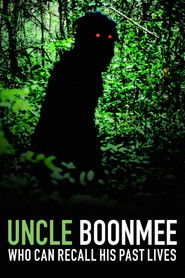
Uncle Boonmee Who Can Recall His Past Lives (2010)
Watch the dinner on the veranda: by oil-lamp light, the dead and the transformed simply arrive at the family table — no music sting, no hard cut — and everyone keeps passing the food. Apichatpong lights interiors to preserve real darkness and holds his static frames past the point where an ordinary film would move on. The result is a ghost story without fear, where the supernatural is received with the mild courtesy you'd offer an early guest, and the wonder lands precisely because nobody onscreen treats it as wonder.
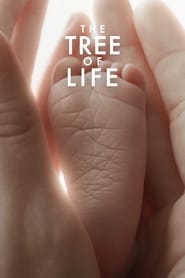
The Tree of Life (2011)
Emmanuel Lubezki's camera never settles — it floats, glides, drifts at a low, child's-eye height through domestic space, catching faces obliquely, working almost entirely in natural light. The film builds memory the way memory actually feels: light through fabric, water, the undersides of leaves, before you're given a single fact. Watch for the audacious cosmic passage set to classical music — its lineage runs straight from 2001 and Fantasia — and for how the film frames a family through two ways of living, named in the opening voiceover as nature and grace.
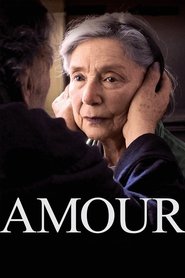
Amour (2012)
Haneke's camera is static, set at a respectful middle distance, and patient enough that you wait inside rooms in something close to real time — a meal prepared, a body lifted. Watch the early concert scene: the camera faces the audience, not the stage, and you must hunt for the couple in the crowd. That's the film handing you your job. No music cushions anything; light comes from windows and lamps; two great actors, Riva and Trintignant, work with a restraint that makes every small gesture enormous.
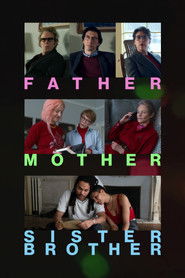
Father Mother Sister Brother (2025)
Jarmusch's late chamber piece, shot by two longtime collaborators, sits in his deadpan register where humor comes from awkwardness and timing rather than jokes. Watch the static, wide, frontal framings held past the point of comfort, and the way empty rooms and household objects are given the frame like characters — a debt to Ozu that the film wears openly. The subject is estrangement within intimacy: family members pouring tea, sitting, glancing, unable to close the distance in the room, while the withheld and the unsaid do all the talking.
Why watch these together? Because they form a conversation across a century. Dreyer's faces, Antonioni's emptied landscapes, Akerman's kitchen, Tarr's mud, Ozu's ghost hovering behind both Haneke and Jarmusch — each of these films learned from the others how to make stillness speak. Watched in sequence, you'll start noticing the inheritances: the fixed frontal frame passed from Jeanne Dielman to Jarmusch, the artist's-crisis structure passed from 8½ to Kaufman, the drifting camera shared by Kubrick's corridors and Malick's living rooms. More than that, these films retrain your attention. They ask you to stop waiting for the next event and start inhabiting the present one — to notice light, duration, the sound of wheels on carpet, a hand in the grass. That patience is a skill, and it compounds. By the last film, you won't just be watching differently. You'll be seeing more.