Sightlines · a mini film course
The Watchers: Eleven Films About Seeing What Cannot Be Fixed
Most movies run on a simple engine: a character sees a problem, acts, and the world changes. The films on this list — made across seven decades, in six languages — all do something braver and stranger. They slow that engine down, or stall it, or break it entirely. Their characters look at things they cannot change: a body failing, a marriage cooling, a war arriving, a past that won't stay past. And instead of rushing to rescue them, the camera stays. It watches rather than chases. Time is allowed to stretch. What fills the space where the plot would normally go turns out to be the good stuff: memory, dream, grief, love, and the sheer texture of the world. Here is what to look for.
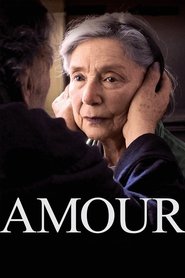
Amour (2012)
Notice how still the camera is — mounted at a respectful middle distance, holding on rooms and routines until a meal being prepared or a body being lifted acquires real weight. Haneke inherits this from Ozu and De Sica: a portrait built by inventory of small daily gestures rather than dramatic incident. Watch especially the early concert scene, where the camera faces the audience instead of the stage, making you hunt for the two main characters in a crowd of watchers — the film quietly assigning you your job for the next two hours. The light comes from windows and lamps; the music comes only from inside the story. Nothing is dressed up, and that restraint is the point.
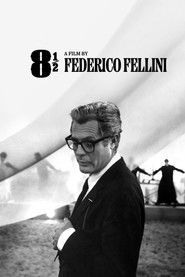
8½ (1963)
The great trick here is the missing seam. Fellini cuts between waking life, memory, and fantasy with the same hard, matter-of-fact join he'd use between two rooms of the same house — no dissolve, no misty transition, no musical cue to warn you that you've left the world for someone's head. Gianni Di Venanzo shoots all three registers in one continuous, gorgeous black-and-white, so you can't grab onto a change in grain or light. The opening sequence teaches you the rules in two minutes: watch it closely, then relax and let the film flow. Confusion, here, is the design.
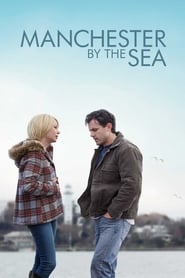
Manchester by the Sea (2016)
Watch for the deliberate plainness — steel-grey New England winter light, a camera that holds on faces and refuses to underline anything. Lonergan structures the film out of order, letting the past interrupt the present without ceremony, and writes dialogue where people overlap, stumble, and never quite say the thing. Pay attention to how often the necessary action is simply unavailable to the characters — how the film treats grief not as a problem with a solution but as a season to be endured. Casey Affleck's face does enormous work by doing almost nothing.
Annihilation (2018)
Garland builds his mysterious zone on the template of Tarkovsky's Stalker — a rule-warping interior space entered by a small expedition — and shoots it in toxic, prismatic greens, everything tinted through a soap-bubble membrane. Watch for the moments when the characters (trained soldiers and scientists, exactly the people a thriller would arm with competence) can only stand and look at something inexplicable. The film keeps trading action for pure attention, and the sound design fuses with the score into a single throbbing texture. Its real subject isn't the alien; it's the human drive toward self-sabotage, made visible at the level of the cell.
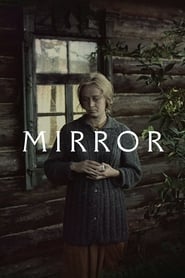
Mirror (1975)
There is no plot to follow, and you should stop trying early — the narrator never even appears on screen; we only hear his voice as memory, dream, newsreel, and present circle each other. Instead, watch the physical world: a gust of wind bowing a whole field of buckwheat, rain coming through a ruined ceiling, faces lit by windows and candles in Rembrandt-like shadow. Tarkovsky refuses the standard flashback grammar of dated captions and sealed clips; here the past doesn't wait politely to be retrieved — it survives whole, and floods in. Let the images work on you the way music does.

The Sixth Sense (1999)
This is the most mainstream film here, and the most rigorously built. Tak Fujimoto shoots Philadelphia in chilled blues and grays, then rations the color red like a drug — track where it appears. Shyamalan works in the old Val Lewton tradition of horror by suggestion: withholding the thing itself and letting sound, cold air, and negative space imply it (a boy's breath fogging in a warm kitchen is scarier than any monster). Notice, too, that the child at the center is a pure watcher — someone who sees what he cannot act on — and how the whole film's mood flows from that helplessness.
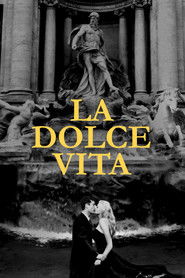
La Dolce Vita (1960)
Watch Mastroianni's face: a performance built entirely out of intelligent, helpless receptivity — a professional observer (a gossip journalist) who sees everything and can act on none of it. The film drifts episodically through Roman nights and dawns in wide, hard-lit black-and-white, Otello Martelli's documentary-rooted lighting flattening celebrities into photographic surfaces. The opening image — a statue of Christ dangling from a helicopter over Rome while shouted words are swallowed by rotor wash — announces everything: the holy and the trivial sharing the same sky, and nobody able to hear a thing.
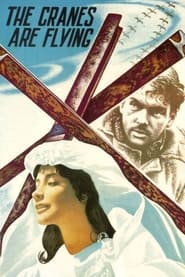
The Cranes Are Flying (1957)
Urusevsky's camera is the star: unchained, athletic, spiraling up staircases in single sustained breaths, inheriting the acrobatic energy of the 1920s Soviet avant-garde and turning it toward private feeling instead of political rhetoric. Watch what the camera does when a character can't move — how the world takes over the motion, birch trees wheeling against a white sky, fantasy and present sharing a single frame. This film broke the monumental Stalinist war picture open and relocated the war to the home front and the wounded heart. It's the emotional headwaters of everything Tarkovsky would later do.
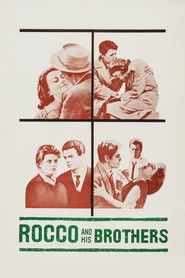
Rocco and His Brothers (1960)
Visconti grafts opera onto documentary, and the graft is visible in the light: Rotunno's photography shifts between grainy social-realist surfaces — wet Milanese pavements, half-built apartment blocks, migrant crowds — and charged, high-contrast chiaroscuro that lifts the family drama toward tragedy. Watch Alain Delon play absolute goodness as a kind of paralysis: a saint who can only behold. The film's deepest tension is between observing a family with documentary patience and feeling the melodramatic engine underneath pulling everyone downward.

Life Is Beautiful (1997)
The boldest gamble here: a clown's film that slides, in a single arc, from broad romantic slapstick into something much darker — the tonal-pivot architecture Benigni learned from Chaplin. Watch the scenes where Guido invents — most famously "translating" a guard's barked German orders into the rules of a game for his son — two incompatible versions of reality laid over the same moment, and the fabrication offered as an act of love. Tonino Delli Colli's photography splits its personality along with the story. Notice how the film's dramatic irony works: we always know more than the child, and that gap is where all the feeling lives.

Wild Strawberries (1957)
The opening dream — a deserted street in white glare, a clock with no hands, a blank pocket watch — tells you everything: time has been unhooked from measurement, and an old man who can no longer change his life by doing anything can only stand inside his past and look at it. Watch how Gunnar Fischer's photography quietly differentiates the film's layers of time, and how memory erupts into the present-day car journey without dissolves or soft edges — the grammar that Fellini and Tarkovsky would both borrow. Bergman inherited the ghost-observing-his-own-past device from silent Swedish cinema and made it the model for half a century of films about consciousness.
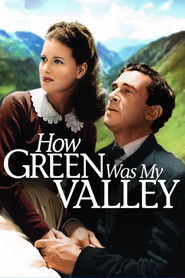
How Green Was My Valley (1941)
The counterweight to everything above — and the reason to watch it alongside them. Ford is the great architect of the older cinema these other films depart from: a world where place presses on people, people act, and the action reshapes the place. Watch Arthur Miller's deep-focus frames, which hold the home, the chapel, and the pithead legibly in one shot — a whole society visible in its physical relation to its labor. Ford built the entire Welsh village from scratch in the California hills so that the imprint of place on people, and people on place, would be total. And yet the film is narrated from memory, about a valley already lost — so the seed of all the later watching-and-grieving cinema is already here.
Why watch these together? Because sequence teaches what no single film can. How Green Was My Valley shows you classical cinema's engine running at full, glorious strength — and shows you memory and loss already pressing against it. The Cranes Are Flying, Wild Strawberries, La Dolce Vita, and 8½ show that engine deliberately stalled, and the astonishing things — dream, drift, the world's own motion — that rush in to replace it. Mirror takes the experiment to its limit; Rocco and Life Is Beautiful test what happens when observation and fabrication collide with catastrophe. And Amour, Manchester by the Sea, The Sixth Sense, and Annihilation prove the tradition is alive right now, in art cinema, American indies, studio thrillers, and science fiction alike. Across all eleven, one discipline repays you: don't wait for the plot to catch. Watch the light, the duration, the faces, the cuts that come without warning. These are films that trust you to look — and looking, it turns out, is the whole event.