Sightlines · a mini film course
Most movies are engines. A character sees a problem, acts on it, and the story rolls forward on that chain of cause and effect — see the threat, fight it; want something, chase it. The twelve films on your list belong to a different tradition, one that quietly runs through postwar Europe, classical Japan, and contemporary art cinema on every continent: films in which the characters can see everything and do almost nothing about it. A daughter watching her own life being settled. A journalist who perceives for a living and can act on none of it. A dying man passing food to a ghost. When action stops resolving things, something else floods in — time itself, felt as duration, and faces held long enough that a feeling can register without ever being spent. These are films where the camera watches rather than chases. Your job, as viewer, is the same as the characters': sit still, look, endure — and be rewarded for it.
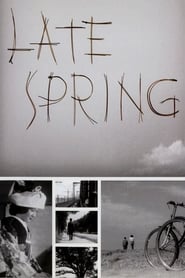
Late Spring (1949)
Start here, at the wellspring. Ozu shoots almost everything from a low, static camera at tatami height, framing rooms into nested rectangles, and he punctuates scenes with cutaways to still objects — hanging laundry, empty corridors, a vase in the dark. Watch what those pauses do: at one famous moment, a cut away to a vase and back is all it takes for a smiling face to fill with tears, with nothing dramatized in between. Notice how little the heroine Noriko actually does; she watches, and the film builds its whole emotional world out of that watching.
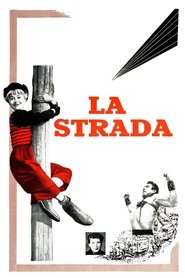
La Strada (1954)
This one lives on Giulietta Masina's face. Fellini holds it in plain, even light — no shadow telling you how to feel — and lets expressions of wonder, hurt, and comic bewilderment simply persist rather than cutting away to what the face will do next. The vocabulary comes straight from Chaplin (City Lights, The Circus): pathos and comedy loaded into a single held look. Watch too how the film moves between two visual registers — grainy, overcast neorealist roads and the threadbare theatricality of the circus — without ever settling into one.
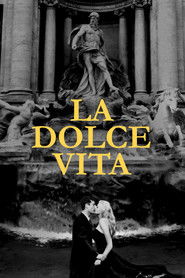
La Dolce Vita (1960)
The film announces itself with a statue of Christ dangling from a helicopter over Rome while a man mimes flirtation into rotor noise nobody can hear — the sacred and the trivial crossing the same sky. Marcello is a professional watcher, a gossip journalist, and Mastroianni builds an entire performance out of intelligent, helpless receptivity: a face that only reacts. Watch Otello Martelli's hard, slightly bleached widescreen lighting flatten celebrities into photographic surfaces — the visual language of the very paparazzi culture the film is anatomizing.
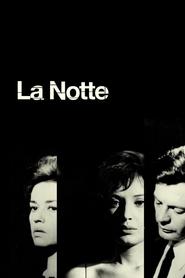
La Notte (1961)
Antonioni gives the city the starring role. Di Venanzo photographs Milan's glass towers and half-finished buildings as active presences, holding the center of the wide frame while the human beings drift to its edges, small and almost incidental. Watch the long walk Lidia takes through the city: you keep expecting it to lead somewhere, and its refusal to arrive is the drama. This is a film about people who understand their situation with painful clarity and cannot convert that understanding into a single deed.
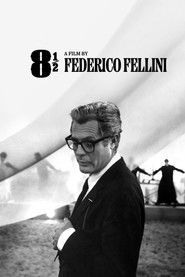
8½ (1963)
Fellini's great innovation here is the missing seam. Present, memory, and daydream are cut together with the same hard, matter-of-fact joins you'd use between two rooms of a house — no dissolves, no misty warning, no change of film grain to grab onto. Di Venanzo shoots it all on one continuous silver so you're never told when you've left the world for the head. Watch the opening traffic-jam sequence closely: in two minutes it teaches you the rule the whole film will keep, and it's exhilarating rather than confusing once you stop demanding a map.
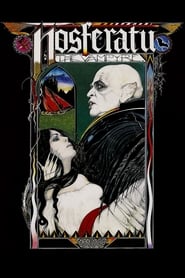
Nosferatu the Vampyre (1979)
Herzog takes the horror film and removes its motor. Watch Kinski's Dracula at the candlelit table: where most vampire films would convert hunger into a lunge or a chase, Herzog lets the longing sit undischarged, and grief moves across that bald mask instead of appetite. The grotesque makeup — honoring Max Schreck's 1922 original — becomes inseparable from the pathos. Schmidt-Reitwein's camera is still or glacially slow, composing painterly, emblematic wide shots; the plague imagery draws directly on Murnau's Faust and Dreyer's milky, dreamlike Vampyr.

Talk to Her (2002)
Almodóvar opens with a Pina Bausch dance piece played almost in full — two women moving with their eyes shut while a man clears obstacles from their path — and the whole film is folded into that image. Watch how the camera treats sleeping bodies: patient, symmetrical, devotional framings in calm creams and blues, scenes that run long while nothing is decided. Notice too how the film reroutes suppressed feeling into color, décor, and a performed song rather than dialogue — a trick learned from Douglas Sirk's melodramas — and how a silent-film pastiche does emotional work that speech never could.
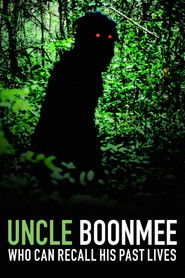
Uncle Boonmee Who Can Recall His Past Lives (2010)
Watch the dinner on the veranda: a dead wife surfaces slowly out of lamp-lit darkness like a photograph developing, a lost son returns transformed, and nobody in the frame screams or even startles. The wonder lands precisely because it's treated as ordinary. Sayombhu Mukdeeprom's photography preserves real darkness in interiors, and Apichatpong holds shots past the point where a normal film would move on. Notice the ghost-story and monster-movie elements deployed without their usual affect — no fear, no jolt — just calm, sustained attention to the impossible.
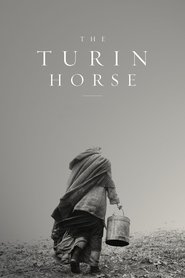
The Turin Horse (2011)
The most radical film here, and the purest. Kelemen's black-and-white long takes — the celebrated opening shot among them — turn the shot itself into a container for lived time. Watch the eating of the boiled potato: the camera holds, nothing is explained, and you wait the way the father and daughter wait. The film's six-day structure makes you inhabit a slow collapse rather than receive information about it. Duration isn't a stylistic flourish here; it's the entire argument, and if you meet it on its terms it becomes hypnotic.
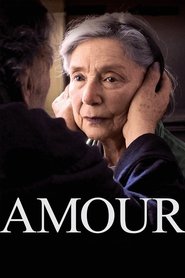
Amour (2012)
Haneke and cinematographer Darius Khondji keep the camera static, at a respectful middle distance, lit naturally from windows and lamps, and let shots run close to real time — a meal prepared, a body lifted. Watch the early piano-recital scene, where the camera faces the audience instead of the stage and makes you hunt for the two protagonists in a hall of strangers: it's the whole film's contract in one setup. The restraint descends from Ozu's domestic interiors and Bresson's refusal of expressive emphasis — discipline as a form of respect for what's being shown.
First Reformed (2018)
Schrader locks the camera into head-on, almost liturgical frontal compositions, and rations movement so severely that when the camera finally moves, it lands like an event. Watch the long counseling conversation early on: two figures in a fixed frame, no cutting away to reactions, the argument allowed to build its full weight. The architecture — a man writing in a journal he's sworn to destroy — comes straight from Bresson's Diary of a Country Priest, and the doubting-pastor drama from Bergman's Winter Light, filtered through a distinctly American ecological dread.
Annihilation (2018)
Proof this tradition is alive inside genre cinema. Watch the moment two deer step out of the brush moving in perfect mirrored unison: nobody explains it, nobody can act on it, and the looking is the whole event. Rob Hardy shoots the Shimmer as a soap-bubble membrane, greens pushed toward the toxic, everything given an oily refraction. The structure — a rule-warping forbidden zone entered by a small expedition — comes from Tarkovsky's Stalker, and the near-wordless lighthouse sequence, where sound design and score fuse into one throbbing texture, deliberately echoes the abstract finale of 2001.
Why watch these together? Because each film trains you for the next. Ozu's vase teaches you what a held cutaway can carry; that lesson pays off in Haneke's rooms and Tarr's kitchen. Masina's face prepares you for Kinski's; Antonioni's architecture prepares you for the Shimmer. Spread across seven decades and five countries, these twelve films share a single wager — that if the camera stops chasing and simply watches, and if you agree to watch with it, ordinary things (a potato, a vase, a sleeping face, two deer) become charged in ways no plot could manage. The reward isn't in what happens. It's in discovering how much a film can make you feel when it trusts you to look.