Sightlines · a mini film course
The Art of Watching: Twelve Films Where Looking Is the Drama
Most movies run on a simple engine: a character sees a problem and does something about it. The films on this list quietly unplug that engine. Here, the people on screen watch more than they act — a boy in a wartime classroom, a woman adrift in an industrial landscape, a child in a field of white grass staring at a passing train. And because the characters can't act, the films ask us to do the watching with them: to sit inside a room in something close to real time, to notice a color, a sound, a glance held a beat too long. These are films where the camera watches rather than chases, where time is allowed to stretch, and where what a person sees — and cannot change — becomes the whole story. Watched together, they form a course in a different kind of screen attention.

Pather Panchali (1955)
Satyajit Ray's first film was shot by Subrata Mitra, a still photographer who had never worked on a movie — and you can feel it in the images' patience: rain on a pond, wind in trees, faces in soft available light. Watch young Apu, played almost entirely as a pair of watching eyes, and notice how the film builds its world out of what children observe rather than what adults do. The famous sequence of two children chasing a sound through white kaash grass — hearing something before they can name it — is the film's grammar in one breath: looking as an event in itself.
Hiroshima Mon Amour (1959)
Resnais opens at such extreme closeness that bodies stop being bodies — skin grained with something you can't identify, and he means you not to be able to. Listen to the opening duet of voices: a woman insisting she has seen Hiroshima, a man answering flatly that she has seen nothing — while the images seem to take her side. Notice too that two cinematographers split the film between France and Japan, and how the film keeps asking whether personal memory and vast catastrophe can ever truly speak to each other.
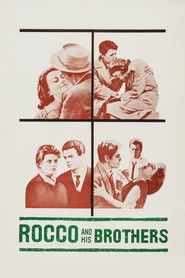
Rocco and His Brothers (1960)
Visconti starts on documentary ground — a widow and her five sons stepping off a train into foggy, half-built Milan, real streets, a crowded basement room — and then grafts full-blown opera onto it. Watch how Giuseppe Rotunno's black-and-white photography shifts between grainy social realism and charged, high-contrast shadow as the family's story darkens. And watch Alain Delon, who plays absolute goodness as a kind of stillness — a man whose watching becomes the most active thing in the frame.
Red Desert (1964)
Antonioni had the grass along the refinery road painted gray by hand, so nothing growing could look alive. Once you know that, the whole film tilts: you're watching a landscape authored to match the inside of a woman's head. Monica Vitti plays Giuliana not as numb but as flooded — a face in constant micro-attention, registering steam, engine-throb, industrial color, taking in more than she can do anything with. Notice how Antonioni's frames make the gap between the world out there and the nervous system in here impossible to close.
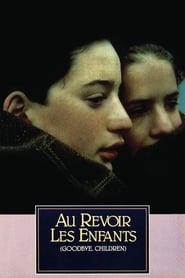
Au Revoir les Enfants (1987)
Malle's autobiographical film about a wartime boarding school is built around a boy who can only watch — and around one glance, lasting less than a second, whose consequences Malle himself could never determine. Watch how Renato Berta's cold, narrow palette of grays and winter blues makes the school's chill physical, and how the young lead performs almost entirely through watchfulness rather than deeds. It's a film about how history reaches into a sheltered life, seen through eyes too young to fully understand what they're seeing.
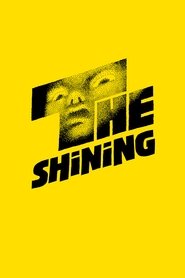
The Shining (1980)
The Steadicam was brand new in 1980, built to smooth out shaky shots; Kubrick turned it into a way of thinking. Watch how it glides a few inches off the floor behind a boy's tricycle — and listen: carpet, hardwood, carpet, the wheels going loud and soft, making you brace for every corner. Notice the one-point-perspective corridors receding to a single vanishing point, and the hotel's famously impossible geography, which no one has ever successfully mapped. The Overlook isn't a setting the characters move through. It behaves like something that's thinking.
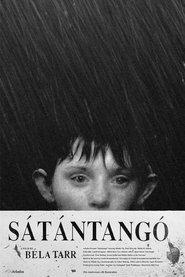
Satantango (1994)
Béla Tarr opens on cows — several unbroken minutes of a herd shuffling out of a collapsing farmyard into the grey — and in doing so teaches you how to watch the next seven hours: not for what happens, but for time itself moving through a ruined place. Shots routinely run five, eight, ten minutes, in black and white, through mud and incessant rain. Watch how waiting becomes the film's real subject, and how a man at a window with a notebook becomes its emblem: someone for whom observing is the only verb left.
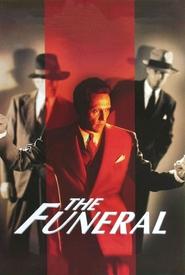
The Funeral (1996)
Ferrara opens his gangster film where the genre is supposed to end: a coffin in the front room, candles burning, in the first minutes. Everything after happens in that body's presence. Watch Ken Kelsch's deep chiaroscuro — faces emerging from darkness, rooms lit by a few practical sources — and notice how the film keeps the machinery of a revenge plot while refusing the genre's forward drive, its glamour, its rise-and-fall arc. It's a mob film arguing with itself about free will and damnation, in explicitly Catholic terms.

The Sixth Sense (1999)
Watch for temperature. A boy's breath fogs in a warm kitchen, and before anything is shown, you know. Shyamalan and cinematographer Tak Fujimoto shoot Philadelphia in chilled blues and grays, then ration the color red like a drug — a doorknob, a balloon, a sweater — marking the places where a hidden world shows through. Notice how young Cole is a watcher, not a fighter: a boy whose perceptions can't be converted into action, in a thriller built on suggestion, negative space, and what's kept just off-screen.
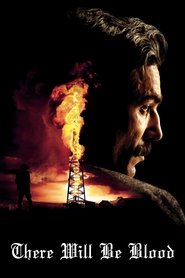
There Will Be Blood (2007)
Anderson opens with roughly fifteen minutes of nearly wordless cinema: a man alone in a landscape, prospecting by hand, breaking his leg, hauling himself across rock — no dialogue, no conventional score. You learn Daniel Plainview the way you learn an animal, by watching what it does to survive. Watch how Robert Elswit's widescreen frames let the social world (leases, handshakes, church socials) and something older and hungrier occupy the same image, and how the film sets oilman and preacher up as doubles rather than opposites.
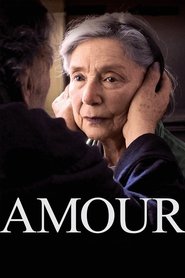
Amour (2012)
Haneke's camera, in Darius Khondji's images, is overwhelmingly static, held at a respectful middle distance, cutting so rarely that shots take on real weight — you wait inside rooms, watch a meal prepared, a body lifted. Pay attention to an early scene at a piano recital where Haneke points the lens at the audience instead of the stage, and makes you hunt for the two main characters in a hall of strangers. In finding them, you've accepted the film's one assignment: to watch, closely and without relief, what love means at its limit.
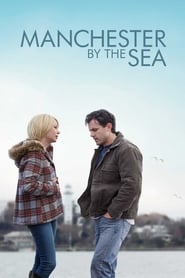
Manchester by the Sea (2016)
The detail to hold onto: a death in winter, when the New England ground is too hard to dig. The necessary action is simply unavailable; you have to wait for the thaw. That's the film's whole design — grief not as a problem to solve but a season to endure. Watch Jody Lee Lipes's deliberately plain photography, the steel-grey low-sun light, the frames that hold still on faces, and Casey Affleck performing a man who perceives everything and acts on almost nothing. Notice too how the past keeps interrupting the present, arriving unannounced.
Why watch them together? Because they train the same muscle from twelve directions. A repertory of stillness: the fixed rooms of Amour, the seven-hour patience of Satantango, the gliding corridors of The Shining, the painted grass of Red Desert. In each, a filmmaker has decided that the most dramatic thing a camera can do is refuse to hurry — and that the most dramatic thing a character can do is see something they cannot change. Watch them in any order, but watch them slowly. By the end, you'll notice that your own attention has changed shape: you'll be reading rooms, light, sound underfoot, the color of a sweater, a half-second glance. Which is exactly what these films, quietly and patiently, were teaching you to do all along.