Sightlines · a mini film course
The Art of Watching: Twelve Films Where Looking Is the Action
Most movies run on a simple engine: a character sees a problem and does something about it, and the editing hurries us from cause to effect. The twelve films on your list all, in their different ways, switch that engine off. Their people are lovers, drifters, assassins, painters, old couples in Paris apartments — and what unites them is that they watch. They look at the world, at each other, at things they cannot change, and the camera looks with them, patiently, sometimes for uncomfortably long. Time is allowed to stretch. Faces are held until they give off feeling like heat. Watch these together and you'll start to notice how a filmmaker can make sheer attention — yours and the characters' — into the drama itself.
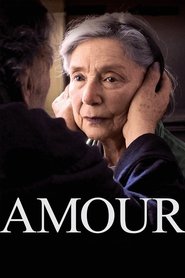
Hiroshima Mon Amour (1959)
Listen to the opening argument between the two voices: a woman insists she has seen everything in Hiroshima, a man answers that she has seen nothing — while the images seem to take her side. Notice how Resnais splits the film between two cinematographers, one for France and one for Japan, and how memory arrives in fragments rather than tidy flashbacks. This is a film about whether looking at catastrophe can ever amount to knowing it — and it makes that question something you feel on your skin.
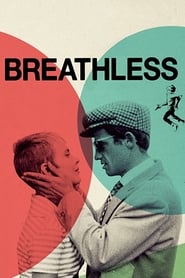
Breathless (1960)
Watch Belmondo's thumb cross his lip — a gesture borrowed from Bogart posters, a man testing whether a pose can hold him up. Notice how the famous jump cuts slice moments out of the middle of shots, so the film moves in nervous skips, and how Coutard's camera treats real Paris streets like reportage, shadows falling hard and uncorrected. The thrill is watching a crime movie where the chase never tightens — just a man drifting, performing freedom, while the city goes about its business.
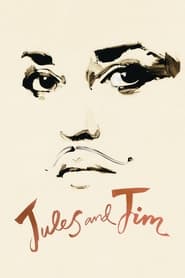
Jules and Jim (1962)
Wait for the moment the film simply stops — Catherine caught mid-laugh, frozen on screen, held far longer than any living face would allow, for no reason except love. Truffaut fills the film with this kind of joy in the medium itself: handheld rushes, a literary voice-over, sunlit river idylls shot with a warmth that makes the happiness feel already half-remembered. Notice, too, the statue the two friends make a pilgrimage to see before they ever meet her — an image worshipped before the woman arrives.
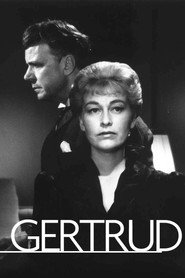
Gertrud (1964)
Dreyer's last film is built from some of the longest sustained shots in narrative cinema — whole scenes unfold without a cut, and the stillness becomes hypnotic. Watch where people look: declarations of love are delivered to the empty air, confessions to the floor, two people on a sofa gazing past each other at something neither can reach. It's a chamber drama that slowly reveals itself as a portrait of a woman who demands love without remainder — and who watches, with terrible clarity, what the world offers instead.

Masculin Féminin (1966)
Godard's portrait of the "children of Marx and Coca-Cola" runs on interviews: long handheld takes in cafés, questions about love and politics answered with a smile, a glance away, a cigarette lit to buy time. Notice how the camera holds a face past the point of politeness, and how violence erupts at the edges of the frame without explanation — and without anyone stopping. Léaud, once the New Wave's running, scheming boy, is here mostly a recorder: earnest, stalled, taking notes on a generation.
Le Samouraï (1967)
The film opens with a man lying on a bed in grey half-light, fully dressed, a caged bird stirring, minutes passing before anyone speaks. Decaë lights Delon's face so sparingly that shadow erases expression — what remains is pure surface, composure held to the edge of abstraction. Watch the ritual of the fedora brim, the hand setting it at exactly its angle: Melville is telling you not to look into this man but at the gestures that are him.
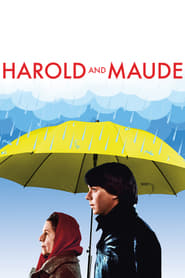
Harold and Maude (1971)
The opening gag sets the register: a death staged with total theatrical commitment, met by a world too bored to look twice. Ashby was an Oscar-winning editor before he directed, and you can feel it in the timing — morbid set pieces cut to land as deadpan comedy against Alonzo's muted, overcast Northern California. Watch how the Cat Stevens songs work as emotional commentary, and how a story obsessed with death keeps arguing, sneakily, for life.
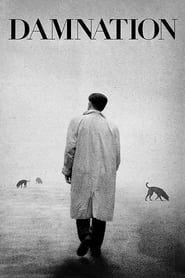
Damnation (1988)
Start with the buckets: coal-conveyor buckets crawling across a grey ruined sky in a slow lateral track that seems to have no reason to end — then the camera turns and finds a man at his window, watching the same thing we were. Tarr's long takes make rain, mud, and decaying walls the true protagonists; emptiness itself becomes the subject rather than the backdrop. This is the founding statement of what people now call slow cinema — let it set its own pace and it becomes mesmerizing.
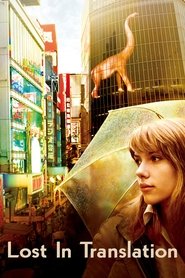
Lost in Translation (2003)
Hold on the image of Charlotte at the hotel window, knees drawn up, looking out at a Tokyo she cannot read — nothing happens, nothing is decided, and the film lets her simply see. Acord's photography keeps placing the two protagonists at windows and in transit, telephoto lenses flattening the neon city into a wash of light behind their isolated faces. It borrows the brief-encounter template and then pointedly refuses the usual payoffs, trusting mood, silence, and connection where a conventional film would supply plot.
Amour (2012)
The camera faces the wrong way from the start: at a concert, Haneke films the audience instead of the stage, and we hunt through a hall of strangers until we find the couple — agreeing, in that moment, to the only job the film gives us: to watch. Khondji's camera stays static, at a respectful middle distance, and the cuts come slowly enough that a meal, a room, a body lifted acquire the full weight of real time. The restraint is inherited from Ozu and Bresson — no musical prompting, no performance flourishes — and it makes an unflinching film about aging into something closer to devotion.
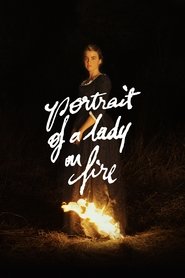
Portrait of a Lady on Fire (2019)
Here looking is not a means to the story — it is the story. Watch how Mathon's camera constantly frames people in the act of watching: the painter studying her subject on cliff walks, the subject watching back, until the gaze becomes a circuit running both directions. Held faces registering a single quality — attention, wonder, restraint — do the work that dialogue does elsewhere, and the film's central question is quietly radical: what does it mean to consent to being seen?
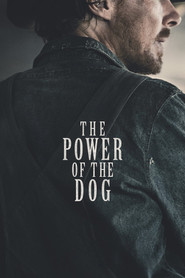
The Power of the Dog (2021)
Early on, a man looks at a mountain and sees something in the ridgeline that no one else can — an image legible to one trained eye alone. That's the film's whole method: Wegner treats the landscape as a psychological surface, and information sits in the frame — a braided rope, hidden books, a woman retreating into smaller rooms — before you understand what it means. It's a Western built like a puzzle you can only assemble in retrospect, and the performances, all suppressed expression and posture, force you to read rather than merely watch.
Watch these together and something cumulative happens: you become a different kind of viewer. Each film trains you a little further — to sit inside a shot rather than wait for the next one, to read a still face, to notice where a character's eyes go when there's nothing left to do. From Dreyer's sofas to Tarr's rain, from a freeze-frame of a laughing woman to a hidden shape in a mountainside, these films share a wager: that watching, done with enough patience and love, is not passive at all. It's the most demanding thing cinema can ask of you — and, by the end of this dozen, the most rewarding.