Sightlines · a mini film course
The House That Watches Back: Twelve Films Where Space, Surface, and Spectatorship Turn Against You
Every film in this set is, in one way or another, about watching — and about the uncomfortable discovery that watching is never innocent. These are thrillers and horror films that refuse to let you sit back. Some trap their characters in a single building until the architecture itself seems to think; some build entire worlds out of one person's mind and dare you to notice; some turn the camera on you, the viewer, and ask why you wanted to see this in the first place. Across seventy years, four continents, and every register from studio polish to art-house provocation, they share a conviction: the most frightening thing in cinema isn't what jumps out of the dark. It's the ordinary detail turned a few degrees wrong — a key on a body, a penguin facing south, breath fogging in a warm kitchen — and the slow realization of what it means.
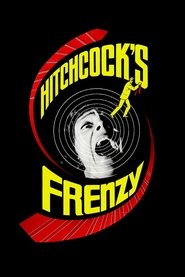
Frenzy (1972)
Hitchcock's return to London after two decades away, and a masterclass in telling you too much. You learn who the killer is early, and the suspense comes from carrying that knowledge while the characters don't. Watch for one astonishing camera movement: at a certain doorway, instead of following the horror inside, the camera retreats — back down the stairs, out into the noise of the Covent Garden market, where the world carries on selling fruit. What the camera refuses to show becomes the loudest thing in the film.
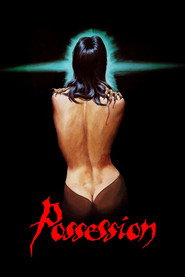
Possession (1981)
Żuławski's camera doesn't observe — it participates, circling and lunging with the actors through cramped West Berlin interiors, refusing the calm grammar most films use to keep you oriented. Watch how the performances are pitched past realism into something operatic and physical: bodies convulsing, exhausting themselves, going on longer than any plot would require. This isn't excess; it's the method. A marriage falling apart is filmed here as though it were a catastrophe on a cosmic scale — and there's a scene in a tiled underpass that you will never forget.
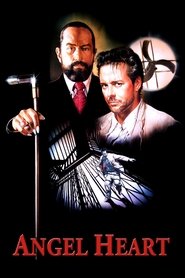
Angel Heart (1987)
A private-eye film crossed with occult horror, shot through perpetual smoke and dust — cold, grey New York against humid, rotting amber Louisiana. Watch the ceiling fans: they turn at the top of nearly every room, chopping the light, and the film keeps looking at them even when its detective won't. Watch also for near-subliminal flashes cut into ordinary scenes, a trick inherited from The Exorcist. This is a mystery where every door the investigator opens seems to worsen the thing he's investigating — the case and the man are more entangled than either of them knows.
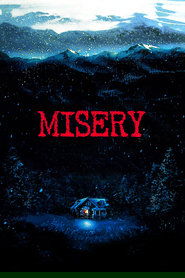
Misery (1990)
One bedroom, a hallway, a staircase — and from these Barry Sonnenfeld's camera wrings endless variety and dread. The genius of Misery is that its suspense is built from tiny objects and their exact positions: a ceramic penguin that always faces one direction, a page squared to a desk, the angle of a door. Watch how the film teaches you the geography of a house and then makes you sweat over whether everything has been put back precisely. It's also a sly story about authorship: a popular writer held captive, quite literally, by his most devoted reader.
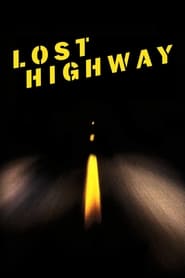
Lost Highway (1997)
Lynch and cinematographer Peter Deming photograph a Los Angeles house as near-total darkness — characters walk into blackness and simply dissolve. Watch the opening moments closely: a voice on an intercom, a message that seems to arrive from nowhere. The film is structured as a loop rather than a line, with doubled faces and repeating spaces borrowed from Vertigo and Persona, and it deliberately withholds the cut that would tell you what's real, what's remembered, what's dreamed. Don't try to solve it; watch how it feels to be inside it.
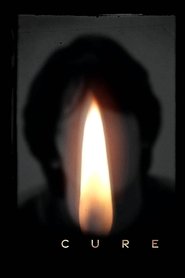
Cure (1997)
Kiyoshi Kurosawa answers the flashy serial-killer films of the '90s by subtraction: no grand design, no spectacle, violence kept mostly off-frame. The camera holds wide and stays far back, letting figures sit small inside washed-out grey environments — dread accumulating in the frame rather than being cut into you. Watch the hypnosis scenes: a flame, a drip of water, a patient circling voice. The film half-confesses that these are also a description of cinema itself — a point of light in the dark, a watcher slowly emptied of resistance. It works on you the way it works on them.

The Sixth Sense (1999)
Tak Fujimoto shoots Philadelphia in chilled blues and greys, then rations the color red like a controlled substance — a doorknob, a balloon, a sweater. Watch where red appears; it's a map of where the hidden world is showing through. Watch, too, how the scares are built from small wrongness rather than spectacle: a temperature drop, breath fogging indoors, the Val Lewton method of suggesting rather than showing. And notice the boy at the center — a child who can only watch and endure what he sees, which turns out to be the film's most radical choice.
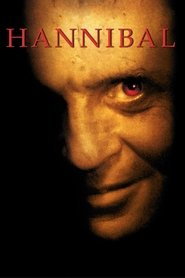
Hannibal (2001)
Ridley Scott and cinematographer John Mathieson render Florence in golden, almost edible light — amber stone, candle-glow, opera-house dark — and the point is the discomfort of the beauty. Watch how the film insists on staging refinement and cruelty in the same frame: high culture and appetite treated as continuous, not opposed. Where The Silence of the Lambs was procedural restraint, this is operatic indulgence — a horror film composed like an altarpiece, in a city where history keeps repeating itself on the same stones.
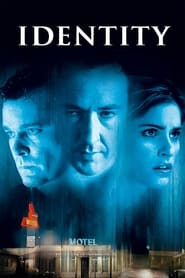
Identity (2003)
Ten strangers, a storm, a Nevada motel — the Agatha Christie closed-circle countdown grafted onto slasher-movie grammar. Watch the numbered room keys, and watch the motel itself: shot in sodium amber and cold blue, rain silvering every surface, identical doors in a row, deliberately stagey and sealed off from the world. That artificiality is not a budget limitation. It's a clue. The film is playing a deeper game about what the space is, and the countdown may not be counting what you think it's counting.
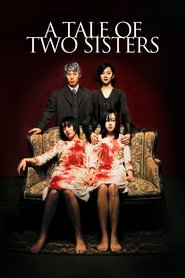
A Tale of Two Sisters (2003)
The most beautiful film in this set, and the beauty is the trap. Lee Mo-gae photographs the house in saturated greens, deep ambers, floral wallpaper, symmetries framed through doorway after doorway — horror hidden not in the dark but in the well-lit corner of a lovely room. Watch how the film treats its gorgeous interiors as a composed surface laid over something unresolved — and how, in the tradition of The Innocents and Repulsion, it never quite lets you sort what's real from what's grief. Let the wallpaper worry you.
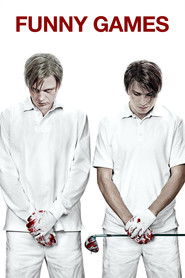
Funny Games (2008)
Haneke's shot-for-shot English remake of his own Austrian original, and the most confrontational film here. Watch how the cinematography refuses to help you: wide, stable, neutral compositions that decline to signal danger, and long static takes held far past comfort. Watch the casting, too — recognizable stars carry expectations of survival and rescue, and the film knows exactly what you're expecting. This is a thriller about wanting to watch thrillers, made in the middle of the torture-porn era as a direct challenge to it, and at a certain point it will address you personally.
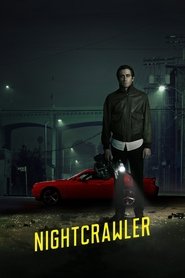
Nightcrawler (2014)
Robert Elswit shoots nocturnal Los Angeles as a glittering, depopulated grid — empty freeways, fluorescent convenience stores — and the film finds real beauty in it, which is precisely the problem. Watch the moment when Lou Bloom, freelance crime-scene videographer, stops merely recording what he finds and starts arranging it for the camera. The observer becoming the author of what he observes: that gesture is the entire film, a descendant of Ace in the Hole and Network, and a portrait of ambition wired directly to appetite.
Watched together, these films train a particular kind of attention. You start noticing what the camera withholds — the retreat down the staircase, the violence kept off-frame, the cut that never comes. You start reading rooms the way Paul Sheldon does: the position of an object, the angle of a door, the wallpaper that's a little too composed. And you start catching the films catching you — Haneke's static gaze, Kurosawa's hypnotic flame, Gilroy's beautiful footage of terrible things — each one asking, in its own register, what you came here to see. That's the reward of this set: by the twelfth film, you won't just be watching thrillers. You'll be watching how thrillers watch you.