Sightlines · a mini film course
The Look That Cannot Be Answered: Twelve Films About Love and the Space Between
Every film in this set is a love story, but none of them is really about whether two people get together. They are about the gap — the pause before an answer, the doorway between two rooms, the cut between two years, the distance between a face and the person watching it. These are films where the camera watches rather than chases, where time is allowed to stretch, where what's not shown carries as much weight as what is. Some are chamber dramas, some are epics, some are dreams; all of them ask you to slow down and notice where people look, what the frame withholds, and how long a feeling can be held before it has to become an action. Watch them as a set and you'll start to see one great subject turning under all of them: love as something that happens in the space between people, and cinema as the art of measuring that space.
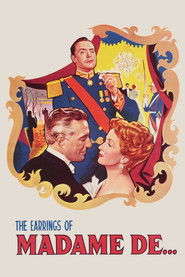
The Earrings of Madame de... (1953)
Watch the camera move — it almost never stops, gliding after characters through doorways, around corners, across ballrooms, as if the world itself were a waltz nobody can step out of. And watch the mirrors: from the very first minute we meet the heroine not as a face but as a reflection, a woman appraising the surface she has been taught to be. A pair of earrings passes from hand to hand, and Ophüls lets that small object trace the whole architecture of a society — its charm, its lies, its beautiful sealed rooms with no exit. Notice how the elegance never lets up, and how that becomes the point.
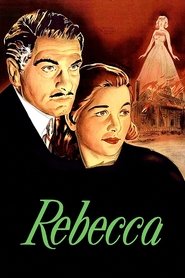
Rebecca (1940)
The title character never appears. No face, no flashback — just a monogrammed R, a preserved bedroom, a melody, a name said so often it becomes weather. Watch how Hitchcock and cinematographer George Barnes build an entire haunting out of absence: the gliding camera keeps gesturing toward someone it can never turn and find, and the vast shadowed house dwarfs the young bride on every staircase. This is a film about living inside someone else's legend, told almost entirely through what the frame refuses to show you.
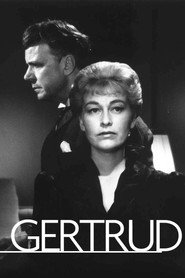
Gertrud (1964)
Two people sit on a sofa talking about love — and neither looks at the other. Watch for this: declarations delivered to the empty air, eyes fixed on some middle distance we can't see. Dreyer's last film is built from astonishingly few shots; scenes unfold in long, unbroken stretches, and figures are arranged with the stillness of a tapestry. It asks for patience and repays it strangely: this is a portrait of someone who sees everything with total clarity but has stopped expecting the world to answer, and once you notice where she looks, you can't stop seeing it.
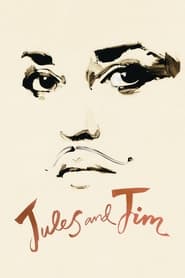
Jules and Jim (1962)
The image everyone keeps is the one that stops: a woman caught mid-laugh, head half-turned, and the film simply freezes and holds her — not at an ending, but in the middle of happiness, for no reason except love. Watch how Truffaut moves: handheld and quick, leaping across years, warm where his New Wave contemporaries were cool. And watch for the statue — before the two friends ever meet this woman, they make a pilgrimage to a photograph of a stone face whose smile resembles hers. The film keeps asking what it means to fall in love with an image.
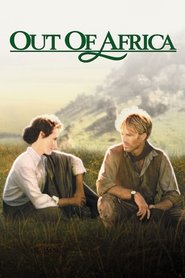
Out of Africa (1985)
Wait for the biplane. For two or three unbroken minutes the story simply stops, and the Rift Valley tilts and unscrolls beneath the wings while John Barry's score does the speaking. Watch how often Pollack sets a still human figure against a vast moving landscape: the character does nothing, and the world performs the emotion instead. This is a film about the impossibility of possessing anything — land, a lover — and its most eloquent passages are the ones where there is nothing to be done, only something to be seen.
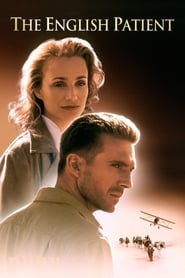
The English Patient (1996)
The opening aerial shots show dunes that aren't quite dunes — the wind has worked them into a hip, the furrow of a back, a sheet pulled to one shoulder. John Seale lit sand and skin so they would rhyme, and the film never lets the rhyme go. Watch how the structure works: a man who cannot move, laid out in a bombed villa, for whom nothing remains but memory — and a past that arrives not in tidy flashbacks but as a door opening into time. Small present-tense things — a dressing changed, wind in stone rooms — sit beside epic recollection, and the film's meaning lives in the traffic between them.
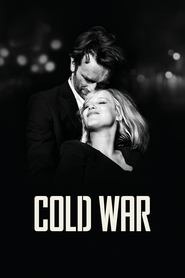
Cold War (2018)
A scene ends. Black screen. When the picture returns, a year has passed, a border has been crossed, and the lovers are somewhere else — older, more damaged. You were never shown the leaving. Watch what this film buries in its cuts: fifteen years and half of Europe in eighty-eight minutes, with every rupture happening in the dark between shots. Watch, too, how Żal's black-and-white frames push the characters low beneath looming skies and ceilings, and how a single folk song keeps returning in new costumes — field recording, state anthem, jazz ballad — as history keeps rewriting it.
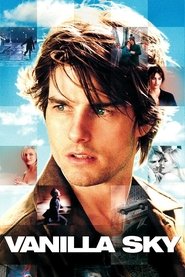
Vanilla Sky (2001)
Early on, a man drives into Times Square and finds it scrubbed clean of every other human being — and the film shows you this gorgeous, depopulated nightmare before telling you anything is wrong. That's the trick in miniature: John Toll's cinematography gives the hero's privileged world a lush, high-gloss sheen, and the film weaponizes that beauty as a warning. Watch with suspicion. When an image seems too perfect to trust, you're being told something. Notice the songs, too — Crowe curates every needle-drop as a layer of narration, not decoration.
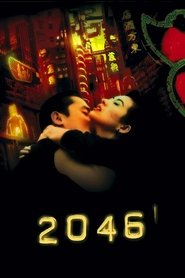
2046 (2004)
Wong Kar-Wai shoots corridors and doorways with long lenses that flatten bodies against walls, in near-darkness that turns backgrounds into molten color. Watch for the stutter: individual frames printed two and three times over, so that a single second of hesitation — a face deciding whether to answer — swells into something you can almost climb inside. The film moves between the amber hotel corridors of 1960s Hong Kong and the cold blue carriages of a science-fiction train, and the two aren't story and flashback so much as two faces of one turning stone. This is a film about love arriving a beat too late, and the delay itself is the subject.
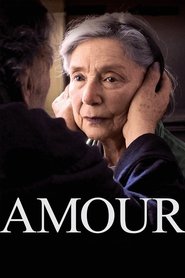
Amour (2012)
Early on, at a piano recital, Haneke points the camera the wrong way — at the audience instead of the stage — and makes you hunt through a crowd of strangers to find the two people this film is about. That's your job from then on: to watch. The camera is mostly static, held at a respectful middle distance; a meal is prepared, a body is lifted, nearly in real time. Watch how the refusal to cut away, to add music, to soften anything, becomes its own form of devotion. The title is not ironic, and the film spends two hours earning it.
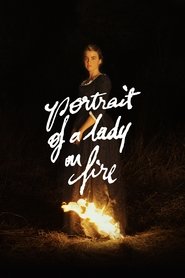
Portrait of a Lady on Fire (2019)
This is a film where looking is the event itself, not the prelude to one. Watch the traffic of glances: a painter memorizing a face on cliff walks, reconstructing it at night from stolen glimpses — and then the moment the model climbs onto the stool and looks back, straight into the lens, and the whole film reorganizes. Notice how long Sciamma holds a face, and how much a still expression can register when the shot refuses to end. And notice what she withholds: almost no score, so that when music finally arrives, it lands like an earthquake.
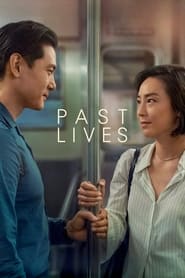
Past Lives (2023)
The film opens by handing its own puzzle to strangers: three people sit in a bar, and across the room, people we never meet try to guess what they are to each other. Before we know a single name, we've been assigned a job — reading lives from the outside. Watch how Shabier Kirchner's patient, often static camera treats the physical distance between bodies as the film's real subject: who stands in a doorway, who's separated by a frame edge, how far apart two people sit. Built on the Korean idea of in-yun — connection as the residue of countless past lives — it's a film about the staggering improbability of any two people meeting at all.
Watch these together and something happens that no single film can do alone. The frozen laugh in Jules and Jim teaches you to see the held hesitation in 2046; the mirror in Madame de... prepares you for the too-beautiful surfaces of Vanilla Sky; the absent woman haunting Rebecca echoes in the buried cuts of Cold War; Dreyer's averted gazes flower into the answered gaze of Portrait of a Lady on Fire. These twelve films, spanning eight decades, keep circling the same discovery: that the deepest moments in a love story are the ones where nothing can be done — only seen, endured, remembered. Train your eye on the pauses, the distances, and the gaps between shots, and you'll find that's where these filmmakers put everything that matters.