Sightlines · a mini film course
There's a moment in nearly every one of these films where a person sees something — a theft, a landscape, a loss, another human being — and simply cannot answer it with action. That's the through-line here. Between 1943 and 1976, a handful of Italian filmmakers took the oldest engine in movies — hero sees problem, hero fixes problem — and quietly switched it off. What replaced it wasn't emptiness. It was a new kind of attention: the camera watches rather than chases, time is allowed to stretch, and a face registering the world becomes as gripping as any car chase. Watch these twelve in roughly this order and you'll see the idea born in the rubble of the war, refined into crystalline art films, and pushed to its furthest extremes.
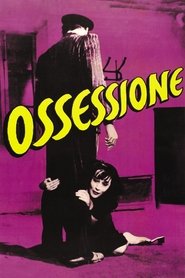
Obsession (1943)
Before the movement had a name, Visconti made this: a crime melodrama shot in the hazy flatlands of the Po Valley, all sun-glare, sweat, and a cluttered roadside trattoria that feels genuinely lived-in. Watch how the drifter Gino is introduced — slumped among the freight sacks, a body of pure appetite before he's a character at all. Visconti learned location shooting from Renoir, and here he uses real places not as backdrop but as a thin crust over something older and hungrier. Everything neorealism became starts in this heat and idleness.
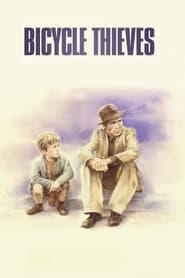
Bicycle Thieves (1948)
The essential neorealist film, and structured with deceptive simplicity: one man, one day, one stolen bicycle, real Roman streets, a non-professional actor. Notice how the camera refuses to aestheticize poverty — no dramatic shadows, no tilted angles, just bodies held inside social space in long and mid shot. The great innovation is what the search doesn't do: perceiving a catastrophe perfectly and being unable to act adequately on it becomes, for the first time, the whole subject of a film. Watch the father and son walk, and notice how much a film can carry without any plot machinery at all.
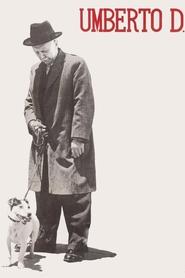
Umberto D. (1952)
De Sica strips away even the narrative engine of Bicycle Thieves. A retired civil servant, his pension short, his dog beside him — and dignity as the daily battle. Watch the small gestures: the film famously builds whole sequences from ordinary routine, filmed at full length, and there's a moment involving an outstretched hand on a street that contains everything the movie has to say about shame and decency. G.R. Aldo's soberly elegant black-and-white photography gives poverty a mournful gravity without ever prettifying it.
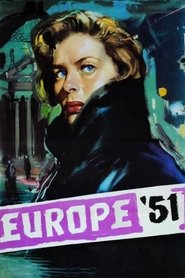
Europa '51 (1952)
Rossellini's film about attention itself — a bourgeois woman who, after a devastating loss, begins truly seeing the suffering around her, and discovers what that seeing costs. Watch the camera hold on Ingrid Bergman's face for durations longer than convention allows, in the tradition of Dreyer's Joan of Arc. The key sequence puts her on a factory assembly line for a single shift: nothing is decided, nothing resolved, and yet everything tips. This is a film where looking is the drama.
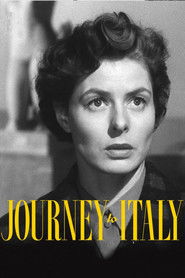
Journey to Italy (1954)
An English couple drives south to sell an inherited villa, and the marriage comes apart not through confrontation but through drift. Watch what Katherine watches: museum statuary, catacombs, the steaming ground of the Solfatara, Pompeii's excavations — a landscape saturated with death and fertility that keeps speaking to her when her husband won't. The camera's plainness is the achievement: it observes her observing, and lets the ancient world do the work a screenwriter would normally do. This film became a template for half of modern cinema, including two directors below.
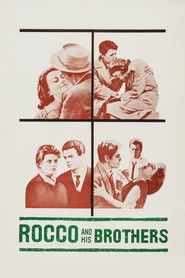
Rocco and His Brothers (1960)
Visconti grafts opera onto the documentary method he'd helped invent. A southern widow and her five sons arrive in a foggy, wet-paved Milan of unfinished apartment blocks, and Rotunno's photography moves between grainy social realism and charged, sculptural chiaroscuro as the family saga darkens. Watch the split in the film's own style — observation versus melodrama — and watch Alain Delon play goodness as a kind of stillness. The film's tragedy is built on loyalty to family as an ideal that the modern city no longer supports.
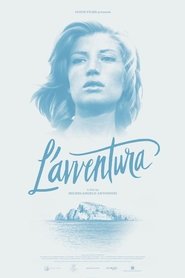
L'Avventura (1960)
The scandal of its premiere and the hinge of art cinema: a mystery film that sets its mystery running and then lets it dissolve. Watch how Antonioni frames people — drifting to the edges, obscured by rock and column, dwarfed by the volcanic island until they read as marks on stone. Nobody says what they mean, because nobody quite knows what they mean; the drama lives in held shots of near-but-unreachable bodies against flat sea. Let it be slow. The slowness is the content.
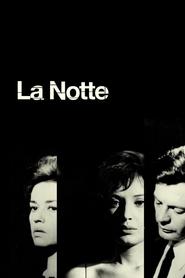
La Notte (1961)
A day and a night in a marriage, set against Milan's glass curtain walls and half-built peripheries — architecture photographed as an active presence rather than backdrop. Watch the long sequence where Lidia simply walks through the city: you keep expecting the walk to arrive somewhere, and its refusal to arrive is the point. A celebrated novelist with nothing left to say, a wife who understands him too well — Antonioni turns "nothing happens" into an exact portrait of two people who take in everything and can convert none of it into a deed.

L'Eclisse (1962)
The most formally daring of the trilogy. Watch Di Venanzo's geometry: characters framed against walls and windows that subdivide the image, a woman reduced to a small figure in the vast abstract plazas of Rome's EUR district. The Stock Exchange sequences give you collective frenzy; the love story gives you feeling that can't hold its shape long enough to become what anyone hoped. And stay for the famous final minutes, in which Antonioni hands the film over entirely to places and objects — one of the boldest endings ever cut, and all the more powerful the less you know going in.
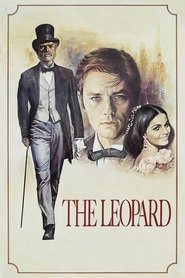
The Leopard (1963)
Visconti's aristocratic masterpiece: the Risorgimento seen through a Sicilian prince who understands his class's extinction more completely than anyone else — and lifts not one finger. Rotunno's photography is explicitly modeled on 19th-century Italian painting; the film moves like a series of magnificent tableaux, holding shots long past conventional rhythm. Watch the ball sequence, an entire social world rendered in choreographed camera movement (Visconti learned from Ophüls's waltzing ballrooms), and watch Burt Lancaster's prince watching it all — a man who perceives history perfectly and greets it with lucid, devastating stillness.
Red Desert (1964)
Antonioni's first color film, and he treats color as something to author: he had the grass along the refinery road literally painted gray. Watch Monica Vitti's Giuliana move through Ravenna's petrochemical landscape not numb but flooded — a face in constant micro-attention, registering steam, engine-throb, industrial sound she cannot discharge into any action. Di Palma's telephoto lenses flatten space until the world looks like her nervous system turned inside out. The question the film keeps open: is her distress illness, or an accurate response to a world nobody evolved to inhabit?

Salò, or the 120 Days of Sodom (1976)
Fair warning: this is the most difficult film here, by design — Pasolini's reckoning with fascism, staged as Sade's catalogue of appetites inside a rationalist villa, structured on Dante's descending circles rather than any narrative arc. But watch how it's made: Delli Colli lights it cool and even, like an official document; the compositions are painterly, frontal, held at a deliberate distance. That distance is the argument — power as consumption, atrocity administered with a bureaucrat's blandness, and watching itself put on trial. It belongs here because it takes the tradition's beautiful surfaces and the drives beneath them (the pairing Visconti discovered in Obsession) to their terminal point.
Why watch these together? Because they teach you a different way of being an audience. Each film trains your eye a little further: Bicycle Thieves shows you that a search can matter more than its outcome; Umberto D. that a routine filmed in full is drama; Rossellini that a face taking in the world is an event; Antonioni that a landscape can carry what dialogue can't; Visconti that history is something a person can watch happen to himself. By the time you reach the painted grass of Red Desert or the cold rooms of Salò, you'll notice you've stopped waiting for things to happen — and started seeing what's actually in the frame. That shift, from waiting to watching, is the gift this whole tradition offers. Let the films be slow. They're not withholding anything. They're giving you time.