Sightlines · a mini film course
When Watching Becomes the Story: Italian Cinema Learns to Hold Still
Something remarkable happened in Italian cinema between the rubble of 1945 and the painted landscapes of 1964. The movies stopped chasing their characters toward solutions and started simply watching them — with patience, with tenderness, sometimes with terrible clarity. In these twelve films you can trace a single, thrilling arc: from the war-torn streets of Rossellini's Rome, where ordinary people try to act on their world and find the world won't answer, through De Sica's heartbreaking portraits of people society has quietly discarded, to Visconti's operatic ruins and finally Antonioni's near-empty frames, where the buildings and spaces themselves seem to do the feeling. The through-line is a shift in what a camera is for: not to follow the plot, but to stay in the room when the plot fails to arrive. Watch for the moments when nothing "happens" — a woman standing on rocks, hands on an assembly line, a walk through a half-built city — and notice how full those moments are.
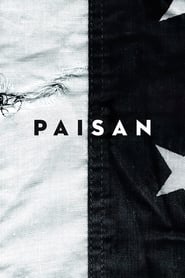
Paisan (1946)
Six episodes, shot on the still-warm ground of a just-liberated Italy, with a camera that pans and reframes mid-shot as if reacting rather than directing. Watch how the language barrier between Americans and Italians becomes the film's real subject — people reaching across a distance with gestures, matches, photographs — and how rarely the reaching lands the way anyone intends. This is where the whole tradition begins: real streets, non-professional faces, and drama built from misunderstanding rather than villainy.
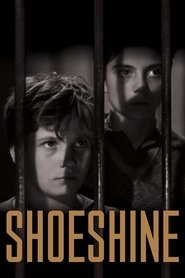
Shoeshine (1946)
De Sica opens on two shoeshine boys and a gleaming white horse — the one clean thing in a grey, occupied Rome. Watch how the film establishes their friendship as its moral center, and how the adult world presses in on it not through malice but through indifference and institutional machinery. Notice the documentary attentiveness of the street scenes, always keeping the boys legible in the crowd: children as the clearest lens on a broken social order.

La Terra Trema (1949)
The most rigorous and the most beautiful of the neorealist films at once: real Sicilian fishermen speaking their own dialect, composed by G.R. Aldo in long, deep-focus takes of astonishing painterly control. Watch the women in silhouette on the black rocks before dawn, held far longer than any plot requires — the film announcing that watching is its subject. Notice how the sea works as both livelihood and adversary, and how the geometry of nets, doorways, and boats frames a family against forces much larger than any single act of will.
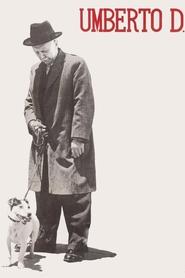
Umberto D. (1952)
A retired civil servant, his dog, and a pension that no longer covers the rent. Watch the famous early moment when Umberto extends his palm on the street, then turns it over as if checking for rain — a tiny lie told to preserve dignity, and the whole film in one gesture. Aldo's sober, mournful black-and-white gives every small routine its full weight; the celebrated sequence of the maid simply waking up and beginning her morning, filmed at real duration, quietly changed what movies were allowed to do. Antonioni was taking notes.
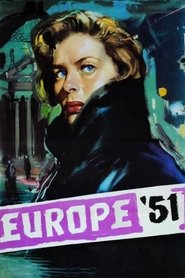
Europa '51 (1952)
Rossellini follows a bourgeois woman whose grief cracks her open to the suffering around her — and watch what the camera does: it observes rather than intervenes, holding on her face for longer than convention permits. The assembly-line sequence, where she covers a shift for a sick worker and the machine hands her a single repeated motion, is one of the great scenes of pure looking in cinema. The film's real subject is attention itself — what it costs to truly see another person — and how uncomfortable that makes everyone around her.
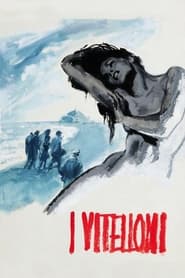
I Vitelloni (1953)
Fellini's five overgrown boys drift through an off-season seaside town where the wind scours the empty piazza. Watch the Carnival aftermath: a drunk man slow-dancing with a giant papier-mâché head as the ballroom empties — melancholy and comedy fused into a single image. Notice how the film keeps the neorealist look (real locations, black-and-white street life) while turning inward, toward fantasy, procrastination, and the ache of a life perpetually postponed.
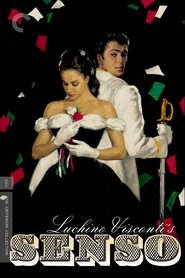
Senso (1954)
Visconti's leap into Technicolor, opera, and history — and watch the opening at La Fenice, where patriotic leaflets flutter down onto white Austrian uniforms mid-aria: politics, passion, and performance arriving in a single shower of paper. The film's photography has its own poignant story — begun by Aldo, who died during the shoot, and completed by Robert Krasker of The Third Man — and you can feel both hands: painterly realist daylight and candlelit, shadow-carved interiors. Everything you see is exquisite, and everything you see belongs to a world that is gorgeously, visibly dying.
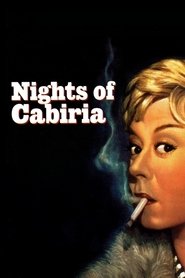
Nights of Cabiria (1957)
Fellini's small, indomitable heroine works Rome's peripheral roads, gets knocked down, and gets up again — watch how the film builds its structure from that rhythm of loss and recovery rather than from a driving plot. Tonti's cinematography moves between raw headlight-and-darkness naturalism and something more charged and theatrical. And stay alert near the end for one of cinema's great faces: a look that turns, against all reason, toward the lens — and toward you.
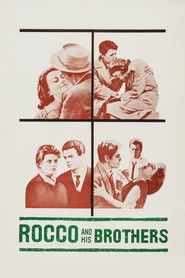
Rocco and His Brothers (1960)
A southern family steps off the train into a Milan of fog, wet pavement, and half-built suburbs, and Visconti observes them with documentary patience — then grafts full-throated opera onto that ground. Watch Rotunno's black-and-white shift between grainy social realism and blazing chiaroscuro as the family saga intensifies. And watch Alain Delon play goodness as a kind of paralysis: a man whose stillness, whose watching, becomes the most charged thing in the frame.
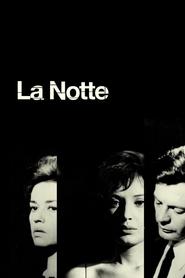
La Notte (1961)
A writer and his wife move through a single Milanese day and night, and the architecture — glass curtain walls, brutalist towers, half-finished buildings — takes the center of the frame while the people drift to its edges. Watch Lidia's long walk through the city: you keep waiting for it to lead somewhere, and its refusal to arrive is precisely the point. Di Venanzo photographs buildings as active presences, and the film's real drama is the space between two people who see each other clearly and can do nothing with what they see.

L'Eclisse (1962)
Antonioni's grammar of negative space, perfected: characters framed against walls, windows, and glass that subdivide the image, a woman reduced to a small figure in a vast modernist plaza. Watch how the film begins after the emotional event a conventional melodrama would build toward, and spends its time in the aftermath. And know that the ending — several minutes of a street corner, patiently observed — is among the most famous passages in all of cinema, a demonstration of what happens when a film stops asking its images to do anything and lets them simply be.
Red Desert (1964)
Antonioni's first color film, and he treats color as material: he had the grass along the refinery road literally painted grey, so that nothing growing could look alive. Watch Monica Vitti not as someone numb but as someone flooded — a face in constant micro-attention, registering steam, engine-throb, industrial sound she cannot convert into action. Di Palma's telephoto lenses flatten Ravenna's petrochemical landscape into something between nightmare and abstract painting: a world authored down to the chlorophyll to match the inside of one woman's head.
Watch these together, roughly in order, and you'll see a national cinema teach itself — and then teach the world — a new patience. The early films break the old machinery honestly: people try to act, and a war-wrecked, rigged world refuses to answer. De Sica turns that broken circuit into unbearable tenderness; Fellini finds grace and comedy inside it; Visconti scales it up to opera and lets whole worlds gleam as they rot; Antonioni empties the frame until the spaces themselves carry the emotion. The reward for your attention is that these films train it. They ask you to do what their characters do: not to solve, but to see — to notice the turned hand, the held silhouette, the streetlamp, the painted grass. By the last film, you'll find that watching has become its own kind of event, and that a camera holding still can be the most dramatic thing in the world.