Sightlines · a mini film course
The Camera That Watches: Italian Cinema Learns to Hold Still
Here is the secret thread running through this set: over about thirty years, Italian filmmakers taught the movies a new posture. Classical cinema chases — a character sees a problem, acts, and the story leaps forward with them. These films, made in the rubble of the war and the strange prosperity that followed, discovered what happens when the camera watches instead. Their people see their world with painful clarity — poverty, a rigged market, a marriage gone quiet, a landscape turned chemical — and find that no action quite answers what they see. So the films slow down, let time stretch, let a street corner or a face or a piece of architecture carry the weight a plot used to carry. Watched in sequence, this is the story of a national cinema moving from the documentary streets of neorealism into something dreamier, colder, more painterly — without ever losing the habit of patient looking.
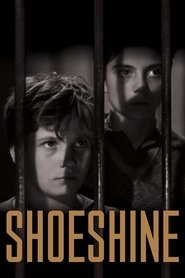
Shoeshine (1946)
De Sica shoots postwar Rome with documentary attentiveness — real crowds, military vehicles, the black market — while keeping two shoeshine boys legible inside the swirl. Watch how the film opens on an image of pure joy (a white horse, gleaming against a grey city) and then measures everything after against it. Notice, too, how the machinery of harm here isn't villainy but institutional indifference: nobody has to be evil for the world to close in.

La Terra Trema (1949)
The most rigorous neorealist experiment of all — real Sicilian fishermen playing themselves, in their own dialect — yet photographed by G.R. Aldo with astonishing formal beauty: long deep-focus takes, figures framed in dark doorways, silhouettes of women on volcanic rocks watching for boats. That tension is the thing to savor: raw documentary material composed like painting. Watch how drama is built from the rhythms of actual work — nets, salt, dawn departures — rather than imposed plot.
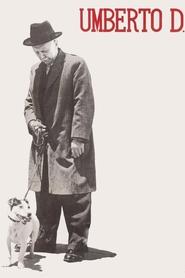
Umberto D. (1952)
De Sica strips away even the story engine that powered Bicycle Thieves and simply follows a retired pensioner through his days. Watch the hands and gestures — the film is fascinated by the tiny performances of dignity, the effort to seem fine while everything erodes. And watch for a famous extended sequence of a maid simply waking up and starting her morning: pure everyday non-event, filmed at full length. It looks like nothing; it opened the door for a decade of cinema to come.
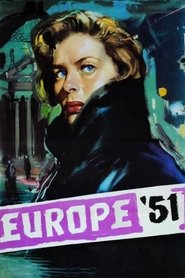
Europa '51 (1952)
Rossellini's camera holds on faces longer than convention allows, avoiding all expressive embellishment, and the film's true subject is attention itself — what it costs to genuinely perceive another person's suffering. Watch the sequence where a bourgeois woman covers a shift on a factory assembly line: the film simply stays with her hands and eyes as the machine sets the rhythm. Nothing is decided in the shot, and that's the point — looking, here, is an event.
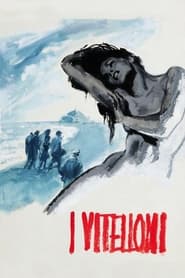
I Vitelloni (1953)
Fellini takes neorealism's real streets and turns them toward five young men who do nothing at all — drifting through a seaside town in the off-season while the wind scours the empty piazza. Watch how episodes replace plot: nights simply run down rather than resolve. The film's melancholy comedy lives in the gap between the men's fantasies and the town's stillness, and Fellini treats their inertia with tenderness rather than scorn.
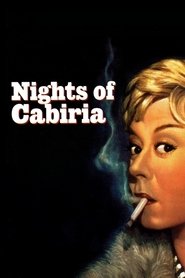
Nights of Cabiria (1957)
Aldo Tonti shoots Rome's periphery raw — headlights slashing the dark on an arterial road — but Fellini fills that realist frame with a heroine built from silent-comedy resilience, part Chaplin's Tramp. Watch the pattern of Giulietta Masina's face: how the film uses her expressions, rather than events, as its real story. And watch how Cabiria's undentable expectation of goodness is filmed not as foolishness but as a kind of grace.
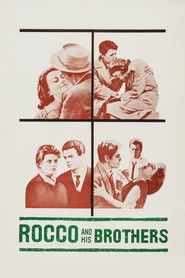
Rocco and His Brothers (1960)
Visconti grafts opera onto documentary: Giuseppe Rotunno's photography moves between grainy realism — wet Milanese pavement, fog, unfinished apartment blocks — and blazing high-contrast light that lifts scenes toward tragedy. Watch that switch happen within single sequences. Notice also how much of the film is people watching each other, and how stillness in this family saga can be the most charged thing in the frame.
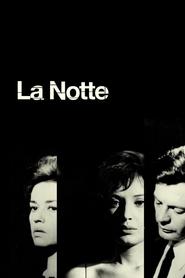
La Notte (1961)
Antonioni photographs Milan's modernist architecture — glass curtain walls, brutalist towers, half-built structures — not as backdrop but as an active presence, often given the center of the frame while the human beings drift to the edges. Watch the long sequence of a woman simply walking through the city: you keep expecting the walk to lead somewhere, and instead the walking is the content. A marriage is being measured against a skyline.

L'Eclisse (1962)
Here the grammar becomes almost geometric: characters framed against walls, windows, reflective surfaces that slice the image — one person inside a car window, another outside it. Watch how Antonioni uses the vast plazas of Rome's EUR district to shrink his people to figures in an abstract composition. And notice how the film begins after the dramatic event a conventional movie would build toward: we arrive in the aftermath, where feeling won't hold its shape.
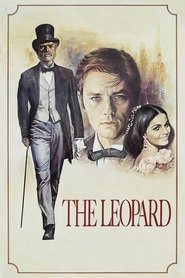
The Leopard (1963)
Visconti and Rotunno compose the film explicitly after 19th-century Italian painting — warm, thick light in the Sicilian villa, every frame a canvas. The famous extended ball sequence is a masterclass: a mobile camera gliding through waltzing crowds, keeping aristocrats and servants and history all legible at once. Watch a prince who understands his world's transformation more completely than anyone around him — and watch what the film does with a man whose deepest act is comprehension.
Red Desert (1964)
Antonioni's first color film, and he treats color as authored reality: he famously had the grass along the refinery road painted grey so nothing growing could look alive. Watch Carlo Di Palma's telephoto compressions turn Ravenna's petrochemical landscape into the inside of a woman's head. Monica Vitti plays not numbness but flood — a face registering steam, sound, engine-throb, taking in more than any action could discharge.

Salò, or the 120 Days of Sodom (1976)
The endpoint, and the hardest watch — approach it knowing what it is. Pasolini borrows Dante's structure of descending circles in place of a plot, and Tonino Delli Colli lights a rationalist villa with cool, even, deliberately undramatic precision, like an official document. Watch the film's ferocious argument about distance: measured medium and wide shots that refuse to let horror become spectacle, indicting the very act of civilized spectatorship. It is a reckoning with fascism made by a filmmaker who came out of neorealism and turned its observational ethic into an accusation.
Watch these together and you'll feel a single lesson deepen across three decades: that looking can be dramatic, that time given room to stretch reveals things action conceals, and that a street corner, a factory floor, or a painted-grey weed can carry as much meaning as any plot turn. The neorealists earned this patience in the ruins of the war; Fellini warmed it, Visconti made it operatic, Antonioni cooled it into architecture, and Pasolini finally turned it back on the audience like a mirror. By the end, you won't just have seen eleven great Italian films — you'll have watched cinema itself learn a new way of paying attention. Bring your own.