Sightlines · a mini film course
The Detective Who Can't Look Away: A Mini-Course in Crime, Obsession, and the Cracked Mirror
Every film in this set begins with the same promise: a crime, a hunter, a trail of clues, and the assurance that following them will restore order. Then each film, in its own way, breaks that promise — or bends it, or hollows it out, or turns it into a hall of mirrors. What connects these twelve movies isn't just murder and investigation. It's a shared fascination with what happens when looking isn't enough — when the detective sees perfectly and still can't act, when the camera makes you the watcher (or the watched), when the world itself refuses to give up its answer. Watch them as a set and you'll see a century of cinema learning, film by film, that the pleasure of a mystery might not be the solution at all. It might be the atmosphere, the dread, the faces, the light — and the strange, implicating position of the person in the audience, holding all the clues.
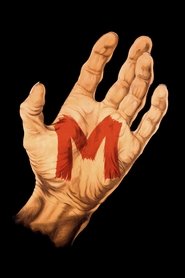
M (1931)
Watch what Lang doesn't show you. A ball rolls out of the grass and stops; a balloon tangles in telephone wires — and you assemble the horror yourself, from the edges of the frame. Listen, too: a whistled tune becomes a warning system, arriving before the face it belongs to, so that your ears learn to dread before your eyes have anything to fear. Fritz Arno Wagner's photography carries German Expressionism's deep shadows into something cooler and more streetwise — architecture as social environment rather than nightmare — and the film's most unsettling question is about the crowd, not the killer: who has the right to judge, and when does punishment become another form of violence?
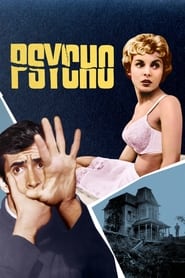
Psycho (1960)
This is a film organized around looking — who looks, through what frame, and what looking costs. Marion Crane is watched from her very first scene: by a boyfriend, a boss, a highway patrolman staring through her car window in sustained, wordless threat. Notice how Hitchcock makes you one of the watchers, and how John L. Russell's clean, functional television-trained style — deep focus, confined spaces, no atmospheric fuss — makes the surveillance feel matter-of-fact rather than gothic. Pay attention to the drain and the eye, and to how the film's most famous violence is built from fragments in the cutting room rather than shown whole. What Hitchcock does with your allegiance in the first act is one of cinema's great acts of misdirection.
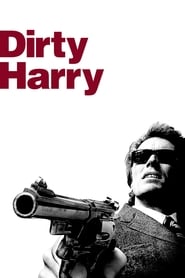
Dirty Harry (1971)
The opening shot puts you behind a rifle scope, looking down at a woman in a rooftop pool — and the rest of the film lives in the discomfort of how comfortable that felt. Siegel and cinematographer Bruce Surtees use the widescreen frame to turn San Francisco into a moral map: the killer perched godlike above the city, Harry shoved to the margins. This is the crime film at its most muscular — a man sees, a man acts, the machinery of pursuit runs hot — but watch how the film keeps asking whether the avenger is contaminated by the violence he answers, and whether the institutions around him have failed or he has simply stopped waiting for them.

Chinatown (1974)
Forget the noir night: cinematographer John A. Alonzo shoots the pivotal moments in harsh California midday, amber and dust, a sun-bleached world where daylight offers no clarity and shadow no refuge. Watch the detective's methods — the tailing, the photographs, the wade into the irrigation channels — staged as immaculate procedural craft, and then watch what each discovery actually does. And keep your eye on that white bandage across Jack Nicholson's nose: a detective who can't follow his own nose, the joke taped to his face, with the director himself playing the little thug who put it there. Water runs through everything here, as resource and as metaphor — power flowing around obstacles, shaping the landscape invisibly.
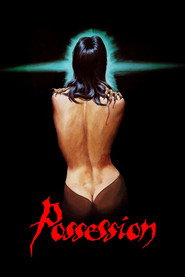
Possession (1981)
A warning and a promise: this one operates at a pitch no other film here attempts. Bruno Nuytten's camera behaves like an anxious participant — wide-angle and close, circling the actors, refusing the calm grammar of shot and reverse-shot — and Żuławski directs his performers to the edge of collapse as a deliberate system, not an accident. Watch the famous underpass scene as the film's thesis: a body no longer acting on the world but undergoing it, convulsion sustained past anything a plot would need. Marriage and divorce rendered as cosmic catastrophe, shot in a divided Berlin by a director in exile — the setting and the psyche mirror each other everywhere.
The Silence of the Lambs (1991)
The signature device is simple and devastating: when characters address Clarice Starling, they look almost straight into the lens — so for the length of the shot, you stand where she stands, being sized up, condescended to, appraised. Tak Fujimoto rations this frontal gaze carefully, saving the most direct eyelines for the moments of sharpest scrutiny, so it never loses its charge. This is a film about seeing and being seen as instruments of power and survival, and its heroine's quiet heroism lies partly in refusing to be reduced to what the men looking at her want to make of her. Notice how much of the film's dread is carried by faces, not violence.
True Romance (1993)
Tony Scott shoots Tarantino's script in bruised blues and molten ambers, saturated to the edge of abstraction — image as pure sensation, closer to a perfume ad than to gritty realism, and that's the point. Clarence is a man assembled from other people's pictures: comic books, movie posters, an Elvis in the bathroom mirror dispensing advice with no dream-dissolve to soften it. Watch how the film holds extreme violence and extreme tenderness in the same frame, and how it argues — with a straight face — that a love built entirely out of pop culture can still be real. The lovers-on-the-run tradition runs from Gun Crazy through Godard to here; this is its neon-lit, unembarrassed heir.
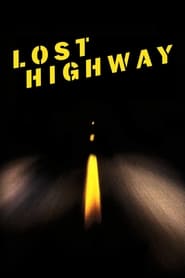
Lost Highway (1997)
A man indoors hears a message through his own front-door intercom, and no one is outside. Hold onto that — the film is folded inside it. Peter Deming photographs the Madison house as engulfing darkness, rooms defined by what can't be seen, people walking into blackness and dematerializing, set against bleached sun-struck exteriors. Lynch takes every piece of noir furniture — the femme fatale, the gangster, the surveillance tapes — and strips out motive, explanation, and detection. Don't try to sort the "real" from the imagined; the film deliberately refuses the cut that would let you. Watch instead for doubling: one actress, two women (or is it one?), and a story shaped like a loop with no seam.

Dark City (1998)
At midnight, the city falls asleep standing up — and the buildings begin to move. Dariusz Wolski shoots in near-total night, hard sourced light carving figures from darkness in the 1940s manner but pushed toward the grotesque, the camera craning and canting through vertical space. This is the direct heir of Metropolis and Caligari: a metropolis with no sun, no edge, no history you can trust. Watch for the one word everyone can say but no one can reach — Shell Beach — and for the film's central question: if memory can be removed and identity reassigned, is there anything left underneath that's genuinely you?
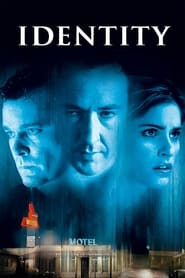
Identity (2003)
Ten strangers, a storm, a Nevada motel, and a numbered room key laid on every body — a countdown stamped into the décor. You'll think you're keeping score in an Agatha Christie puzzle (the film openly adapts the And Then There Were None blueprint), and the fun is in what that scorecard is really counting. Phedon Papamichael shoots the motel in sodium-vapor amber and cold rain-silvered blue, identical doors lined up like a multiple-choice question, the space deliberately stagey and sealed. Notice how artificial it all feels — that hermetic quality is a clue in itself, hiding in plain sight.
Memories of Murder (2003)
The camera finds a body in an irrigation ditch and doesn't rush to it — it drifts sideways, slow and lateral, giving the dead no more visual weight than the dirt embankment above. Kim Hyung-goo's wide, patient frames refuse the procedural's usual grammar of close-up intensity, where faces drive revelation; here the landscape absorbs the crime. Bong inherits Chinatown's template directly and pushes it further: watch how a system that brutalizes its suspects cannot produce reliable knowledge, and how the film turns the machinery of investigation — the leads, the interrogations, the lab reports — into a portrait of an entire society under strain. It's a slow burn that rewards every minute you give it.
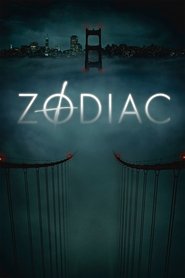
Zodiac (2007)
Harris Savides shoots by practical light — desk lamps, fluorescents, faces falling half into darkness — in the direct lineage of All the President's Men's newsroom photography: actors pooled in lamplight against dark voids. This is the procedural stripped of glamour and pushed to its logical extreme: watch the hardware-store basement scene, where a man is bodily certain of what he knows and that certainty cannot be booked, charged, or even spoken aloud with force. Fincher's real subject is obsession — what drives people to pursue certainty past the point their institutions, marriages, and health can bear — and the film's Bay Area geography carries an unusual personal investment for this most controlled of directors.
Why watch these together? Because sequenced this way, they form an argument. Lang teaches you in 1931 that the most powerful image can be the one withheld; Hitchcock teaches you that your own gaze is part of the crime; Siegel and Polanski, in the same anxious decade, show the detective at full power and at total impotence; Demme hands you the heroine's exact position in the room; and Fincher, Bong, Lynch, Proyas, and Mangold each dismantle a different load-bearing wall of the mystery — the solution, the stable self, the trustworthy world. Żuławski and Scott are the wild outliers that prove the range: one turns a marriage into a horror film of pure bodily endurance, the other turns crime into a valentine written in neon. Watch for the rhymes — motels in the rain, whistled tunes and countdown keys, cameras that look down rifle barrels or straight into your eyes — and you'll find that these twelve films have been talking to each other all along. All you have to do is listen in.