Sightlines · a mini film course
The Detective Who Can't Look Away: A Course in Watching, Reading, and the Crimes That Refuse to Close
Every film in this set is built around an act of looking — a detective following clues, a cop on a stakeout, a man at a telescope, a killer being watched by an entire city. But these aren't stories where seeing leads cleanly to solving. Again and again, these filmmakers turn the machinery of the crime picture against itself: the camera watches rather than chases, the evidence asks to be read rather than acted on, and the gap between witnessing something and being able to do anything about it becomes the real drama. Watch these twelve films together and you'll see a century-long conversation about what happens when the person looking — the detective, the cop, the voyeur, and yes, you in your seat — gets pulled into the crime they thought they were only observing.
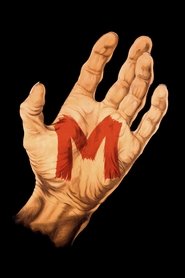
M (1931)
The founding text — the first serial killer film, and a masterclass in making the audience do the work. Watch how Lang refuses to show you the worst thing: a child's ball rolling to a stop, a balloon tangled in telephone wires, a mother calling into an empty stairwell. The absence tells you everything, and you become a collaborator from the first minutes. Listen, too, for a whistled tune — Grieg's "In the Hall of the Mountain King" — and notice how Lang teaches you a rule of sound so that your ears become the detective before any character catches up.
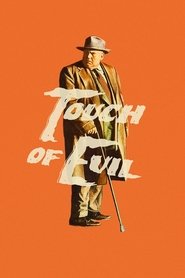
Touch of Evil (1958)
The film opens with one of the most famous shots ever made: a camera that lifts off the ground and threads three unbroken minutes of border-town traffic, music, and neon while a bomb ticks in a car trunk. No cut — the whole town breathes as one connected thing. Then hold that against the film's other signature image: a massive cop shot from floor level, ceiling pressed down on his head like a lid. Welles and cinematographer Russell Metty build scenes by moving actors toward and away from a wide-angle lens instead of cutting, so watch how proximity — a face suddenly looming — does the work editing usually does.

Chinatown (1974)
Noir traditionally hides its crimes in shadow; this film commits them in blinding California daylight. Watch John Alonzo's amber, sun-bleached palette and notice how harsh midday light offers no more clarity than darkness would — a sunlit world where you still can't see. And watch Jack Nicholson's face: for half the film his detective wears a white bandage across his nose, a sight-gag with teeth — a man paid to sniff things out who literally can't follow his own nose. Notice how every discovery he makes seems to tighten rather than loosen the knot.
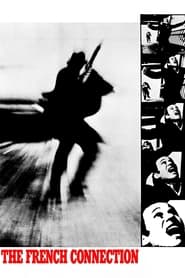
The French Connection (1971)
Shot in a New York winter with handheld cameras and available light — greys, browns, wan fluorescents — this is the crime film as raw weather report. Watch the surveillance sequences through Owen Roizman's telephoto lens: the flattened, grainy distance of a man watching from across a street. And watch for one perfect wordless scene: a cop stamping his feet on a freezing sidewalk, eating cold pizza, while across the glass the elegant man he's hunting enjoys a fine meal. Friedkin never explains it. He just lets you stand on the cold side of the window.
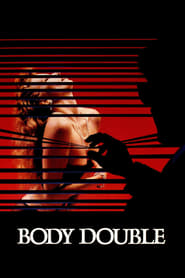
Body Double (1984)
De Palma's love letter to — and interrogation of — the act of watching. A man aims a telescope at a distant window, and we look through the eyepiece with him: the round black vignette, the wobble of magnification, the hardware of looking kept visibly in the frame. Watch how the film never lets you forget you bought a ticket to do exactly this. Keep an eye out for De Palma's split-diopter shots, which hold a foreground face and a deep-background doorway both knife-sharp at once — two planes of attention, neither one safe to ignore.
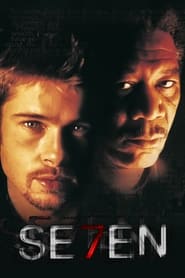
Se7en (1995)
A detective story that wants you to do homework. Each crime scene arrives with a caption — a word scrawled at the scene — and the film's real suspense is an act of reading: a weary detective in a library at night, pulling Dante and Chaucer off the shelves, learning to interpret murders as a single authored text. Watch Darius Khondji's lighting: every source is visible in the frame — a bare bulb, a flashlight beam, streetlight through rain-slicked glass — and the camera positions itself to let shadow flood everything else. One of the most influential looks of the 1990s, and you'll see why.
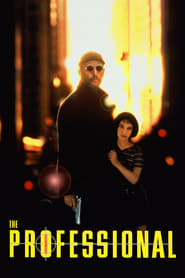
Léon: The Professional (1994)
Before this hit man kills anyone in front of us, we watch him tend things: a glass of milk, sit-ups in the dark, a houseplant he calls his only friend because "it has no roots — like me." Watch the rhythm Besson builds between two registers: the clean, procedural precision of the work, and the long, still passages where Jean Reno's face — impassive behind round dark glasses — is simply held, feeling registered but never spent. Note Thierry Arbogast's palette too: warm ambers and golds in the refuges, colder tones wherever institutions and violence live.
The Limey (1999)
Watch for a face that doesn't belong to the film: grainy, golden footage of a young Terence Stamp, shot by Ken Loach in 1967, spliced in as the older character's own remembered past. Soderbergh never labels it a flashback — it just surfaces, the way memory does while you're doing something else, so past and present share the same screen without a border between them. Notice how Ed Lachman's sunstruck, unglamorous Los Angeles stays observational and grounded even as the editing fractures everything around it: a steady world seen through an unsteady mind.
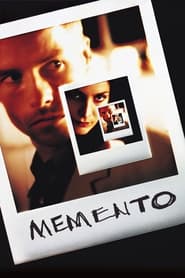
Memento (2000)
Watch the Polaroid in the opening — a photograph that un-develops, detail draining back into blankness. The whole film runs on that reversed current: the color scenes play in reverse order, each one ending where the last began, so every scene drops you in with no memory of how you got there — while a second strand, in noir black-and-white, runs forward toward a hinge. You aren't watching a man who has lost his memory; the structure makes sure you have. Notice how restrained Wally Pfister's photography stays — clarity over flourish — because the architecture is doing all the disorienting the film needs.
Minority Report (2002)
The film's truest image is strange for a thriller: a man before a wall of glass, gloved hands raised, conducting fragments of a crime that hasn't happened yet — sorting, scrubbing, reading, unable to act. Detection becomes deciphering. Watch Janusz Kamiński's drained, silvery look — the image overexposed and chemically stripped of color, crushed toward cold blues and steel greys — a future that feels bleached rather than gleaming. And note the lineage: this is M's manhunt structure and Hitchcock's wrong-man engine, rebuilt inside a blockbuster.
No Country for Old Men (2007)
Watch the gas-station scene: a coin on a counter, an owner who doesn't know what he's playing for, nothing moving but talk and fluorescent hum — and a tension with nowhere to go. The Coens and Roger Deakins work by strategic restraint: long lenses press tiny figures against featureless desert, and sound — a rustle, a room tone, footsteps — does the work a score usually would. Notice how faithfully the film runs the crime-thriller machine, and then pay attention to what it quietly declines to give you.
American Gangster (2007)
Watch the wardrobe. A drug lord dresses in grey, mid-priced suits — the uniform of a man whose survival depends on not being looked at — until a chinchilla coat, worn once to a prizefight, catches the wrong eyes across an arena. Scott stages the turn not as a fall but as a clerical error, and the camera finds the watchers before the watched knows he's been seen. Notice Harris Savides's chromatic argument: amber warmth and fur for the criminal's world, institutional grey and street cold for the law's — luxury and its pursuit lit as two different climates.
Why watch these together? Because they teach each other. Lang's whistled tune trains you for Fincher's captions; Welles's mobile camera prepares you for De Palma's telescope; Friedkin's cold-sidewalk stakeout echoes forward into Scott's watchers in the arena. Chronologically, you'll watch the crime film learn to distrust its own promise — that seeing leads to knowing, and knowing to justice — and you'll watch filmmakers turn that distrust into some of the most inventive craft in cinema: the withheld image, the unbroken take, the reversed photograph, the memory without a date. Best of all, every one of these films makes you the final detective. They hand you the periphery and trust you to supply the center. Bring your full attention; these films will use all of it.