Sightlines · a mini film course
The Cinema of Watching: Twelve Films Where Looking Becomes the Story
Most movies run on a simple engine: someone sees a problem, does something about it, and the doing carries us forward. The twelve films on your list quietly switch that engine off. Their characters — a priest in a hostile parish, a painter in a burning city, a woman in a poisoned landscape, a man circling a disappearance — see everything with terrible clarity and can do almost nothing about it. So the films stop chasing action and start doing something rarer: they let the camera watch, they let time stretch until you feel it passing in your own body, and they trust that the watching itself — a face held too long, a landscape that outlasts its people, a meal eaten in silence — will carry more weight than any plot could. These are films where the shot is the event. Here's what to look for.
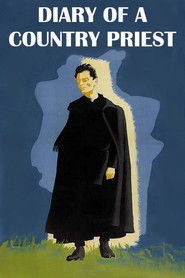
Diary of a Country Priest (1951)
Start with the film's small, radical doubling: a hand writes in a journal, a tired young voice speaks the words, and then the image shows us the very things the words just named. Nothing is dramatized — something is recorded. Notice too what Bresson asks of his lead, Claude Laydu, in his first role: not acting but a kind of emptied stillness, feeling driven so far inward it registers only as fatigue. The photography by Léonce-Henri Burel is deliberately grey and undramatic — overcast light, plain rooms, isolated faces — because the drama here is entirely interior, and the film wants you to sense it rather than be shown it.
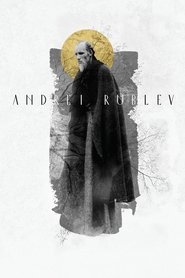
Andrei Rublev (1966)
The film opens with a man strapped to a crude balloon, briefly airborne over a river, shouting "I'm flying" — and notice what the camera does not do: it doesn't cut away to spare you, doesn't rescue the moment with an edit. It watches. That patience is the film's whole grammar. Tarkovsky and cinematographer Vadim Yusov build everything on duration — long takes that refuse to punctuate revelation with a cut — and their painter-hero spends much of the film simply witnessing his catastrophic century. Watch how the film turns witnessing itself into the deepest question: what does it cost to make art in a time of ruin?
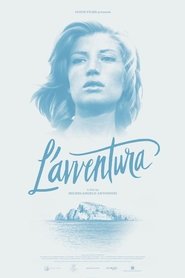
L'Avventura (1960)
Antonioni sets a mystery running — a woman vanishes on a volcanic island, a search begins — and then quietly declines to run it the way a mystery should. Watch instead the geometry: two people standing close enough to touch and utterly unreachable, human figures drifting to the edges of the frame, hidden by walls, dwarfed by rock and sea until they read as incidental marks on stone. Antonioni called his subject "incommunicability," and he films it not through confrontation but through its absence — nobody says what they mean because nobody quite knows.
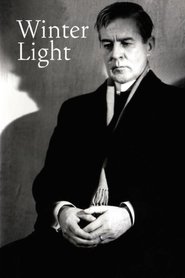
Winter Light (1963)
The centerpiece is a dare: Ingrid Thulin, in close-up, speaking a letter directly into the lens for nearly seven minutes. No music, no reaction shot, no relief — just Sven Nykvist's flat winter light lying on her face like a verdict. Bergman treats the human face not as a window but as a surface scraped bare, and this chamber drama — spatially confined, spiritually enormous — is his most unforgiving demonstration. Watch what a face can hold when a film refuses to look away.
Red Desert (1964)
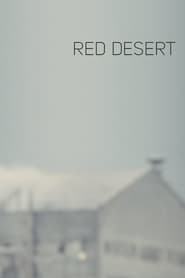
Antonioni had the grass along the refinery road painted grey — not lit grey, not lab-graded, but dulled by hand so nothing growing could look alive. Once you know that, the film tilts: you're watching a landscape authored down to the chlorophyll to match the inside of a woman's head. Monica Vitti plays Giuliana not as numb but as flooded — a face in constant micro-attention, registering steam, engine-throb, industrial sound she cannot discharge into any act. Cinematographer Carlo Di Palma's telephoto lenses flatten and compress; the gap between the world out there and the nervous system in here never closes.
Au Hasard Balthazar's descendants — a quick note
You'll notice Bresson's shadow everywhere in this set: the drained performances, the animals filmed as bare fact rather than symbol, the attention to hands and objects over faces. Keep his method in mind as a skeleton key.
Stalker (1979)
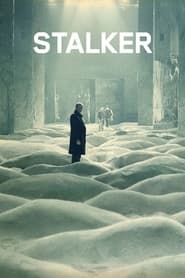
Two-thirds of the way through, the camera lies down in shallow water and drifts over a riverbed of submerged things — coins, a syringe, a torn scrap of religious painting — while a man sleeps just above the surface. It never resolves into a clue. That refusal is the door into Tarkovsky. This is science fiction with every conventional pleasure evacuated — no spectacle, no explanation — replaced by a camera that moves with geological patience through grass and flooded corridors. Watch how the mysterious Zone, supposedly lethal, gives the three travelers nothing to fight — only things to behold — and how that changes what "danger" means.
Damnation (1988)
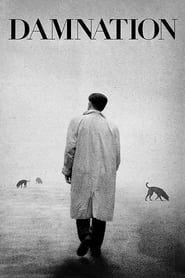
The opening shot teaches you how to watch the whole film: coal-conveyor buckets crawl across a grey sky in a slow lateral track, and then the camera reverses to discover a man at his window — watching the same buckets we were just watching. The pivot from machine to watcher is the film in miniature. Tarr, breaking from Hungary's documentary tradition toward something metaphysical, films a world in which everything — buildings, bodies, love — is returning to mud, with rain as a near-cosmological principle. Watch the long takes not as style but as weather.
The Seventh Continent (1989)
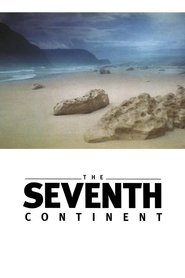
You can go a long stretch before realizing you haven't seen a full face. Haneke's camera looks at hands, a faucet, a cereal bowl, banknotes at a teller's window, a car passing through a wash — the world as an inventory of objects and transactions. This is a horror film without a monster, a procedural without a crime to solve, the first panel of Haneke's "glaciation" trilogy about comfortable modern life hollowing out from the inside. Watch what the fragments withhold, and notice how the withholding becomes a kind of dread.
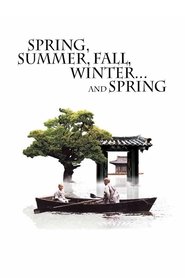
Spring, Summer, Fall, Winter... and Spring (2003)
A boy ties stones to small animals; his master ties a stone to the boy. The lesson is a weight that never comes off — and weight is the nearest thing this film has to a plot. Kim Ki-duk, trained as a painter, composes the floating temple and its encircling mountains as frontal, symmetrical, painterly tableaux, and there is almost no dialogue: meaning is pushed onto water, wind, birds, the creak of a rowboat. Watch how the seasons do the storytelling that speech usually does.

Silent Light (2007)
The film opens on a star-pricked black sky and holds — crickets thinning, horizon bruising blue, a Chihuahuan dawn rising in something close to real time. Nobody does anything; the world simply moves, and you are made to watch it move. Reygadas casts an entire Mennonite community of non-professionals, drained of theatrical performance in the Bresson manner, and Alexis Zabé's wide, deep, luminous compositions nest a moral crisis — a married man's love for another woman — inside an order far larger than any single life. The film tells you its scale before it tells you its story.
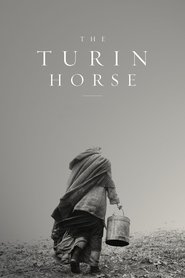
The Turin Horse (2011)
Watch them eat the potato. The father tears at it one-handed, too hot, fast and angry, peel and all; the daughter eats slowly; nothing is explained; the camera holds. Fred Kelemen's black-and-white photography is one of the sustained achievements of contemporary cinema, and Tarr builds the film from long takes across a six-day structure so that you don't receive information about a world winding down — you inhabit it. The waiting is the film, and the waiting is extraordinary.
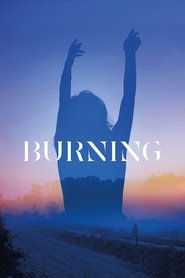
Burning (2018)
There's a well on the family farm, or there isn't — one person swears yes, another swears no, and Lee Chang-dong never shows it to you. The film inherits its organizing device straight from L'Avventura: a disappearance that generates unbearable uncertainty rather than a solution. Watch Yoo Ah-in's blocked, near-absent performance — lifted almost directly from Bresson — as a young man who drives, jogs, checks, and watches, in Hong Kyung-pyo's unhurried compositions of flat farmland near the DMZ. This is a thriller as pressure chamber: the dread is in what refuses to resolve.
Why watch them together? Because these films teach you a different way of paying attention, and each one makes the next easier — and richer — to see. You'll catch the family resemblances: Dreyer's suffering faces behind Bergman's, Bresson's emptied performers reborn in Mexico and Korea, Antonioni's unsolved disappearance echoing fifty-eight years later in Burning, Tarkovsky's rain and ruin flowing into Tarr's mud. More than that, you'll feel your own viewing habits change. These filmmakers bet everything on the idea that if a shot is held long enough — a potato cooling, a dawn rising, a face refusing to release you — watching stops being passive and becomes an event in itself. Give them your patience. It's the one thing they ask, and the thing they repay most extravagantly.