Sightlines · a mini film course
The Cinema of Watching: Twelve Films Where Looking Becomes the Story
Most movies run on a simple engine: a character sees a problem, does something about it, and the world changes. The films on your list all, in their different ways, switch that engine off. Their people see everything — a dying marriage, an indifferent city, a silence where God should be — and can do almost nothing about any of it. So they watch. And the films make us watch with them: the camera holds instead of cutting away, time is allowed to stretch, and empty spaces — street corners, refineries, grey beaches, ruined landscapes — move to the center of the frame and start doing the emotional work dialogue used to do. This is not slowness for its own sake. It's a wager that if a shot stays long enough, you stop waiting for the next thing and start actually seeing the thing in front of you.
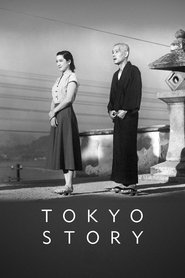
Tokyo Story (1953) — dir. Yasujirō Ozu
The gentlest entry point, and in some ways the deepest. Ozu's camera sits about fifty centimeters off the floor — the eye-level of a person kneeling on tatami — and it almost never moves. Watch for the shots between scenes: smoke from chimneys, laundry in still air, a train passing — images with no people in them, held a few seconds past any narrative use. They tell you nothing, and that's the point: they let transience itself become the subject, without a word of melodrama.
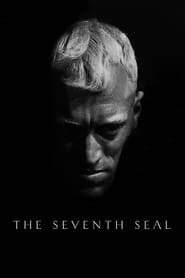
The Seventh Seal (1957) — dir. Ingmar Bergman
A knight home from the Crusades wants to do one meaningful thing before he dies, and keeps discovering there's no deed available to him. Watch how Gunnar Fischer shoots faces against overexposed skies and deep shadow — a visual grammar borrowed from silent cinema (Sjöström's embodied Death, Dreyer's faces isolated against near-white). The famous chess game on the beach is nearly motionless, and that stillness is the film's whole argument: what does a man of action do when action counts for nothing?

Wild Strawberries (1957) — dir. Ingmar Bergman
It opens with a clock that has no hands — time unhooked from measurement in the very first dream. Watch how Fischer's photography quietly shifts texture between the present-day car journey and the memory and dream passages, and how the elderly protagonist enters his own past as a kind of visitor, looking on rather than doing. The technique descends directly from Sjöström's The Phantom Carriage, and the layered memory-architecture owes something to Citizen Kane — but the effect is entirely Bergman's: a life reviewed rather than relived.
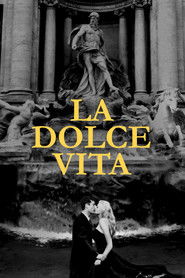
La Dolce Vita (1960) — dir. Federico Fellini
The opening tells you everything: a statue of Christ dangles from a helicopter over Rome while a journalist mimes flirtation at sunbathers, every word drowned by rotor wash. Marcello is professionally a watcher — a gossip journalist — and Mastroianni builds the performance out of radical passivity, a face of intelligent, helpless receptivity. Watch Otello Martelli's hard, bleached chiaroscuro flatten celebrities into photographic surfaces: the film's look is its diagnosis of a culture of abundance and vacancy.
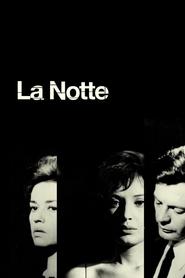
La Notte (1961) — dir. Michelangelo Antonioni
Watch for Lidia's long walk through Milan. The architecture takes the center of the widescreen frame — glass curtain walls, half-built structures, waste ground — while she drifts to the edge, small, almost incidental. Antonioni redirects neorealism's tools (real locations, patient observation) from society toward the psyche: buildings become active presences, and a marriage is measured not in arguments but in the spaces between two people.

L'Eclisse (1962) — dir. Michelangelo Antonioni
Here Antonioni pushes furthest. Di Venanzo's photography works by negative space and geometric containment: characters framed against walls, windows, reflective surfaces that subdivide them from each other. Watch how the film treats a street corner in Rome's EUR district — a water barrel, a fence, a sprinkler on dry grass — as attentively as any face. The film's real subject is the difficulty of holding a feeling in place long enough for it to become anything, and the compositions make you feel that slippage.
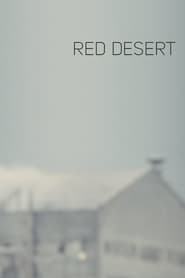
Red Desert (1964) — dir. Michelangelo Antonioni
Antonioni's first color film, and he treats color as authorship: he famously had the grass along a refinery road painted grey by hand so nothing growing could look alive. Watch Carlo Di Palma's telephoto compression turn Ravenna's petrochemical landscape into an externalized nervous system, and watch Monica Vitti play her character not as numb but as flooded — registering steam, sound, engine-throb, sensation with nowhere to go. The landscape isn't a backdrop for her state of mind; it's a portrait of it.
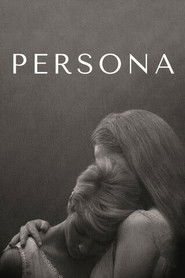
Persona (1966) — dir. Ingmar Bergman
A chamber piece built almost entirely out of two faces. Sven Nykvist lights Ullmann and Andersson with a severe naturalism — window light, luminous skin, backgrounds falling to black — and holds close-ups past the point where they express anything readable, until you start reading a face the way you'd read weather. Watch how the film keeps reminding you it's a film, and how one woman's silence turns the other's speech into something almost physical. The lineage runs straight back to Dreyer's The Passion of Joan of Arc: the close-up as landscape.
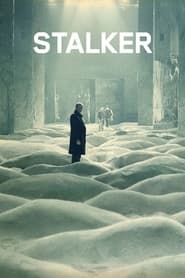
Stalker (1979) — dir. Andrei Tarkovsky
Three men risk everything to enter a forbidden Zone — and then, mostly, they stop. They sit in wet grass, argue, lie down. Watch the camera move with what one description calls the weight of geological time: long gliding tracks through grass and flooded corridors, deep focus anchored by foreground objects — a glass of water, sand, submerged debris. There's a passage where the camera drifts low over a riverbed of sunken things while a man sleeps just above the waterline; resist the urge to decode it. The film wants your attention, not your solutions.
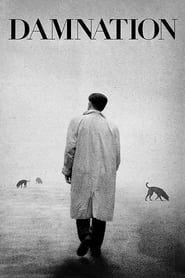
Damnation (1988) — dir. Béla Tarr
The foundational statement of Tarr's long-take world. It opens on coal-conveyor buckets crawling across a grey sky in a slow lateral track — then the camera reverses to find a man at his window, watching the same buckets we were. That pivot is the film in miniature: motion belongs to machines and weather; people watch. Notice the rain, which falls almost cosmologically, dissolving buildings, relationships, resolve. Tarr takes Tarkovsky's water and ruin and strips out the transcendence, leaving pure material weight.
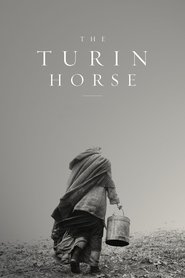
The Turin Horse (2011) — dir. Béla Tarr
Tarr's final film, shot by Fred Kelemen in some of the most sustained black-and-white photography in contemporary cinema. Six days on a windswept farm, a father, a daughter, a horse, and a daily boiled potato eaten without explanation. Watch the eating scene: he tears at it fast and angry with his one good hand; she eats slowly; the camera simply holds. You wait the way they wait, and the waiting becomes the film — decay experienced as lived time rather than described in dialogue. Bresson's donkey in Au hasard Balthazar stands behind the horse: an animal's suffering filmed as bare fact, not symbol.
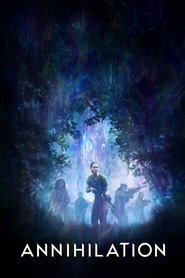
Annihilation (2018) — dir. Alex Garland
Proof that this tradition is alive inside modern genre cinema. Garland builds his Shimmer directly on Stalker's Zone — a rule-warping contaminated space entered by a small expedition — and Rob Hardy shoots it in toxic greens and soap-bubble refraction. Watch the moment two deer step from the brush moving in perfect mirrored unison: nobody explains it, nobody can act on it, the women just look, and the looking is the event. Watch too how the finale hands the film over to pure image and sound, in deliberate homage to 2001's Star Gate. A thriller's competent heroine, placed somewhere competence can't reach.
Why watch these together? Because they teach each other. Ozu's empty rooms train you for Antonioni's empty street corners; Bergman's held faces prepare you for Tarr's held landscapes; Tarkovsky's Zone hands its keys directly to Garland's Shimmer. Watched in sequence, you'll feel your own attention change — the itch for "what happens next" quieting into curiosity about what's actually in the frame, right now, and how long it can stay there. These filmmakers all made the same discovery from different directions: when a film stops rushing toward its next event, time itself becomes visible — and watching someone watch, patiently, turns out to be one of the most moving things cinema can do.