Sightlines · a mini film course
The Reading Room: Twelve Films Where Watching Is the Plot
Every film on this list is, in one way or another, about looking — and about what looking costs. These are movies built around cameras, telescopes, ciphers, crime scenes arranged like messages, and faces that stare straight back at you. They don't just show you a story; they hand you evidence and make you work. Some put you behind the eyes of a watcher until you feel implicated. Others fill the frame with details that quietly ask to be read rather than merely seen. Taken together — from Weimar Berlin to last year's multiplex — they form a single long conversation about what it means to be the person in the dark, paying attention. I've arranged them chronologically, because the later films are openly writing letters to the earlier ones.
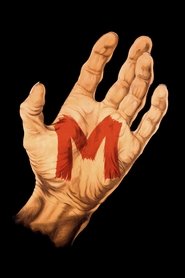
M (1931)
Lang teaches the first lesson: what the frame withholds can hit harder than anything it shows. Watch how a child's ball rolling to a stop, or a balloon caught in telephone wires, lets an empty image imply everything — you assemble the horror yourself, and that collaboration powers the whole film. Listen, too: a hummed tune becomes a signal you learn to dread, arriving before any face does. Nearly every film below inherits something from this one.
Peeping Tom (1960)
Powell tells you almost everything up front, and the suspense comes not from mystery but from distance — the gap between what one character sees in a shy man with a camera and what you already know. Notice how often the frames are beautiful in ways that feel faintly wrong, and how the film keeps mounting lenses and mirrors together, recording and reflecting at once. It's a movie that gently accuses you of enjoying exactly what you're enjoying.
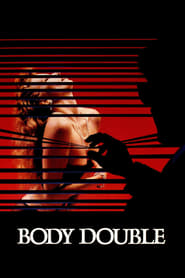
Body Double (1984)
De Palma rebuilds Hitchcock's watcher-at-the-window in glossy, saturated Los Angeles light — and refuses to let the act of looking dissolve into the story. When the hero peers through a telescope, you see the round black vignette, the wobble of magnification: the hardware of desire stays in the shot. Watch for the split-diopter compositions, where a face up close and a doorway far away are both knife-sharp, forcing your eye to hold two things at once.
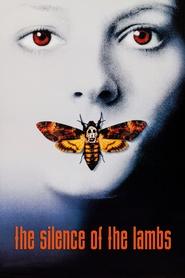
The Silence of the Lambs (1991)
The signature move here is deceptively simple: when people address Clarice Starling, they look almost straight down the lens — so for the length of the shot, you are the one being sized up. Fujimoto rations the device carefully, saving the most direct stares for the moments of sharpest scrutiny, and by then the grammar has trained you to flinch. Notice how a mainstream thriller becomes a film about the gaze itself: who wields it, who survives it.
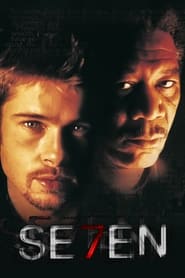
Se7en (1995)
A detective story usually wants you to watch a chase; this one wants you to do homework. Each crime scene arrives like a page of text addressed to the investigator, and the film's real suspense is the patient act of reading — library stacks at night, index cards, old books. Watch Khondji's light, too: every glow is motivated by something in the frame — a bare bulb, a flashlight, rain-streaked neon — and everything else is allowed to fall into shadow.
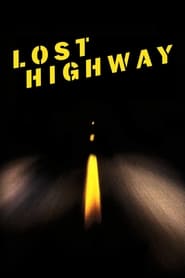
Lost Highway (1997)
Lynch takes the noir kit — the murder, the gangster, the surveillance tapes, doomed Los Angeles — and removes the explanations. The Madison house is photographed as near-total darkness; people walk into blackness and simply dematerialize, then the film cuts to bleached, sun-struck exteriors. Don't try to sort what's real from what's dreamed or remembered; the film deliberately refuses the cut that would tell you, and that refusal is the experience. Let it stay liquid.

Dark City (1998)
Proyas builds a metropolis with no sun, no edge, and no history you can trust — a night-world drawn straight from German Expressionism's painted shadows and looming, canted architecture. Watch what the city itself does when no one is looking, and how the restless camera climbs and cranes as if searching for an exit. It's noir fused with science fiction, and the paranoia lives in the geography.
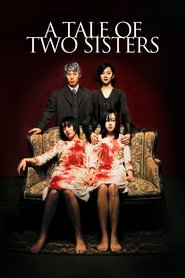
A Tale of Two Sisters (2003)
Here the horror hides not in the dark but in the well-lit corner of a lovely room. Lee Mo-gae shoots the house with a painter's care — floral wallpaper, warm woods, symmetry framed through doorway after doorway — and the prettiness is the trap: a surface so composed you almost don't notice it's a screen over something. Resist sorting scenes into "now," "memory," and "imagined" as you go; the film is designed to withhold that sorting, and it rewards your patience.

Shutter Island (2010)
Scorsese, cinema's great historian, builds a loving anthology of old forms — rain-slicked noir, gothic asylum dread, the studio-era B-picture — and then salts it with tiny details that don't quite behave. Watch the edges of shots, the small objects, the things that seem like slips; trust that the film knows exactly what it's doing. Richardson's hard, haloing top-light makes every institutional interior feel like an interrogation.
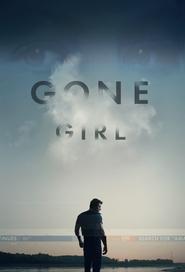
Gone Girl (2014)
The whole film lives in the gap between what an image shows and what it can be made to mean — a news camera catching a face a half-second early, and a country deciding what that face proves. Fincher hands you competing accounts of a marriage, braided together, and dares you to decide whom to trust; notice how Cronenweth's sickly-beautiful palette makes the suburban Midwest feel ordinary and faintly toxic at once. This is the reading-room idea turned on the audience itself.
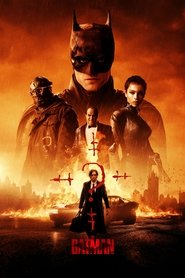
The Batman (2022)
Reeves makes watching the literal plot: everyone in this Gotham is under someone's gaze, and the hero is simply the most patient watcher of all. A killer addresses ciphers directly to the detective, so you decode over his shoulder — the film runs on interpretation rather than action set-pieces, which is why it feels so unlike other comic-book movies. Fraser's radically underlit frames, faces top-lit with eyes lost in shadow, descend straight from the darkest 1970s crime films — and from Se7en, which you'll have just seen.
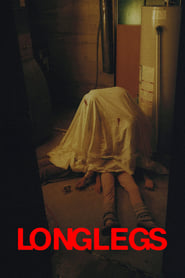
Longlegs (2024)
Watch where Perkins puts things. The frames are wide, symmetrical, drained to institutional grey, and mostly empty — small figures marooned in dead space your eye anxiously scans — and the menacing presence almost never sits where a frame is supposed to hold him: he presses in from the top edge, cut off, slightly out of focus. Your eye goes hunting before your mind admits it's afraid. The dread here is a question of where, exactly, the bad thing is — and the film never quite lets you locate it.
Watched together, these twelve films become a course in how images mean. You'll see the lineages light up in real time: Lang's offscreen implication flowering in Powell's guilty lenses; Hitchcock's window-watchers rebuilt by De Palma; Demme's straight-down-the-lens stare returning in Longlegs; Se7en's rain-soaked, letter-writing killer answered decades later in Gotham. More than that, you'll feel your own habits sharpen. These films train you — to scan negative space, to distrust a beautiful room, to notice the light source inside the frame, to hear a tune before you see a face. By the end, you won't just have watched twelve thrillers. You'll have learned how they teach you to watch — and you'll never sit in the dark quite as inn