Sightlines · a mini film course
Bodies Against Walls: The British Cinema of Wanting Out
Every film in this set is, one way or another, about a person pressing against the limits of the world they were born into — and about cameras that know how to show that pressure without a word of dialogue. Here you'll find soot-dark Yorkshire valleys where the frame itself feels like a class barrier; London flats where squalor is lit so honestly you can smell it; and stranger, more stylized worlds where a distorting lens tells you exactly how a mind sees before you know a single fact about it. The through-line is the body: bodies that dance, run, fight, crave, calculate, and drink because the words they'd need don't exist for them. Watch how each film decides where to put the camera in relation to that struggling body — close and complicit, or far back and unsentimental — because that single choice is where each of these films tells you what it believes.
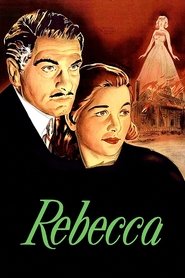
Rebecca (1940)
The strangest thing about this film is who isn't in it. The title character never appears — no face, no flashback — and yet she saturates every room through a monogram, a melody, a preserved bedroom, a name spoken like weather. Watch how George Barnes's cavernous lighting and gliding camera dwarf the nameless young heroine inside Manderley's architecture, keeping you waiting for a reveal the film can never deliver. It's a masterclass in building presence out of pure absence.
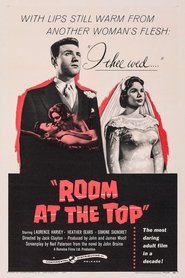
Room at the Top (1958)
Watch Joe Lampton's posture before you listen to anything he says: a man standing in doorways he hasn't been invited through, silently pricing the carpet, the decanter, the daughter. Freddie Francis shoots the soot-darkened Yorkshire townscape not as scenery but as a physical fact — the visible architecture of who lives up the hill and who doesn't. This is the film that opened the door for the whole British New Wave, and Simone Signoret's frank, grown-up warmth is the imported continental note that makes everything English around her look colder.
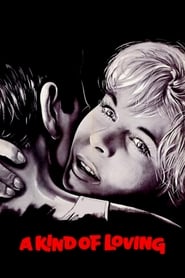
A Kind of Loving (1962)
Schlesinger keeps pulling back to long shots — a figure made tiny under a viaduct, terraced roofs, grainy overcast sky — and the distance is the point: you watch Vic Brown the way you watch weather. Notice how little he ever decisively does; this is a drama built on drift, on how a moment of boredom can quietly close off a life. Denys Coop's documentary-grained black-and-white makes the industrial North a character with more agency than the hero.

This Sporting Life (1963)
This is the British New Wave pushed to its outer limit. It opens in a dentist's chair, anaesthetic flooding in, and memories start surfacing and sinking with the drug — a bold, fragmented structure borrowed from French art cinema rather than English realism. Watch the contrast between the rugby sequences, shot with a chaotic, in-the-scrum physicality years ahead of their time, and the domestic scenes, where Richard Harris's Frank tries to use force in rooms where force is exactly the wrong instrument. A man superbly equipped for one arena, watched failing in another.
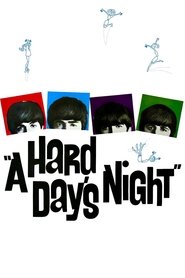
A Hard Day's Night (1964)
Pure motion — but look at what the motion is for. The Beatles are chased, herded, and packed through trains, corridors, and studios; they never once drive the plot, only handle being handled. Then comes the field sequence: they burst through a fire door and, for the length of "Can't Buy Me Love," simply run and flail in the grass while long telephoto lenses make it look caught rather than staged. Two minutes of movement with no purpose at all — and it's the truest thing in the film.

Darling (1965)
Distrust the voice. Diana Scott narrates her own life with the practiced candour of a magazine profile, while Kenneth Higgins's hard, clinical monochrome quietly shows you what she leaves out — a glance held too long, a face going slack mid-triumph. You're watching two films at once: the one she tells and the one the camera keeps, and the cuts are where the satire lives. It's the bridge from kitchen-sink seriousness to Swinging London gloss, and it trusts neither.
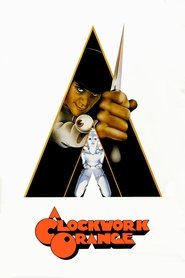
A Clockwork Orange (1971)
That famous opening — one made-up eye, a stare down the lens, a slow mechanical retreat through the Milk Bar — is the whole method in miniature: before anyone is hurt, the film has shaken your hand. Watch how Kubrick and John Alcott use an extreme wide-angle lens to make the world bulge and curve toward Alex, so that you see everything as grandly, possessively, as he does. Then notice how the violence is staged as performance — dance, song, choreography — which is exactly what makes your own seat in the audience feel so uncomfortable.
Withnail & I (1987)
A comedy powered by paralysis. Two out-of-work actors see their predicament with perfect clarity — no money, no jobs, a kitchen sink they've declared a biohazard — and can do absolutely nothing about any of it, so they drink. Watch Peter Hannan's photography carry the tonal balancing act: the Camden flat in sickly nicotine browns, then the Lake District opening into wide grey desolation. There's barely a plot, just a holiday taken "by mistake," and the film's genius is proving that a dead end can be hilarious without ever ceasing to be sad.
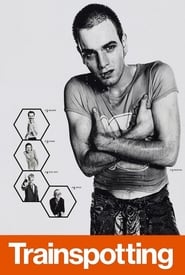
Trainspotting (1996)
It opens at a sprint — Renton pounding down the street to "Lust for Life" — and the film runs with him: jump cuts, Dutch angles, a camera that crowds and sometimes rushes ahead of its own characters. Watch how Brian Tufano's restless handheld style makes the film move like the high it's about, and notice the honesty of the structure: the pleasures come before the costs, refusing the standard fall-and-recovery shape of every addiction movie before it. The running is fast and circular — energy with nowhere to go — and that's the diagnosis.
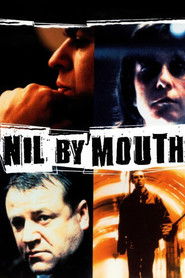
Nil by Mouth (1997)
Gary Oldman's camera works at close quarters inside tight, lived-in rooms, in long unbroken takes that let confrontations build and detonate in real time — a method learned directly from Alan Clarke's unblinking observation. The key decision to watch for: no flashbacks, ever. The family history that explains these people is carried entirely in behaviour, posture, and one extraordinary monologue by a man in a chair. The past isn't shown; it's worn. This is the harshest film here, and the most compassionate about why words fail.
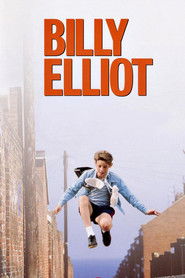
Billy Elliot (2000)
The film's whole understanding of itself is in the Angry Dance: a boy runs out of street, hits an actual brick wall at the end of a terraced alley, and keeps stamping against it to glam rock — rage he can't name, discharged as pure movement. Watch how Brian Tufano (yes, the Trainspotting cinematographer) shoots the mining town in muted wintry tones while letting the dance sequences break loose. Everything the boy cannot say, the legs say instead.

Poor Things (2023)
Start with the lens. Robbie Ryan's fisheye and wide-angle shots, sometimes pinched inside circular irises, make the frame bulge — banisters curving as if the house were breathing — because that's how Bella sees: rawly, hugely, the world pouring in at the corners. Then watch the film's quietest trick: as she matures, the distortion relaxes and the framings normalize. The optics are the coming-of-age. Every authority she meets gets exposed as partial and self-interested, and her education is the joyful demolition of received wisdom — a Victorian satire wearing science-fiction skin.
Watched together, these films teach you a single skill: reading bodies and spaces instead of waiting for explanations. You'll see the same Yorkshire long shot recur across forty years; you'll notice one cinematographer, Brian Tufano, connecting a heroin comedy to a ballet drama; you'll watch the distorting lens travel from Alex's swaggering eye to Bella's newborn one. Most of all you'll start noticing distance — when a camera holds back and lets a figure shrink against brick and sky, and when it crowds in close enough to feel a room's heat. That's the grammar this whole tradition speaks. By the last film, you'll be fluent.