Sightlines · a mini film course
The Camera Knows Something You Don't: Twelve Films Where the Image Does the Telling
Most movies use the camera as a neutral window — you look through it at a story. The twelve films in this set refuse that arrangement. In each one, the image itself is the drama: a lens that distorts because a mind is still forming, a frame that cages because a house is a trap, a mirror that won't tell you which side is real. These are films about looking — about desire, obsession, appetite, and the dangerous act of watching another person — and every one of them builds that theme into its optics, its cutting, its light. Watch them not just for what happens, but for how the picture behaves: when it glides, when it holds still too long, when it goes down beneath the lawn. The camera in these films is never innocent. Neither, they suggest, are you.
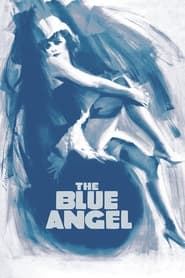
The Blue Angel (1930)
Start here, with the oldest trick in the set: light as fate. Sternberg drenches the film in smoky chiaroscuro, and watch how the film literally migrates its proud professor out of a cold, squared-off classroom and down into a cluttered basement dressing room hung with nets and painted flats — a man tangled in a world that isn't his. The ruin isn't announced in dialogue; it's staged as a change of element, like a creature moved into the wrong water. Notice how much the film tells you through posture, costume, and where the shadows fall.
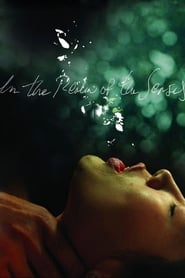
In the Realm of the Senses (1976)
Ōshima shoots his lovers with the stillness and frontality of traditional Japanese erotic art — lacquered reds, patterned fabrics, a camera that composes rather than peeks. Watch how the outside world (soldiers, 1936, a country marching toward war) is allowed in only briefly, so that the lovers' turning-away from it registers as a deliberate act. The film seizes the language of commercial erotic cinema and slows it into something grave and painterly. Notice how the decorative period surface — the inn, the kimono, the songs — gradually thins, and what starts to show through it.
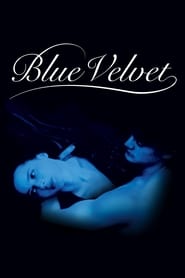
Blue Velvet (1986)
Lynch tells you everything in the first two minutes: roses too red, a lawn too green, and then the camera descends through the grass into a seething colony of insects while the soundtrack turns to industrial roar. There's a surface, it's beautiful, and it's lying. Watch how the film keeps positioning you in the watcher's seat — literally, from inside a closet — so that the pleasure of looking becomes inseparable from complicity in what's seen. The prettiness is never decoration; it's the lie the horror lives under.
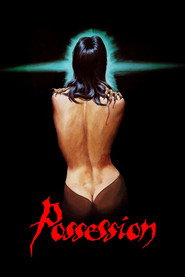
Possession (1981)
Here the camera stops observing and becomes an anxious participant — wide-angle, close, circling the actors, chasing sudden movement, refusing the calm grammar of shot and reply. Żuławski directed his cast to the edge of collapse as a deliberate system, not an accident, so watch for moments when a body keeps going past anything the story strictly needs — when performance becomes pure endurance. The most famous scene takes place in a tiled Berlin underpass, and it advances nothing; it simply happens to a body, at full pitch, and the film trusts you to feel that as meaning.
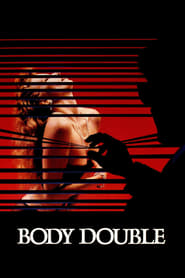
Body Double (1984)
De Palma won't let you forget you're looking. The telescope point-of-view keeps the apparatus in the frame — the round vignette, the wobble of magnification — so you feel the lens as hardware, and feel a little ashamed of yourself. Watch for the split-diopter shots that hold a face in the foreground and a doorway in the deep background, both knife-sharp: two planes of attention forced into one image. It's Hitchcock's grammar rebuilt in glossy L.A. light, with the voyeurism turned up until the audience is inside the crime of watching.
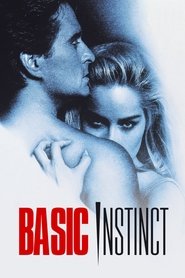
Basic Instinct (1992)
Watch the interrogation scene as pure choreography: five men arranged around one woman in white, and the camera gliding, circling, unhurried — as if she were the still point and the entire machinery of the law were what's in motion. De Bont's cinematography is cool, affluent, seductively smooth, and Verhoeven uses that polish to run the genre's power dynamics backward: the people asking the questions become the ones being read. Notice how the film treats confession, evidence, even sex as possible performances — how it keeps you from ever standing on solid ground.
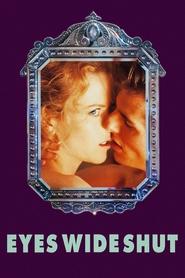
Eyes Wide Shut (1999)
Kubrick's signature centered, symmetrical compositions and slow drifting camera turn a marriage story into a sleepwalk. Watch the early image of a woman at a mirror, her husband watching their reflection rather than her — held just long enough that you stop trusting it. From one confessed fantasy, the whole film unspools as a nocturnal wander where nothing is clearly happening and nothing is clearly dreamed. Notice how nearly every encounter is shadowed by money and transaction, and how the dreamlike gliding through baroque interiors keeps you from ever locating the boundary between the real night and the imagined one.
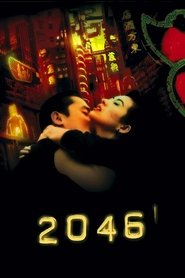
2046 (2004)
Wong Kar-wai films hesitation itself. Watch for step-printing — individual frames repeated two or three times so that a second of delayed feeling swells into something you can almost climb inside — and for telephoto shots that flatten bodies against corridor walls while backgrounds melt into color. The film moves between amber 1960s Hong Kong hotel corridors and the cold blue carriages of a science-fiction serial its writer-hero is composing; don't try to sort which is frame and which is story. They're two faces of one stone, turning. This is a film about love arriving a beat too late, and the images are built to make you feel the lag.
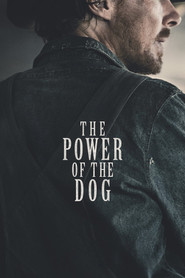
The Power of the Dog (2021)
Early on, a man looks at a mountain and sees a shape in the ridgeline that no one else can see. Hold onto that: this is a film where images carry meanings legible to one person alone, and where information sits calmly in the frame before you understand what it is — a braid of rawhide, a hidden book, a woman retreating into smaller and smaller rooms. Ari Wegner shoots the landscape as a psychological surface, and Campion, drawing on a tradition of performances that suppress outward display, makes you infer everything from posture and gaze. Watch actively; this one rewards a second viewing enormously.
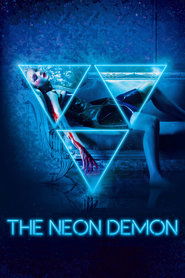
The Neon Demon (2016)
Braier's cinematography runs on two competing currents — cold geometric control and saturated, gel-lit spectacle in the lineage of Suspiria — and the tension between them is the horror. The opening image is a tableau of a beautiful "dead" girl who turns out to be posing for a camera: before a word is spoken, the film has told you that here, being looked at and being consumed are the same act, only at different speeds. Watch how often characters study each other in mirrors and photographs rather than face-to-face — an industry of images replacing persons, staged as creeping dread.
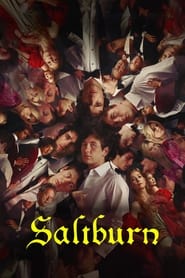
Saltburn (2023)
Watch where the film parks its scholarship boy: in doorways, at the lip of rooms he hasn't been invited into, framed inside the frame. Fennell shoots in the near-square, old-snapshot ratio — nominally nostalgia for a mid-2000s memory, but really a box that cages, sealing the labyrinthine estate shut. Sandgren's light is class semaphore: golden-hour warmth and candle-glow for the aristocrats, drabness for the outsider. And the camera has two gears — locked, frieze-like tableaux for the family; prowling, hungry movement for the boy who watches them. Track which gear you're in at any moment.
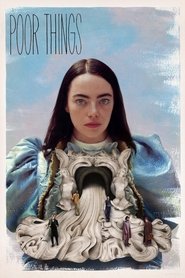
Poor Things (2023)
The boldest optical experiment in the set: the lens ages with its heroine. Early on, Ryan's fisheye and wide-angle shots — sometimes pinched inside circular irises — make the world bulge and pour in at the corners, because you're seeing through a consciousness meeting everything for the first time. As she matures, watch the distortion relax, the framings normalize toward eye level. Perception is the plot; you're literally watching a mind calibrate its own lens. Around that, Lanthimos builds an episodic journey — an internally coherent alternate Victorian world in the Brazil tradition — where every authority figure she meets is exposed as interested and partial. Her education is in unlearning.
Watched together, these films train you to do something most moviegoing lets you skip: read the image instead of waiting for the story to explain it. You'll start noticing rhymes across decades — Sternberg's descent into the smoky basement echoing in Lynch's descent beneath the lawn; Hitchcock's watchers reborn in De Palma's telescope, Verhoeven's circling camera, Fennell's boy in the doorway; the mirror games of Kubrick, Wong, and Refn all asking the same unanswerable question about which side of the glass is real. By the last film, you'll find you're watching differently — alert to where the light goes, what the frame withholds, when the camera watches rather than chases. That alertness is the whole course. These twelve films don't just tell stories about looking; they teach you, shot by shot, how much a picture can know.