Sightlines · a mini film course
Eyes for Rent: Cinema That Learns to Watch
There's a moment in each of these films where the story pauses and someone simply looks — at a photograph, a city, a wall of glass, two deer moving in impossible unison. These are science fiction films, mostly wearing the trench coat of the detective story or the wet gleam of horror, but what binds them isn't gadgets or futures. It's a shared suspicion that seeing is no longer simple. In these films, images have to be deciphered: memories may be manufactured, recordings may lie, beauty may be a symptom, and the world onscreen may be a copy so good you can't find the seam. Watch how each film builds this doubt — not through dialogue, but through light, camera, cutting, and the courage to let time stretch.
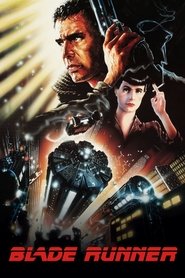
Blade Runner (1982)
Watch the light before anything else: Jordan Cronenweth shoots in radical darkness — shadow pools sliced by sodium-colored shafts, venetian-blind striping quoted straight from 1940s crime pictures like Double Indemnity. Then watch the photographs. Characters clutch them, hoard them, arrange them on pianos, offering snapshots as proof of who they are — and the film quietly asks whether a picture of a past can stand in for a past actually lived. Notice, too, the vertical city inherited from Metropolis: gleaming towers above, drowned streets below, the geography itself a moral diagram.

Ghost in the Shell (1995)
The revelation here is a stretch of film near the middle where nothing "happens": a long, wordless boat ride through a drowned-looking city — rain, canals, mannequins, a face in a café window that could be the heroine's double. A counter-terrorism officer in the middle of a manhunt simply stops hunting and starts looking, and the film stops with her. Oshii's virtual camera favors low angles and deep architectural recession, treating the city as something to be contemplated rather than traversed. Let that boat sequence work on you; it's the film's whole argument delivered without a line of dialogue.
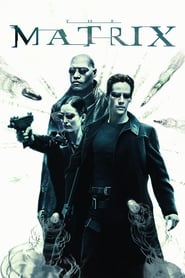
The Matrix (1999)
Watch the color: scenes inside the simulation carry a sickly green cast, while the "real world" doesn't — cinematographer Bill Pope is teaching your eye to distrust one reality before the script confirms anything. Watch also how the film wears its lineage openly: the cascading digital-code titles owe a direct debt to Ghost in the Shell, the long black coats to Hong Kong crime cinema. The whole picture is training you toward a new kind of action hero — one whose ultimate power isn't punching harder but reading the image everyone else merely reacts to.
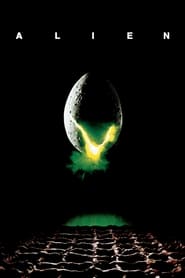
Alien (1979)
The principle here is productive obscurity: industrial, partial lighting, corridors that dissolve into blackness, a creature almost never shown in full. The camera drifts and probes rather than chases — measured, patient, always slightly losing what it's looking for. Notice that the creature is given no motive, no grievance, no inner life; Scott and Giger deliberately withheld those, because a villain can be argued with, but a pure appetite can only be outlasted. It's a haunted house rebuilt as a spaceship, and the house is a workplace.
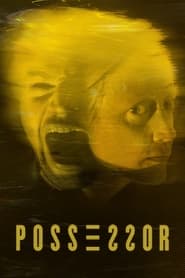
Possessor (2020)
Open your attention on the ritual: an assassin who works by inhabiting other people's bodies sits with a tray of keepsakes and recites a memory aloud, checking her own face for the answer — a sobriety test for the self. The unnerving detail is that the test can be passed by rote. Karim Hussain's cinematography splits the film chromatically — clinical whites for the corporate facility, richer, more sensuous color elsewhere — and the horror is delivered through handmade, practical effects in the lineage of Videodrome and Scanners: identity trouble you can touch.
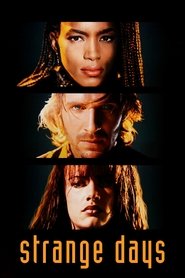
Strange Days (1995)
You don't watch the opening — you wear it: an entire robbery experienced through someone else's eyes, shot on custom rigs Bigelow built years before GoPro or bodycams existed. The film runs two distinct kinds of looking side by side: the grimy, neon-soaked nocturnal Los Angeles of the "real" story, and the immersive first-person clips of recorded sensation being sold like contraband. Notice how the device implicates you — every clip asks whether watching a recorded experience makes you a witness or an accomplice.
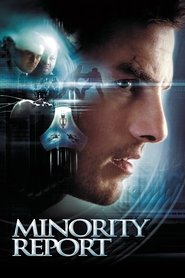
Minority Report (2002)
The film's truest image is a strange one for a thriller: a man before a wall of glass, gloved hands raised, sorting fragments of a crime that hasn't happened — conducting, scrubbing, reading, unable to act. Janusz Kamiński drains the palette through a bleach-bypass process, overexposing toward cold blues and steel grays, so the future arrives already faded, like evidence. Watch how detection itself becomes an act of interpretation: the visions arrive fragmented and out of order, raw time that must be reassembled before it can mean anything.
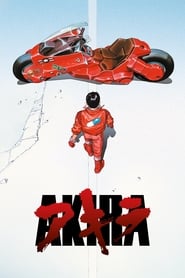
Akira (1988)
Start with the shot everyone copies: a red motorcycle braking into a slide, its taillight smeared into a hand-painted streak — motion and the residue motion leaves behind. That pulse runs through the whole film: bursts of frantic cutting, then compositions that simply stop and watch. Otomo's animators simulate a real cinematographer's lens — rack focus, flare, layered depth — to give Neo-Tokyo physical weight, and the story they're weighing is a boy handed a power that becomes an appetite: he doesn't wield it, it eats him.
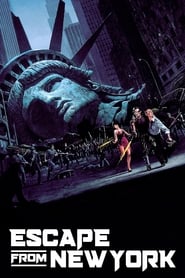
Escape from New York (1981)
Look closely at the famous wireframe flyover of Manhattan: no computer drew it. The crew wrapped scale models in reflective tape and lit them so only the glowing edges came back — a handmade fake of a digital image, and the perfect emblem of a film that conjures a whole future from grime and ingenuity. Dean Cundey's anamorphic widescreen turns a walled prison-island into a nocturnal world lit by fires and headlights, and Carpenter builds the plot like a clock: one man, one sealed city, twenty-four hours, and charges in his neck to enforce the deadline.
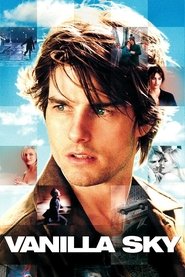
Vanilla Sky (2001)
The opening tells you everything and nothing: a man drives into Times Square and finds it scrubbed of every other human being — and the film shows you this gorgeous, depopulated impossibility before admitting anything is wrong. John Toll's cinematography is lush, high-gloss, saturated with wealth and beauty, and that surface perfection is itself a clue: the image is too beautiful to trust. Watch the seams between the psychiatric-cell present and a past you're never allowed to verify, and treat Crowe's meticulous song choices as a second narrator running underneath the first.
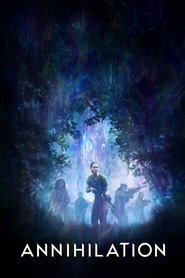
Annihilation (2018)
Two deer step from the brush moving in mirrored unison, one shadowing the other like a copy that hasn't noticed it's a copy — and the expedition can do nothing but watch. That stalled, helpless attention is the film's engine. Rob Hardy renders the Shimmer as a soap-bubble membrane tinting everything inside it, greens pushed toward the toxic, and Garland structures the whole thing on the template of Stalker: a rule-governed forbidden zone whose logic warps the deeper you go. Stay with the near-wordless finale, where score and sound design fuse and the film surrenders storytelling to pure image and sound.

eXistenZ (1999)
The genius here is a refusal: Peter Suschitzky shoots the game-worlds in exactly the same muted, naturalistic light as the supposedly real frame — no color shift, no lens warp, no chime when a door closes behind you. The flatness is the special effect. Meanwhile the technology is wetly organic — breathing pods, umbilical cords, ports in the spine — and Cronenberg films it all with no awe whatsoever, asking you not to marvel but to get used to it. By the time you have, you've lost the thread back out.
Watched together, these eleven films form a single extended lesson in suspicious seeing. You'll notice the influences ricocheting between them — Blade Runner's rain-soaked verticality feeding Akira, Akira and Ghost in the Shell feeding The Matrix, eXistenZ and Strange Days circling the same wire-in-the-skull anxieties from opposite sides of the millennium. But more than lineage, they share a method: each one slows the reflex between seeing and doing, and asks you to sit inside that gap. Some fill it with dread, some with melancholy, some with rapture. The reward of the marathon is that your own eye changes — you stop asking "what happens next?" and start asking "can I trust what I'm looking at?" Which is, these films suggest, the question our century was always going to hand us.