Sightlines · a mini film course
Learning to Distrust Your Own Eyes: Twelve Futures About Looking
What binds this watchlist isn't spaceships or robots — it's a shared suspicion of the image itself. Across forty years, these films keep circling the same unsettling questions: can you trust what you see, what you remember, even who you seem to be? And they answer with style: cameras that watch rather than chase, cities built to dwarf a lone figure, light used the way a novelist uses adjectives. Some of these films are all momentum; others deliberately let time stretch until you're forced to just sit with an image. Watching them together, you'll start to feel the difference in your bones — and notice how each one decides whether its hero gets to act on the world, or can only witness it.
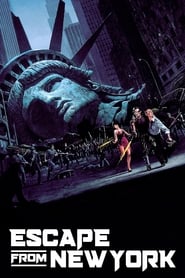
Escape from New York (1981)
Carpenter shoots his walled-off prison Manhattan in wide anamorphic frames built almost entirely out of darkness — fires, headlights, sodium pools. Watch for the famous "computer" wireframe of the city: no computer drew it; the crew wrapped scale models in reflective tape and lit only the edges. A handmade fake of a digital image — the perfect emblem of a future conjured from grime and ingenuity. Notice too how cleanly the film is built: a sealed space, a deadline, one silhouette of a man against a whole hostile island.
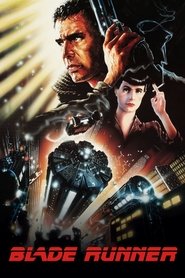
Blade Runner (1982)
Jordan Cronenweth's cinematography is the template half this list draws from: radical darkness cut by shafts of sodium light, and venetian-blind shadow striping quoted directly from 1940s crime films like Double Indemnity. Watch the photographs — characters keep holding, hoarding, and studying them, as if a snapshot could prove who you are. The film quietly asks whether it can. Notice how the vertical city works, too: towers above, squalor below, an inheritance straight from Metropolis.
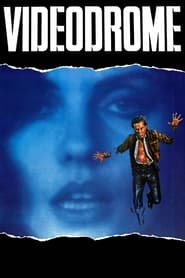
Videodrome (1983)
Cronenberg's masterstroke is restraint: Mark Irwin shoots the film's most impossible images in exactly the same cool, clinical light as its dingy TV-station offices. Nothing in the camera's grammar tells you when reality has slipped — and that withheld cue is the whole method. Watch how the protagonist changes register across the film, from fast-talking operator to someone who can only stare. When the screen itself starts to seem alive, ask yourself when you stopped being sure of what you were seeing.
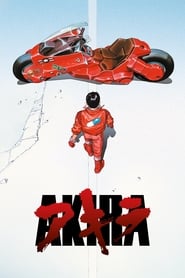
Akira (1988)
Start with the shot everyone copies: a red motorcycle braking into a slide, its taillight smeared into a hand-painted streak of light. Otomo's animators simulate a real cinematographer's lens — rack focus, flare, layered depth — to give Neo-Tokyo physical weight no live-action budget could buy. Watch the rhythm: bursts of frantic cutting, then compositions that simply stop and stare. And watch a boy handed a power he cannot steer — the film's horror is appetite, not villainy.

Ghost in the Shell (1995)
Oshii's animated city is assembled from real places — Hong Kong canals and neon streets — rendered with low angles and deep architectural recession, so the metropolis feels stacked in layers above you. The film's boldest move is a long, wordless passage in the middle where the plot simply pauses and a character rides through the city, watching: doubles in windows, mannequins, rain on dark water. Let it work on you. It's the film's philosophy delivered as pure image, and half of Hollywood's later cyberpunk is quoting it.
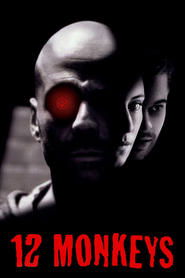
Twelve Monkeys (1995)
Gilliam and cinematographer Roger Pratt (fresh from Brazil) build a visual language for a fractured mind: cold desaturated blues for the future, distorting wide lenses and looming low angles for institutions. Watch how the film keeps circling back to one scrap of childhood memory — an airport, hard morning light — refusing to let you read it clearly. And watch what it does to Bruce Willis: it takes an action star and methodically strips away his ability to change anything, so that seeing becomes the whole drama.

eXistenZ (1999)
Cronenberg again, and again the trick is deadpan. Peter Suschitzky shoots the game-worlds in exactly the same muted, naturalistic light as the "real" one — no color shift, no lens warp, no chime when a door closes behind you. The flatness is the special effect. Watch how casually the film treats its wet, breathing bio-technology: it never asks you to marvel, only to get used to it — and once you have, you've lost the thread back out.
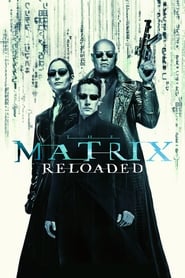
The Matrix Reloaded (2003)
Bill Pope's color scheme is a reading instruction: sickly green for the simulation, firelit warmth for the human world — the film teaches you its palette the way it teaches its hero his strange new sight. Watch for the moments when the picture stops being something to watch and becomes something to decipher, code beneath the costume of the world. And when the film halts dead for a long, talky scene in a white room of monitors — don't check out. The stall is the point.
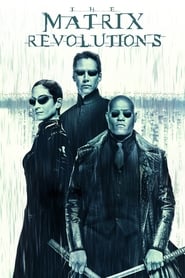
The Matrix Revolutions (2003)
The trilogy's finale runs the grandest possible version of the classic action machine — a total situation, a last city, a machine army — and its dock battle turns industrial architecture into a cathedral that summons the fighting rather than merely containing it. But watch how Pope's rigid green-versus-real color code starts to complicate in this installment. Underneath the noise, the film is staging a quiet reversal about sight itself: what it might mean to perceive a world truly, and what that costs.

Pacific Rim: Uprising (2018)
Here's the control experiment for the whole course: a film that deliberately restores the old, clean circuit — see the threat, act on the threat — after decades of sci-fi doubt. Dan Mindel shoots it bright, glossy, and spatially legible, the opposite of noir murk. Watch the two-pilot cockpit: the "Drift" fuses two nervous systems so one giant body can perceive and move as a single will — the gap between seeing and doing made literally visible. Its lineage is a gift from Japan: Godzilla's city-scale monsters, anime's piloted machines.
Blade Runner 2049 (2017)
Roger Deakins finally won his Oscar for this, and you'll see why: bold saturated color fields — sodium-orange dust, sickly corporate amber, cold blue-grey rain — each environment a distinct world. Where the 1982 film was cluttered neon smoke, this is sculpted near-emptiness: one shaft of light, a lot of nothing, a human figure dropped in like punctuation. Watch how often the detective is filmed not detecting but simply enduring — long stretches of near-silent stillness in spaces that dwarf him. The pacing owes as much to 2001 as to noir: duration itself becomes the instrument.
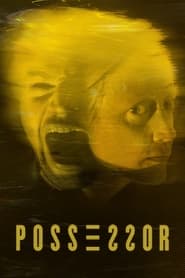
Possessor (2020)
The son extends the father's tradition inward: where David Cronenberg's horror lived in the flesh, Brandon's lives in identity — the body as a contested vessel. Karim Hussain's photography splits the world into clinical institutional whites and richer, more sensuous palettes, saving his most extreme effects for the seams between selves. Watch the small ritual the protagonist performs between jobs — objects on a tray, a memory recited aloud — a sobriety test for the self. Ask yourself whether such a test could ever really be passed, or only performed.
Watched together, these twelve films become a conversation across four decades about a single anxiety: that seeing might not be enough — that images can be forged, memories implanted, worlds simulated, and selves worn like clothing. The pleasure is in the craft each film brings to that anxiety: shadow-striped noir lighting, hand-painted light trails, deadpan cameras that refuse to flag the unreal, color palettes that function as maps. Notice when a film lets its hero act and when it only lets them watch; notice when time is spent and when it's allowed to stretch. By the end, you'll have developed exactly the skill these films are about — looking harder at the image, and trusting it a little less.