Sightlines · a mini film course
Watching in the Dark: Eleven Films Where the Image Does the Thinking
What binds this set — from a Swedish witch-lecture of 1922 to a shape-shifting island of 2018 — is a shared conviction that cinema's deepest power isn't chase or plot but attention. In every one of these films, the camera watches rather than hurries. Light is treated as a character: it battles shadow, filters through gauze and smoke, gathers on a face and holds there. Again and again, characters find themselves in situations where doing is impossible and looking is everything — and the filmmakers build whole visual languages to make your looking the event. Watch them roughly in order and you'll see a lineage of light passed hand to hand, from German Expressionist shadow-play through Hollywood chiaroscuro to the modern art-horror revival.
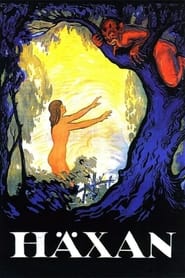
Häxan (1922)
Watch the hinge between document and dream: a lecturer's pointer taps a medieval woodcut of Hell — and then the film cuts, and the engraving stands up and walks. Christensen builds the whole picture as an argument in chapters, marshaling engravings, artifacts, and staged tableaux toward a single unsettling thesis about how institutions treat suffering women across the centuries. Notice Johan Ankerstjerne's candle-and-firelight photography, faces sculpted out of darkness — and notice that a film from 1922 is essentially reasoning out loud, decades before the essay-film had a name.
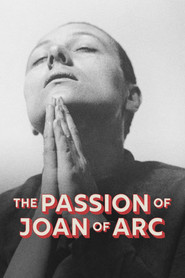
The Passion of Joan of Arc (1928)
Dreyer and cinematographer Rudolph Maté made the extreme close-up not punctuation but the film's entire language. You watch nearly everything at the distance of a tear crossing bare, unmade-up skin, on new film stock that could finally record a face like weather. The usual rules of screen geography are suspended — you could never draw a map of the room — because Joan can't act, only endure, so the drama must live entirely in what crosses her face. Give it your full stillness; it repays nothing less.
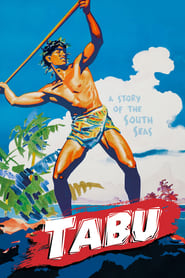
Tabu: A Story of the South Seas (1931)
Murnau's last film transposes his German shadow-craft into pure Pacific sunlight — Floyd Crosby's Oscar-winning photography finds luminous, plastic beauty in divers, dancers, water, and skin. Watch how the film labels its own structure ("Paradise" first) and how a world of open, communal freedom gradually closes around two lovers under the pressure of prohibition and money. And notice how Murnau uses cross-cutting — the oldest rescue-grammar in American movies — for his own, very different purposes.
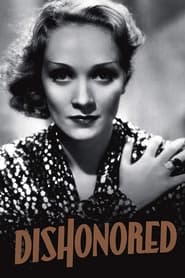
Dishonored (1931)
Sternberg builds his images out of intervening matter: smoke, veils, netting, lace, falling snow placed between lens and subject, so that reaching Dietrich's face becomes an act of labor. Watch how rarely her spy X-27 does anything, and how much instead is held in her composure — feeling gathered on a face and kept there, never quite spent. The film's real subject is performance itself: a woman whose identity is a series of masks, granted more dignity by the camera than by any state.
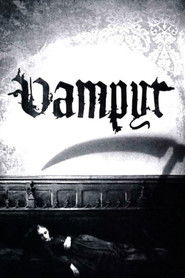
Vampyr (1932)
Maté shot this through a thin layer of gauze in front of the lens, so the whole world looks misted, grayed, half-blind — Dreyer said he wanted you to feel a door had opened onto another world. The hero barely acts; he drifts and watches — shadows that move without bodies, a sick girl's changing face — and the film's most famous shot lays the camera down inside a coffin, looking up through a little glass window as trees drift past. Dreyer's first sound film treats sound as another kind of shadow: near-silence, stray noises. Let it work on you like a dream you can't steer.
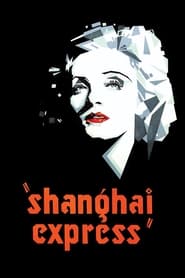
Shanghai Express (1932)
Watch the first time the camera finds Dietrich, and notice what's in the way: a veil, slatted shadow, feathers, smoke standing in the light like held breath. Where Expressionism sent light to battle darkness, Sternberg sends it against white — pale veils and haze that scatter the beam — and Dietrich's face arrives elaborately lit and gives back almost nothing. That gap between the labor of looking and the face's refusal is the drama: a film about whether love can rest on belief rather than proof, staged on a train that becomes a whole society in miniature.
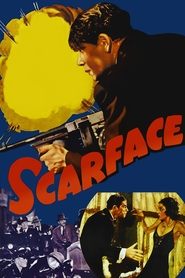
Scarface (1932)
Watch where the X falls: in rafters, in a steel sign's strut, chalked on a wall. Hawks and cameraman Lee Garmes seed a quiet death-stamp through the frame, a pattern you don't have to notice consciously for it to convince you that nobody in this Chicago is really choosing anything. Muni plays Tony not as a schemer but as pure appetite — grinning, grabbing, a child intoxicated by his own power — and Garmes's pools of hard light against deep blacks anticipate film noir's whole look a decade early.
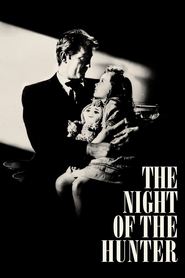
The Night of the Hunter (1955)
You'll remember the shadow before the man: the preacher rendered as a black cut-out, conical hat and long arm thrown huge across a bedroom wall. Laughton — an actor directing his only film — understood that a predator is scariest not as a psychology but as a shape, and he built the movie the way a frightened child thinks: in pictures too large and too clear. Watch Stanley Cortez's storybook lighting and the deliberate echoes of silent cinema, down to the casting of Lillian Gish. It's part noir, part fairy tale, part American folk sermon on love and hate.
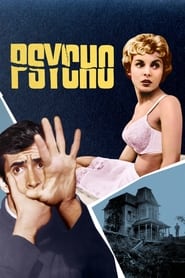
Psycho (1960)
This is a film organized around the gaze — who looks, through what frame, and what looking costs. Marion is watched from the moment she appears: by a boyfriend, an employer, a highway patrolman staring wordlessly through her car window — and Hitchcock quietly makes you one of the watchers. Notice John L. Russell's clean, functional, television-honed photography, so different from Hitchcock's lush prestige style; and notice how forcefully the first act moves — a woman who sees, decides, acts — so that you feel it in your body when the film changes its rhythm. Say no more; go in knowing as little as you can.

Dark City (1998)
At midnight the city falls asleep standing up, and the buildings begin to move — towers screwing out of the pavement, streets folding into streets, while no one is awake to witness it. Proyas builds a sealed world of mirrors with no sun, no edge, and no history you can trust, rebuilt from Metropolis's miniature verticals and lit by Dariusz Wolski in near-total night — hard, sourced light carving figures from darkness like 1940s noir pushed toward the grotesque. Watch for one word, a place-name everyone can say and no one can find, and how the film uses it as a crack of daylight in a world that seems to have no outside.
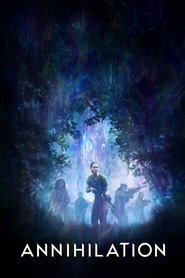
Annihilation (2018)
Two deer step from the brush moving in perfect mirrored unison, and the expedition just watches — nobody explains, nobody can act, and the looking is the whole event. That's the film's method: it takes exactly the character a thriller would arm with competence and puts her somewhere competence doesn't apply. Watch Rob Hardy's palette — greens pushed toward the toxic, everything tinted through a soap-bubble membrane — and stay with the near-wordless final stretch, where score and sound design fuse and the film surrenders story to pure image and sound, in deliberate homage to 2001.
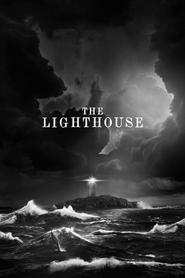
The Lighthouse (2019)
Everything here descends a slope toward a withheld light: one man locked out of the lantern room, scrubbing floors and emptying slops below, drawn upward and downward at once. Eggers is obsessive about period fact — the tools, the food, the rigid choreography of labor — precisely so a wilder, older world of raw appetite can erupt through that documented surface. Jarin Blaschke shot in monochrome on vintage lenses with a look reverse-engineered from silent-era film stocks: skies darkened, skin rendered as raw pore-level texture under hard sidelight. And listen — the foghorn never once lets the soundtrack rest.
Watched together, these films teach a single skill: patience with the image. You'll see the same shadow vocabulary invented in Weimar Germany travel to Hollywood in the suitcases of émigrés, resurface in a Depression-era fairy tale, mutate into 1990s science fiction, and get lovingly rebuilt lens by lens in the 2010s. You'll learn to notice when a camera stops chasing and starts watching — when a face becomes the whole drama, when light itself carries the meaning, when a marked frame tells you something before any character knows it. By the end you won't just have seen eleven films; you'll have acquired a way of seeing that makes every film after them richer.