Sightlines · a mini film course
Don't Trust What You See: Twelve Films That Turn Doubt Into Style
Every film on this list is, in some way, about a mind under siege — memory that won't hold, identity that won't stay put, stories that may be inventions. But what binds them isn't subject matter. It's a shared wager about how movies work: that the camera, which we instinctively treat as an honest witness, can be taught to mislead us — beautifully, deliberately, and in plain sight. Some of these films run time backward or in loops. Some light a lie with the same loving glow they'd give the truth. Some simply let the camera stand back and watch, refusing to chase, until watching itself becomes the drama. Together they form a hundred-year conversation — from expressionist shadows through classic noir to the puzzle-box thrillers of the millennium — about what happens when seeing stops being believing.
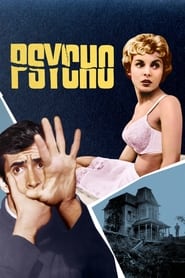
Psycho (1960)
The grandfather of the set. Notice how much of this film is about looking — through car windows, through peepholes, through frames within frames — and how Hitchcock quietly makes you one of the watchers, so that your own curiosity starts to feel like complicity. The photography is clean and functional, shot by a television veteran rather than a prestige stylist, and that plainness is the trap: the ordinary surface makes the darkness underneath land harder. Watch how dread is built from stares held a beat too long.
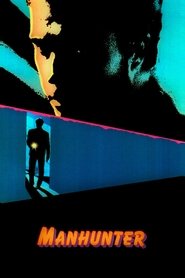
Manhunter (1986)
Michael Mann's cool, designed thriller makes perception the entire plot: FBI profiler Will Graham's method isn't deduction but occupation — he tries to stand where a killer stood and borrow his eyes. The camera is forever watching a watcher, and Dante Spinotti's palette of blues, teals, and clinical whites, with its hard symmetries and empty space, keeps you at a wary, analytical distance. Watch for how empathy is treated as both a gift and a contagion — how understanding someone can start to dissolve the border between you.
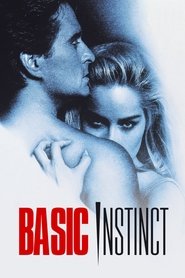
Basic Instinct (1992)
The camera will not stop moving — Jan de Bont's lens glides and circles like a suspicion that can't be pinned down. Watch the famous interrogation scene closely: five men question one woman, and track carefully who is actually reading whom by the end. Verhoeven takes the classic femme fatale and makes her, literally, a novelist — someone who may be scripting the story she's inside of — so that confession, evidence, and desire all become performances you can't peel apart from fact.
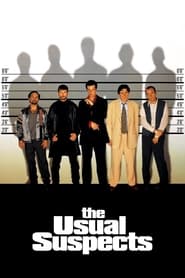
The Usual Suspects (1995)
A man tells a story in a drab, bureaucratic white room, and the film does what films always do with narration: shows you the events, fully lit, fully scored, fully convincing. That's the experiment — can spoken words be given the visual authority of fact? Notice the deliberate contrast between the stripped-down interrogation room and the rich, atmospheric world of the flashbacks, and ask yourself, scene by scene, what your evidence actually is.
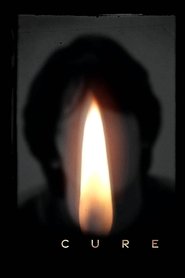
Cure (1997)
Kiyoshi Kurosawa's slow-burn masterpiece works by subtraction: no grand design, no spectacle, violence mostly off-frame, the palette drained to concrete gray. The defining choice is distance — wide shots that hold figures inside their environments and let dread seep in from the edges. And watch how the film's hypnotist works with cinema's own oldest tools: a point of light in a dark room, a patient circling voice, a watcher slowly emptied of resistance. The film is half-confessing what it's doing to you.
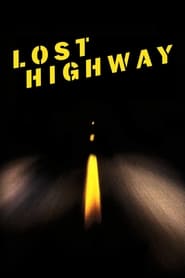
Lost Highway (1997)
David Lynch shoots a house as engulfing blackness — characters walk into shadow and simply dematerialize — set against bleached, sun-struck exteriors. This is film noir with the explanations surgically removed: the gangster, the murder, the doomed man are all here, but motive and detection are gone, replaced by dream logic and doubling. Don't fight it. Watch how faces, names, and identities refuse to stay fixed, and let the film's looping, seamless strangeness work on you like music.
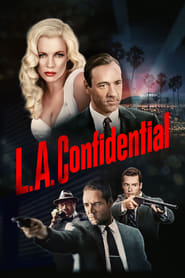
L.A. Confidential (1997)
Dante Spinotti again, now in warm amber and golden light — and here's the trick: this is a film about a city of manufactured surfaces (tabloid press, TV cops, counterfeit glamour), and the cinematography lights the fakes with full old-Hollywood reverence. The forgery is beautiful, the film knows it's a forgery, and it refuses to choose between those facts. Watch the constant gap between what institutions say they are and what they do — it operates at every level, from the police force down to a single perfectly lit face.

Dark City (1998)
Shot in near-total night, with hard, sourced light carving figures from darkness, this is 1940s noir pushed toward the grotesque — its looming, hat-and-coat figures descend straight from silent-era German shadows. Watch the architecture: the vertical city, built from models and forced perspective in the lineage of Metropolis, behaves less like a setting than a character with intentions. Its central question — is the self the sum of its memories, or something underneath them? — makes it a perfect companion piece to half the films on this list.

The Sixth Sense (1999)
Tak Fujimoto shoots Phil