Sightlines · a mini film course
Every film in this set is a crime picture, and every one of them commits its real crime against you — against your trust in what a movie shows you and when it shows it. These twelve films take the oldest promises of cinema — the image is evidence, the story runs forward, the hero acts and the world answers — and quietly, gorgeously break them. Some scramble the clock until "before" and "after" become rooms you wander between. Some hand the narration to people you shouldn't believe. Some watch their protagonists do everything a hero is supposed to do and discover it changes nothing. Watched together, they form a secret history of the crime film learning to distrust itself — and finding, in that distrust, its richest material.
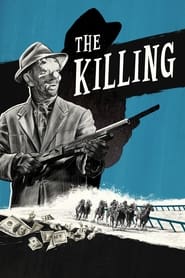
The Killing (1956)
Start here: the blueprint. Kubrick tells one racetrack heist by looping back through the same stretch of time again and again, each pass following a different man, a narrator's tidy chronology laying it all out like a schematic. Watch how the film's clockwork structure mirrors the planner's own ambition to master time and chance — and notice how the deep-focus rooms and wide-angle tracking shots (which Kubrick fought his own cinematographer to get) make every space feel measured, controlled, accounted for. The tension of the whole film lives in the gap between that control and everything it can't foresee.
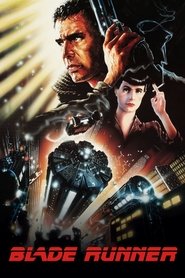
Blade Runner (1982)
A detective story dressed in the deepest shadows since the 1940s — venetian-blind striping quoted straight from Double Indemnity, transplanted into a rain-soaked future Los Angeles. Watch the photographs: characters clutch them, hoard them, offer them as proof of who they are. The film keeps asking whether a memory you can hold in your hand is worth anything if the past it records may not be yours. Let Cronenweth's images do their slow work; this is a film that thinks in light.
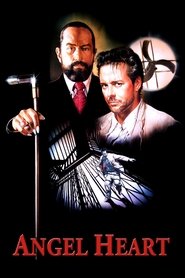
Angel Heart (1987)
A private-eye picture crossbred with occult horror, filmed through smoke and dust so that highlights bloom and shadows swallow detail. Watch the ceiling fans — they're in nearly every room, chopping the light into flicker, and they are never just set dressing. Notice too how the detective's diligent, by-the-book investigating keeps making things worse: every door he opens, every witness he finds. The film runs the gumshoe machinery perfectly while rewiring what it's for.
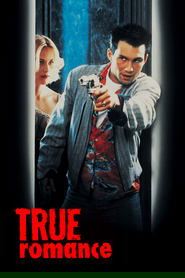
True Romance (1993)
Tony Scott shoots a lovers-on-the-run story in bruised blues and molten ambers, saturated nearly to abstraction — image as pure sensation. Watch Clarence's apartment: comic books, posters, action figures, an autobiography written in merchandise. This is a man who built himself out of movies, right down to the Elvis in his bathroom mirror, and the film's boldest move is shooting that fantasy dead literal, no dreamy dissolves, completely unembarrassed. The question underneath: can a self assembled from pop culture be real?
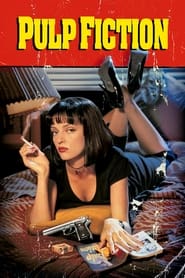
Pulp Fiction (1994)
The film that made shuffled time feel like pleasure. Three chapters and a bookend, deliberately out of order — and notice how easily you accept it, how "earlier" and "later" stop being a chain and become places you visit. Watch also for the restraint under the flash: long takes, slowly drifting frames, medium shots that let conversations about hamburgers and foot massages breathe right alongside lethal violence. Tarantino learned the segmented-heist trick from The Killing itself; this is the blueprint remixed into music.
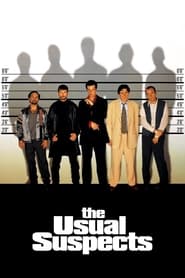
The Usual Suspects (1995)
A man in a bureaucratic white-box interrogation room tells a story, and the film does what films always do — it shows you the story, fully lit, fully scored, fully convincing. Watch how the flat, desaturated present contrasts with the baroque, atmospheric flashbacks, and ask yourself why the memories look better than the room they're told in. This is a film about how identity is performed and how completely we trust the image as evidence. Watch the bodies, not just the words.
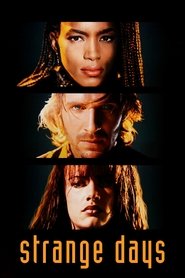
Strange Days (1995)
Bigelow's near-future noir opens by putting you inside someone else's eyes — a robbery experienced first-person, custom camera rigs standing in for a stranger's vision — years before GoPro or bodycam footage made that vision ordinary. Watch the two kinds of looking: the grimy, neon-soaked "real" Los Angeles versus the seamless first-person recordings people buy like a drug. The film treats reliving experience as an addiction, and it makes you the user.
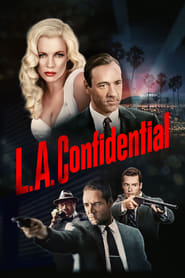
L.A. Confidential (1997)
Neo-noir in warm amber and gold — sunlight through venetian blinds, lacquered bars, mid-century sprawl. Watch the film's obsession with manufactured surfaces: a tabloid, a TV cop show, a vice ring selling call girls surgically altered to resemble movie stars. Notice how lovingly the camera lights the fakes — full 1940s glamour-portrait reverence for a forgery — and how the film refuses to choose between the beauty and the lie. Three cops, three different bargains with the institution; keep track of what each one is willing to trade.
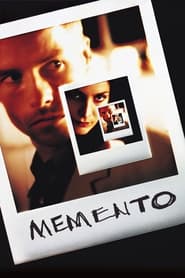
Memento (2000)
A man who can't make new memories hunts his wife's killer using Polaroids, notes, and tattoos — a mind built out of objects. Nolan's real invention is structural: the color scenes run backward, each ending where the last began, so every scene drops you in cold, with no memory of how you got there; a black-and-white strand runs forward to meet them. Watch how Wally Pfister's photography stays clean and legible — the film knows the structure is load enough. You're not watching amnesia. You're having it.
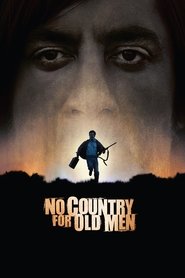
No Country for Old Men (2007)
Deakins's landscapes treat the desert as a participant: long lenses compress figures against featureless space, all distance and exposure. Watch the celebrated gas-station scene — a coin, a counter, fluorescent light, and talk — where nothing moves except a tension with nowhere to go. Notice how much the film trusts ambient sound over score, and how it honors every mechanic of the chase thriller while quietly declining the reassurances the genre usually delivers. The camera watches rather than chases.
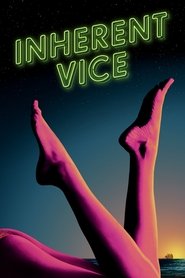
Inherent Vice (2014)
A private eye so baked he writes himself notes — not hallucinating — because he can't tell a clue from a contact high. Anderson channels the loose, elegiac 1970s Los Angeles of Altman's The Long Goodbye: relaxed naturalistic light, framings through doorways and smoke, a plot that swells past what anyone can hold in one head. Watch how the case happens to Doc rather than through him — the detective as passenger. Let the mood outrank the mystery; that's the design.
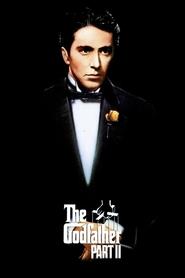
The Godfather Part II (1974)
Save this for when you're ready to sit still. Coppola braids two timelines — a father's rise, a son's reign — and Gordon Willis lights them as two different worlds: harsh Mediterranean daylight and documentary restraint for the past, deepening amber shadow and enclosure for the present. Watch how the film strips the gangster genre of its consolations, and how, in its most powerful moments, the camera simply waits with a man instead of cutting away to rescue him. Power here is something you watch closing over a face.
Watched together, these films teach a single lesson from twelve angles: the crime picture is cinema's laboratory for testing what an image is worth. When the timeline shatters, you feel how much you'd relied on order. When the narrator lies with a straight face, you feel how much you'd trusted the frame. When the hero acts and nothing resolves, you feel the old machinery of cause and effect exposed as machinery. Each film here inherits from the others — Kubrick's shuffled heist feeds Tarantino, the noir confessional feeds Memento and The Usual Suspects, Altman's drifting detective feeds Anderson — so the more of them you watch, the more each one opens. Pay attention to how you're being shown things, not just what you're shown. In this set, the telling is the crime, and it's beautiful.