Sightlines · a mini film course
The Untrustworthy Image: A Century of Noir and Its Descendants
Every film on this list wears the same trench coat — shadow-carved faces, murder, detectives, cities that never quite see morning — but what actually binds them is deeper and stranger. These are films about the gap between what we're shown and what's true. In them, narration lies, memory fails, light itself becomes a moral instrument, and the viewer is quietly deputized: you assemble what the frame withholds, you decode alongside the detective, you fall for the same beautiful surfaces the characters do. Watched together, they trace a hundred-year conversation — from Weimar Germany to the modern blockbuster — about whether the camera is a witness or an accomplice.
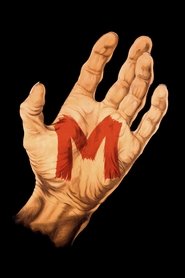
M (1931)
The founding text — and the source code for half the films below. Watch what Lang doesn't show: a ball rolling to a stop, a balloon caught in telephone wires, a mother calling up an empty stairwell. He hands you the periphery of a terrible event and trusts you to supply the center, making you a collaborator from the first minutes. Listen, too, for a whistled tune: Lang teaches you a rule about a sound, and from then on your ears know things the characters don't.
Double Indemnity (1944)
The film that consolidated noir's grammar, from a director whose European eye had absorbed German shadow-play. Watch the venetian blinds: slanted bars of shadow printed across faces, a cell forming around people before any crime is committed. And notice the structure — a man narrating his own story into a Dictaphone, so that everything he does, however competent, unfolds under a doom already sealed. Fascination and fate, running side by side without ever touching.
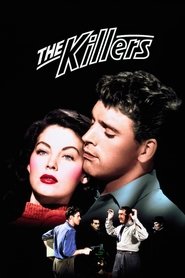
The Killers (1946)
Built from a Hemingway story and one of the great feats of noir lighting — hard light angling down onto a diner counter, killers half-swallowed in darkness. Watch the astonishing stillness of its opening: a man who sees exactly what's coming and simply waits, the room lit like a coffin. The rest of the film is a mosaic investigation, assembling a life from testimony in the fractured manner of Citizen Kane.
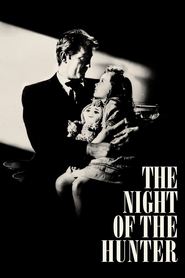
The Night of the Hunter (1955)
An actor's only film as director, and it looks like nothing else: part noir, part gothic fairy tale, shot in stark storybook chiaroscuro. Watch the shadows arrive before the man — a black cut-out in a conical hat thrown huge on a bedroom wall, more alive than the body casting it. Laughton understood that a predator is scariest as a shape, and he built a film that thinks the way a frightened child thinks: in pictures too large and too clear.

Chinatown (1974)
New Hollywood revisits the detective film and quietly sabotages the machine. Watch the light: crimes happen in blinding California daylight, amber and dust, inverting noir's nocturnal grammar — sunshine as moral weather. And keep an eye on that white bandage across the detective's nose: a sleuth who literally can't follow his own nose, doing everything the genre demands with maximum craft, in a world where competence may not be enough.
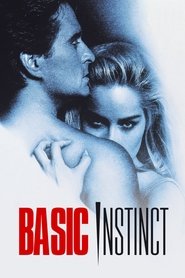
Basic Instinct (1992)
Watch the camera in the interrogation room: five men around one woman in white, and the lens circles her as if she were the still point and the entire apparatus of the law the thing in motion. Verhoeven's coup is making the femme fatale a literal author — a novelist — so that confession, evidence, even desire might all be performance. A glossy studio thriller running on ideas usually reserved for difficult art cinema.
True Romance (1993)
The tenderest film here, lit like a perfume ad — bruised blues and molten ambers pushed to the edge of abstraction. Watch the hero's apartment: comic books, posters, neon — an autobiography written in merchandise, a self assembled from other people's movies. When Elvis appears in a bathroom mirror to offer advice, Scott shoots it dead literal, no dreamy dissolve — because the film's whole wager is that a borrowed identity, lived hard enough, might become real.
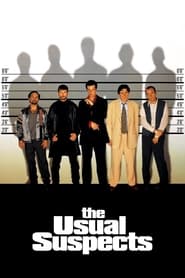
The Usual Suspects (1995)
Watch the rooms. The interrogation room is a deliberately drab bureaucratic white box — so that the flashbacks a small-time crook narrates from inside it arrive fully lit, fully scored, seductively cinematic. That contrast is the trick: the film exploits our oldest habit as viewers, the assumption that if we see it, it happened. Pay attention to how identity is performed — posture, voice, weakness — and to which cues you decide to trust.
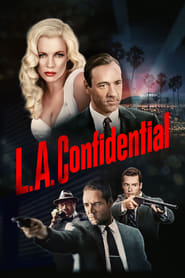
L.A. Confidential (1997)
A film about forgery that is itself lit like the thing it exposes. Watch how Spinotti photographs a call girl made over to resemble a 1940s star: full glamour-portrait reverence, lamplight straight out of the studio era — the film knows she's a counterfeit and lights her with love anyway. That refusal to choose between the beautiful and the fake is the engine, in a Los Angeles of tabloids, TV cops, and manufactured surfaces.

Dark City (1998)
Noir fused with science fiction, its DNA running straight back to Metropolis and Caligari: painted shadows, canted angles, silhouetted figures in hats and coats. Watch the midnight sequences, when the whole skyline swells and reshapes itself like a lung while its citizens sleep standing up. A sealed world with no sun, no edge, no history you can trust — and one word, a half-remembered seaside town, that everyone can name and no one can find.
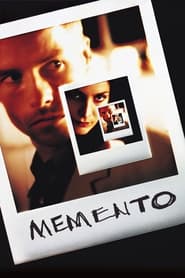
Memento (2000)
The boldest structural experiment on the list: color scenes running backward, each ending where the last began, so that every scene drops you in with no memory of how you got there — while a black-and-white strand runs forward to meet it. Watch the opening Polaroid: a photograph un-developing, detail draining back to blankness. The film doesn't describe its hero's broken memory; it installs the condition in you. Notice how restrained the camerawork stays — clarity as kindness, given how hard your brain is already working.
The Batman (2022)
The tradition arrives in the blockbuster era intact. Watch how radically underlit it is: faces top-lit with eyes lost in shadow, a near-monochrome city punctuated by sodium orange and blood red, borrowed from the "Prince of Darkness" grammar of The Godfather and the rain-soaked procedural mood of Se7en and Zodiac. Notice that watching is the plot — a killer who leaves ciphers addressed to the detective, so that you decode over the hero's shoulder, one more accomplice in the dark.
Watch these together and you'll start seeing the relay: Lang's shadows passing to Wilder, Wilder's doomed narrator passing to Singer and Nolan, the whole German night-world resurfacing in Proyas's shifting city and Reeves's underlit Gotham. But the deeper reward is what happens to you. These films train you to notice how meaning gets made — an empty frame, a whistled tune, a bandaged nose, a photograph fading the wrong way — and then they use that training against you, telling their stories through narrators who lie, memories that fail, and images too beautiful to doubt. By the twelfth film you won't just be watching noir. You'll be watching the way you watch — which is exactly where this whole shadowy tradition wanted you all along.