Sightlines · a mini film course
The Camera Is Not Your Friend: Twelve Films About Watching, Remembering, and Being Wrong
Movies made a quiet promise for their first hundred years: what you see on screen happened. These twelve films break that promise — beautifully, deliberately, each in its own way. They are all, at heart, about the gap between seeing and knowing. Some rearrange time until you feel a character's confusion in your own body. Some put you behind eyes you can't trust. Some hand the story to a narrator and let you discover, too late, what narration really is. Watch for a shared gesture across all of them: the moment a character stops acting on the world and simply looks at it — because the film has quietly taken away everything else they could do. That helplessness, it turns out, is one of cinema's most powerful positions to put you in.
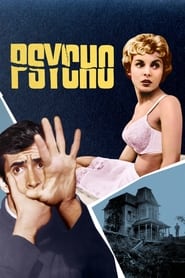
Psycho (1960)
Start here, at the root. Hitchcock organizes the entire film around looking — who watches whom, through what window or peephole, and what the watching costs. Notice how often you're given a character's exact vantage point, so their staring becomes yours. Shot with a lean TV crew in stark black and white, it strips away the plush atmosphere of Hitchcock's prestige pictures, and that plainness makes the dread hit harder.
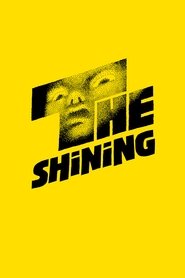
The Shining (1980)
The famous floating camera — Garrett Brown's brand-new Steadicam — glides inches off the floor behind a boy on a tricycle, and listen: carpet, hardwood, carpet, the wheels going loud and soft as he rounds each corner. Then try to draw a map of the Overlook Hotel. You can't; its geography is quietly impossible, a window where a wall should be. Kubrick isn't filming a building. He's filming something that thinks.
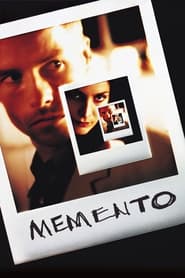
Memento (2000)
Nolan's real invention is structural: the color scenes run backward, each one ending where the last began, so you enter every scene with no idea how you got there — you're not watching a man who can't hold onto his memories, you're becoming one. A second strand in noir black-and-white runs forward, and the two braid toward each other. Wally Pfister shoots it all with restrained clarity, wisely, because the structure alone is doing the heavy lifting.
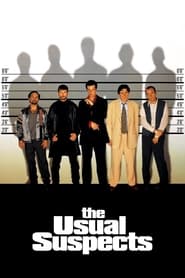
The Usual Suspects (1995)
A man tells a story in a white, fluorescent-lit interrogation room — deliberately drab — and the film shows you what he describes in rich, fully lit, fully scored flashback. Watch what that contrast is doing. The film descends from a long line of narrated confessions (Double Indemnity, Rashomon), and it understands something sly about movie grammar: when a film shows you something, you believe it. Ask yourself, all the way through, why you do.
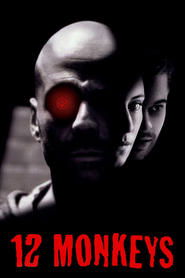
Twelve Monkeys (1995)
Gilliam takes Bruce Willis, an actor carrying all the physical authority of the action hero, and spends the film disabling it — a large, capable man who can see everything and change almost nothing. Roger Pratt's distorting lenses and low angles make every institution feel like it's pressing inward. And notice the fragment of memory the film keeps circling back to, a scrap of an airport in hard morning light: the whole structure is a machine built around that image, inherited directly from Chris Marker's La Jetée.

The Sixth Sense (1999)
A boy who can only see, listen, and endure — and a film patient enough to sit in that helplessness with him. Tak Fujimoto shoots Philadelphia in chilled blues and grays, then rations the color red like a controlled substance; track where it appears. And savor the small wrong details — a breath fogging in a warm kitchen — where the ordinary is turned just a few degrees off true. This is horror by suggestion, in the old Val Lewton tradition: what's withheld scares more than what's shown.
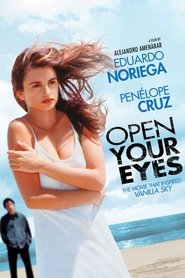
Open Your Eyes (1997)
Amenábar's opening is one of the great images of the decade: a young man drives into central Madrid at rush hour and the city is empty — clean sunlight, sharp focus, nothing distorted, and completely unbearable. That's the film's method throughout: dread found in broad daylight, because a world that never announces itself as unreal can betray you at any moment. Watch how naturalism itself becomes the trap.
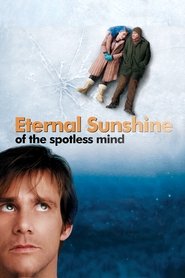
Eternal Sunshine of the Spotless Mind (2004)
Watch the bookstore scene: signs going blank, titles sliding off spines, a remembered room quietly losing its nouns while the man inside it watches. Gondry never cuts away to a computer screen to explain — the erasure happens in the image. Ellen Kuras shoots the present tense with raw handheld immediacy and the memory scenes with fluid instability, so you always feel, in your gut, which layer of the mind you're standing in.

Black Swan (2010)
The camera rides a few inches behind Nina's shoulder for most of the film — not inside her head, not safely outside it, but shadowing her, close enough that intimacy curdles into surveillance. Then there are the mirrors, which a ballet studio supplies in endless quantity: watch for reflections that lag a half-beat, that don't quite behave. Aronofsky is working a European lineage here — The Red Shoes, Polanski's apartment films — where a woman's space becomes a picture of her mind.
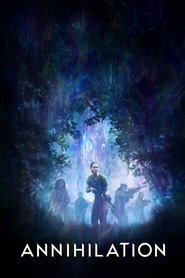
Annihilation (2018)
Two deer step from the brush moving in perfect mirrored unison, and the expedition can do nothing with the sight but look. That stalled attention is the film's whole mode. Rob Hardy pushes the greens toward the toxic and wraps everything in a soap-bubble shimmer of refracted light, and the final stretch surrenders almost entirely to image and sound — a deliberate echo of 2001's plunge into pure abstraction, by way of Tarkovsky's forbidden Zone.
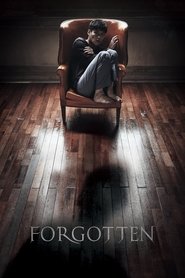
Forgotten (2017)
A product of Korean cinema's supremely confident thriller tradition, this one works through architecture: doorways, window panes, stairwells — the home framed as a set of thresholds the protagonist can't safely read. Notice how the camera hovers near his point of view without ever fully committing to it, keeping you close enough to share his uncertainty but never sure enough to trust it. It opens with a memory of perfect clarity attached to a fact that checks out as impossible, and builds everything from that gap.
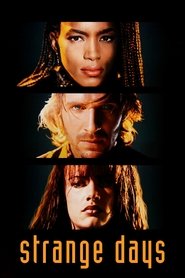
Strange Days (1995)
You don't watch this film's opening — you wear it: a crime unfolding through borrowed eyes, shot with custom first-person rigs years before GoPros and bodycams made that vision ordinary. Bigelow maintains two distinct ways of looking — a grimy, neon-soaked noir Los Angeles, and the seamless immersion of the recorded clips — and the film's whole moral weight lives in the difference between them. It asks the question all these films circle: what does it cost to see through someone else?
Watched together, these films teach you a skill: distrust. Each one trains you to notice how you're being shown things — whose eyes you've been given, what the frame is withholding, whether a memory on screen is evidence or invention. You'll start seeing the rhymes: the narrated confession echoing from Psycho's lineage into The Usual Suspects and Forgotten; the single haunting memory-image passing from La Jetée into Twelve Monkeys and Eternal Sunshine; the watcher who cannot