Sightlines · a mini film course
There's a moment in almost every one of these films where a character stands still and stares at something they cannot understand, cannot fight, and cannot look away from. A sky that shouldn't be that color. A city that rearranges itself overnight. Two deer moving in impossible unison. These eleven films — spanning fifty years, from grimy New York procedural to soap-bubble alien wilderness — all worry at the same nerve: what happens when looking stops working? Some of them respond by building better machines for seeing (a blood test, a wire under the hair, a wiretap). Some let their heroes fail entirely, reduced to witnesses of catastrophes they can't bend. And some — the purest thrill machines here — restore the old confidence on purpose, so you can feel exactly what the others have taken away. Watch them as a set and you're watching cinema argue with itself about whether a person can still act on the world, or only endure it.
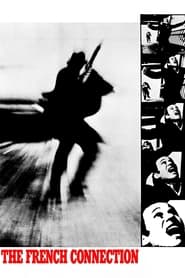
The French Connection (1971)
Start here, with the old grammar working at full strength — but notice it's the detective's version: not one big heroic act, but a thread pulled inch by inch, each tail and frisk and wiretap lighting up one more corner of a hidden network. Shot on real winter streets in the semi-documentary tradition, with telephoto surveillance shots and a palette of greys, browns, and fluorescent green. Watch the scene where Doyle eats cold pizza on the sidewalk while his quarry dines behind restaurant glass: Friedkin never explains it, just makes you stand on the cold side of the window. Obsession here isn't heroism — it's pathology, and it costs.
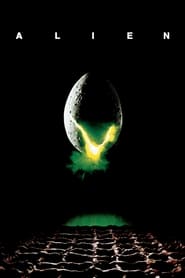
Alien (1979)
A haunted house rebuilt as an industrial workplace. Vanlint's lighting is deliberately partial — backlit corridors dissolving into darkness, the creature almost never shown in full — and the camera drifts and probes rather than chases. What to watch for: the creature is given no motive, no plan, no inner life to read. It's pure appetite, and that refusal to make it a villain is the whole design. A villain you can out-argue; a drive you can only outlast.
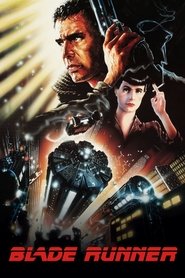
Blade Runner (1982)
Watch the photographs. Characters carry them, hoard them, offer them as proof of who they are — and the film keeps asking whether a memory you can hold in your hand means anything if the past it records was lived by no one. Cronenweth's cinematography quotes 1940s crime films directly (the venetian-blind shadow striping comes straight from Double Indemnity), fusing noir's moral exhaustion to science fiction's vertical city. Slow, dark, elegiac — let it take its time.
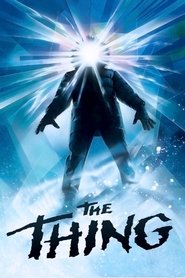
The Thing (1982)
Dean Cundey's wide, deep-focus frames keep multiple men in sharp focus at once — and that's the trap. The film denies you a single reliable point of view, so you're doing exactly what the characters are doing: scanning faces, trusting no one. The central horror isn't the creature so much as what it does to the group: when appearance itself can be counterfeited, watch how a room full of rational men builds a machine to do their trusting for them, because their eyes have stopped being evidence.
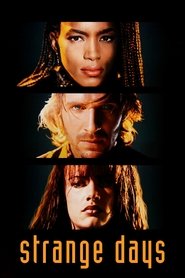
Strange Days (1995)
Bigelow's near-future noir opens by putting you inside someone else's eyes — a full unbroken first-person sequence, shot on custom rigs years before GoPro or bodycams made that vision ordinary. The film maintains two distinct ways of looking: the grimy, neon-wet Los Angeles of the story, and the immersive "clips" of recorded experience its junkie hero deals like a pharmacist of stolen feeling. Watch for how the film implicates you — every clip asks whether watching a recorded life is intimacy, theft, or both.
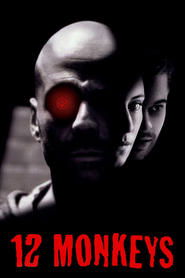
Twelve Monkeys (1995)
Gilliam takes Bruce Willis — an actor who arrives carrying the physical authority of an action hero — and spends the film disabling it. His time traveler is sent back not to prevent catastrophe but merely to gather information; heroism reduced to data collection. Watch the distorting lenses, the low institutional angles, the cold desaturated future pressing inward — and watch how one fragment of memory keeps returning, deliberately kept unreadable. The architecture is inherited from the French short La Jetée, and the whole film is a machine built around a single image.

Dark City (1998)
A city of near-total night — hard, sourced light carving figures out of darkness like 1940s noir pushed toward the grotesque — with a visual bloodline running straight from silent German cinema: painted shadows, looming coats and hats, canted geometry, a vertical metropolis built from miniatures. Watch what the film does with space: this is a world with no sun, no edge, no history you can trust, and everyone shares one word for the outside — a place they can all name and none can find. Notice how the postcards and the murmured place-name work on you.
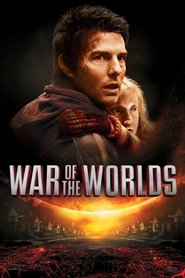
War of the Worlds (2005)
The great craft decision: the film never once leaves one man's eye-line. No command center, no president, no scientist at a map — just a divorced dockworker trying to keep his daughter alive. Kamiński shoots it in bleached, ashy, overcast light that carries the photographic memory of September 11th, and Spielberg deploys his old Jaws grammar of withholding: the threat revealed late, partially, through reaction shots and off-screen sound. Watch what it feels like when a blockbuster refuses the genre's promise that courage and ingenuity will prevail.

28 Weeks Later (2007)
It opens with one of the most controlled sequences in 2000s horror — candlelit farmhouse, then a daylight sprint across open English country — and the choice made in that opening never stops echoing. Watch how Chediak's camera changes when violence erupts: whip-panned, strobed, near-abstract, so attacks arrive as sensory overload rather than legible action. The infected here skip thought entirely — blood hits the eye and the body simply wants — and the film shoots them that way. A British zombie picture that's also, pointedly, about occupation and the failure of every system of control.
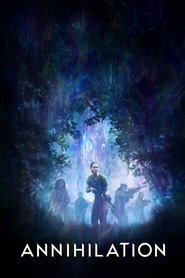
Annihilation (2018)
The counterweight to everything above. Garland arms his heroine with exactly a thriller's competences — soldier, scientist — then puts her inside a zone where there's nothing adequate to do. The camera watches rather than chases; the palette is toxic greens and oily refracted light, the whole world tinted through a soap-bubble membrane. Watch the moments where characters simply stand and look — the looking is the event — and stay for a nearly wordless final passage where image and sound take over from story entirely, in the lineage of Tarkovsky's forbidden Zone and Kubrick's Star Gate.
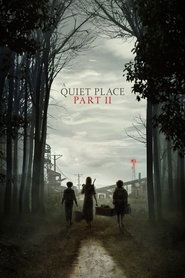
Pacific Rim: Uprising (2018) & A Quiet Place Part II (2021)
I'm pairing these deliberately, because both are restorations — films that consciously choose the old, confident grammar after moodier predecessors. Uprising is bright, clean, spatially legible blockbuster craft (Dan Mindel's glossy anamorphic look), and its central image — two pilots neurally fused so a giant body can perceive and act as one will — is practically a diagram of see-the-threat, fight-the-threat cinema. A Quiet Place Part II opens with a golden small-town Saturday afternoon engineered to be taken from you — a sequence that borrows Spielberg's family-in-peril grammar from War of the Worlds almost beat for beat — then extends the first film's great idea: that what looks like weakness (a deaf daughter, imposed silence) becomes the family's resource. Watch how sound design does the storytelling in one, and sheer spatial clarity in the other.
Why watch these together? Because the set forms a spectrum, and the spectrum is the lesson. At one end, films where perceiving and acting click smoothly together — the wiretap that pulls the thread, the pilots fused to their machine. At the other, films where perception outruns any possible response — the man wearing the ash of other people, the biologist who can only watch the deer. In between, films about broken seeing: eyes that can be rented, memories that can be installed, faces that can be forged, cities rebuilt while the witnesses sleep. Every one of these films is asking, through pure craft — where the camera stands, what the light conceals, when the cut arrives — whether the world is still something a person can change, or only something a person can survive watching. Notice which films chase and which films wait, and you'll have learned more about how movies think than a shelf of textbooks could teach you.