Sightlines · a mini film course
Selling Yourself in America
Every film in this set is about a transaction — and about what a transaction does to the person making it. Salesmen working phones, prospectors working claims, columnists trading favors, con artists pitching movies, a narrator pitching his own story to a cop. Across a century of settings, these eleven films keep circling one question: what happens when a person's worth becomes something that can be measured, ranked, bought, rented, or performed? Watch them together and you'll notice the filmmakers answering with the camera as much as the script — where people stand in a frame, who's above and who's below, how long a shot is willing to wait, whose body kneels and whose stays still. This is a course in how movies show power, appetite, and the American talent for turning the self into a product.
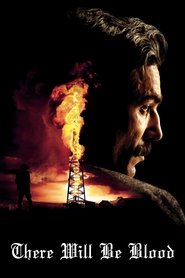
There Will Be Blood (2007)
The film opens with roughly fifteen minutes of nearly wordless cinema: one man alone in a landscape, prospecting by hand, dragging a broken body across rock — no dialogue, no conventional score. Anderson is teaching you to learn this character the way you'd learn an animal: by watching what it does to survive. Notice how the film keeps two worlds in the same frame — the polite surface of lease negotiations and handshakes, and something older and hungrier underneath it. The oilman and the preacher aren't opposites here; watch how the film stages them as rivals running the same kind of operation.
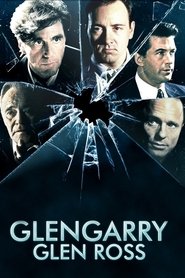
Glengarry Glen Ross (1992)
A chamber piece built almost entirely of talk, shot in rain-streaked blacks, sodium ambers, and cold office fluorescents that turn one workplace into a pressure cooker. Watch Jack Lemmon work a phone: the practiced warmth, the little laugh he's run ten thousand times, and what his face does when the pitch stops landing. These are men built entirely to act — see the mark, read the weakness, close — trapped in a situation where no amount of hustling connects to anything. The whole film lives in that gap between total effort and zero traction.
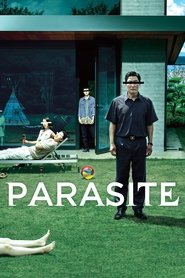
Parasite (2019)
Bong and his cinematographer build the entire visual grammar on a vertical axis: cramped, low-angled frames in the semi-basement; a long climbing staircase up to the wealthy house. Watch how the camera treats up and down not as two locations but as one continuous slope — there's a rain-storm sequence, shot from above, where people descending stairs read almost like water finding its level. The frame tells you everything about who lives where and why, before the dialogue does. Notice too how precisely the film shifts registers — comedy, thriller, something darker — without ever seeming to change gears.
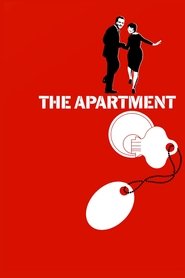
The Apartment (1960)
Wilder learned from Lubitsch how to say everything through objects — closed doors, exchanged things, displaced conversation — and this film is that method perfected. Watch the wide black-and-white frames of the office: one man among rows of identical desks, the corporate world stretching away in forced perspective. The central idea is a man who literally rents out his own domestic warmth for career advancement, and the film never announces its meanings; it transacts them through things, trusting you to complete the deal. Keep an eye on a small broken compact mirror — the film's whole craft is in moments like that, where an object carries what no one will say aloud.
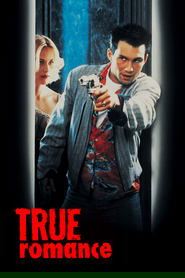
True Romance (1993)
Tony Scott shoots this lovers-on-the-run story in bruised blues and molten ambers, saturated nearly to abstraction — image as pure sensation, unembarrassed and glowing. The hero is a man assembled entirely out of pop culture: comic books, movie posters, an inner Elvis who appears in bathroom mirrors and offers advice, shot dead literal, no dreamy dissolves. Watch how the film wagers that a self built from borrowed movies can still be real — that if you live the myth hard enough, it holds. Its family tree runs from Gun Crazy through Godard to Bonnie and Clyde, and it knows it.
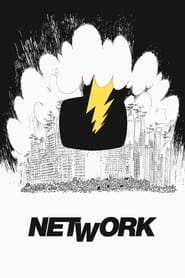
Network (1976)
Lumet and cinematographer Owen Roizman designed the look to drift, almost imperceptibly, from documentary naturalism toward glossy artifice as television's logic takes over the film itself — watch for that slow visual corruption. Then notice something stranger: for a film with a newsroom, a corporate knife-fight, an affair, almost nothing is decided by anyone doing anything. The turning points are speeches. People stand still and talk, and the talking is the deed — a soaked man in a raincoat says words, and a whole city throws open its windows.
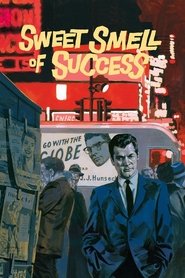
Sweet Smell of Success (1957)
James Wong Howe shoots nighttime Manhattan as a glittering, predatory thing — high-contrast black and white, glistening streets, hard neon sparkle, deep-focus frames packed with menace. But the real study here is posture. "Match me, Sidney": watch who holds out the cigarette and who scrambles to light it. The powerful man barely moves; the desperate one never stops. You can read the entire hierarchy off the arrangement of bodies before you've parsed a line of the venomous, jousting dialogue — which is itself among the most quotable ever written.
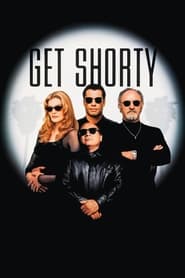
Get Shorty (1995)
The joke at this film's core is that crime and showbusiness run on exactly the same skills: reading people, applying pressure, projecting unshakable confidence. Travolta plays a loan shark as a study in stillness — a man who never raises his voice because he's never needed to — and watch what his signature command, "Look at me," actually does: it's an order to perceive, from someone who has already finished perceiving you. Sonnenfeld had been a great cinematographer himself (Blood Simple, Raising Arizona), and the film's clean, confident visual wit shows it.
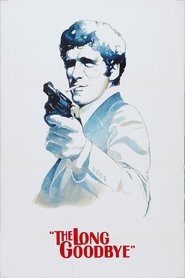
The Long Goodbye (1973)
Altman opens a murder mystery with a long stretch about a man trying to buy the right brand of cat food — and that errand is the whole film folded small. The camera never sits still: always drifting, zooming, panning, like an alert but passive witness with its own curiosity, refusing to underline what matters. Watch Elliott Gould's detective investigate constantly while nothing he learns adds up to leverage; he's a man of loyal, careful effort moving through a Los Angeles that has quietly stopped keeping score. The camera watches rather than chases, and that's the point.

The Substance (2024)
Fargeat shoots faces and bodies with very wide lenses held far too close — skin bulges, a cheek curves like a small planet — so that before a word is spoken, the image has made its argument: this is what looking does to flesh. Watch how the film's own camera reproduces a leering TV director's framing exactly, making you complicit in the consuming gaze — and then inverts it, turning the same extreme close-up from titillating to unbearable. The gaze isn't a theme this film discusses; it's the material it's built from. Body horror in the Cronenberg line, doubles story in the All About Eve line, and pure sensory assault throughout.
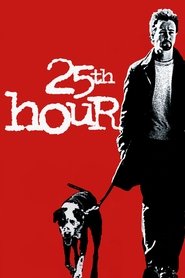
25th Hour (2002)
Rodrigo Prieto gives New York a cold, bruised-blue palette, drained of warmth — the first major fiction film to register post-9/11 grief as atmosphere rather than plot. The premise is a man's last free day before prison, and watch Lee's signature "double dolly" shot: actor and camera mounted on the same rig, so Edward Norton glides weightless while the city slides past behind him. He isn't walking; he's being carried. When there's nothing left for a character to do, the world does the moving instead — and don't miss the ferocious mirror monologue, a love-hate inventory of the city that turns, finally, inward.
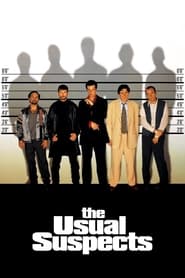
The Usual Suspects (1995)
A man sits in a deliberately drab white interrogation room and narrates, and the film does what films always do with narration: shows you the events, fully lit, fully scored, fully convincing. Watch how Singer keeps every visual marker of trustworthy memory — the shadows, the music, the flashback grammar we've been trained by a century of cinema to believe — and quietly asks whether the camera showing you something makes it true. Pay attention to how identity is performed here: what physical and behavioral cues you trust, and why. The film's deepest ancestors are Double Indemnity's confession-to-an-authority structure and Rashomon's contradictory testimonies given equal visual weight.
Why Watch These Together
Run these films in sequence and a conversation emerges across seven decades. The salesmen of Glengarry are the grandchildren of The Apartment's office drones and Sweet Smell's hustlers; the pitch that rules Get Shorty's Hollywood is the same instrument Verbal Kint wields in an interrogation room and Chili Palmer wields with two words. The vertical frames of Parasite, the seating arrangements of Sweet Smell, the desk-rows of The Apartment — different eras, same insight: the camera can show you a power structure faster than any speech can explain it. And underneath every deal, these films keep finding the same raw appetite — the wanting that comes before the words, whether it's crawling out of a hole in the California desert or leaning too close to a face under studio lights. Watch for how each film decides whether effort still connects to outcome, whether a self can be sold without being spent — and notice how often the answer is written in bodies, objects, and frames rather than dialogue. That's the pleasure of this set: it trains your eye.