Sightlines · a mini film course
The Cinema of Watching: Coming of Age When There's Nothing to Do
Here's a secret about growing up that most movies lie about: it doesn't happen through action. Nobody solves adolescence. The twelve films in this series — spanning Yorkshire coalfields, Tokyo classrooms, San Fernando Valley parking lots, and one long Saturday in a school library — share a quiet radical proposition: that the most important moments of young life are the ones where nothing can be done, only felt, watched, endured. In each of these films, the camera learns to wait. Space becomes something characters are held inside rather than move through. Time is allowed to stretch until you feel it directly, like weather. These are films about looking — and about what happens when looking is all you have.
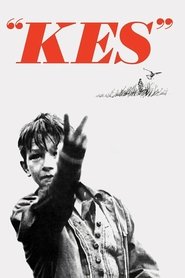
Kes (1970)
Watch for the moments when a boy who flinches through every scene suddenly goes still. Chris Menges shoots from a patient distance — across a room, across a field, on long lenses — so the young non-professional actor never feels pressed by the camera and behavior unfolds unselfconsciously. This is the observational grammar inherited from Italian neorealism (Bicycle Thieves is its direct ancestor), applied to a working-class Northern England where every institution tells Billy his life has already been decided. The kestrel is a wild thing that can't be owned, only worked with — and the film's most electric passages are simply a boy, a bird, and grey sky.
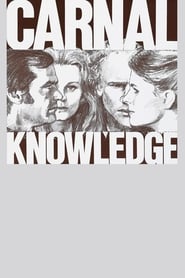
Carnal Knowledge (1971)
The odd one out here — coming of age curdling into arrested development across thirty years. Nichols and the great Italian cinematographer Giuseppe Rotunno stage monologues as near-frontal address, faces held in tight isolation, borrowing from Bergman's Persona. Watch how the polished social surface — dorm rooms, dates, marriages — sits atop something rawer: appetite that never changes shape while the decades change costume around it. Notice the slope of the thing: everything running quietly downhill.
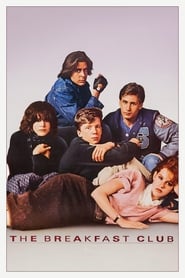
The Breakfast Club (1985)
Five teenagers locked in a library with one instruction: do nothing. Hughes builds an entire feature out of the dead time other movies cut away from. Watch how Thomas Del Ruth uses the library's vertical architecture — the upper gallery, railings, sunken seating — to stage shifting power at different elevations, and how editor Dede Allen (who cut Bonnie and Clyde) paces scenes to breath and reaction rather than plot. Watch Allison especially: she barely speaks for nearly an hour, and her face is where the film happens.
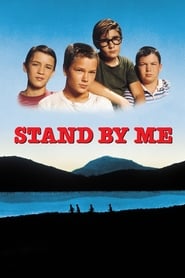
Stand by Me (1986)
It looks like a quest — four boys walking train tracks toward a body — but the walking and talking is the film. Del Ruth again, here favoring hazy late-summer light and wide compositions that set four small figures against the converging geometry of the rails. Watch the moments the film lets stand alone, unshared and unexplained: a boy on dawn watch, something stepping out of the mist. The adult narrator's frame (in the tradition of To Kill a Mockingbird) makes the whole thing a memory being written down, which changes how every image lands.
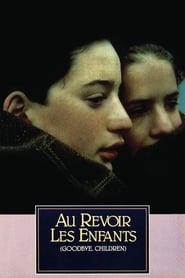
Au Revoir les Enfants (1987)
Malle rebuilt his own boyhood — a wartime boarding school under the Occupation — and shot it in a cold, tonally narrow palette of grays and winter light. Watch how little the young lead is asked to do: he's played almost entirely through watchfulness, and the film trains you to read glances. The stakes of the entire picture come to rest, eventually, on where a pair of eyes moves for less than a second. History arrives in a child's life as something that can only be witnessed, never acted upon.

Dead Poets Society (1989)
Watch the postures. A teacher stands on his desk — it wins no argument, changes nothing, but it shows something: where a body stands inside an institution built of banners reading Tradition, Honor, Discipline. John Seale's burnished autumn photography (amber leaves, fog, candlelight) makes the school gorgeous and enclosing at once. Weir, an Australian looking at East Coast American ritual from the outside, keeps returning to small physical gestures until they become the boys' only remaining language.
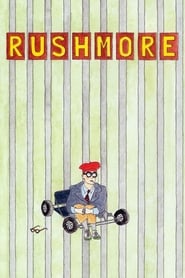
Rushmore (1998)
Here the characters don't fix their lives so much as stage them. Robert Yeoman's anamorphic frames put people dead-center, facing walls head-on — everything composed like a proscenium. Watch for the moments arranged purely to be looked at: a man sinking to the bottom of a pool while party noise goes muffled, a play mounted with in-camera pyrotechnics that resolves nothing but expresses everything. Anderson builds his hero on Truffaut's Antoine Doinel — the precocious, self-mythologizing boy — and the British Invasion soundtrack does emotional work the characters can't say aloud.

American Beauty (1999)
Conrad Hall's Oscar-winning photography boxes characters into geometry — doorframes, blinds, banisters, symmetrical compositions that turn a suburb into an architecture of confinement. But watch for the film's counter-current: a camcorder held far too long on a plastic bag turning in the wind, a shot that offers nothing to do and asks only to be beheld. The film runs two engines at once — a man frantically acting to change his life, and a watcher whose only gift is attention — and asks which one actually sees.
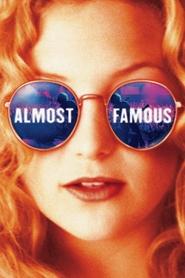
Almost Famous (2000)
The skeleton is a classic journey: sensitive boy leaves home, tours with a band, is tested. But the tissue is something else. Watch how the best scenes advance nothing — a bus full of people who hated each other a minute ago, singing along to a song while John Toll's camera just drifts from face to face and lets it happen. Toll trades his epic-landscape credentials (Braveheart, Legends of the Fall) for warm window light and the human clutter of touring life, drawing on the backstage vérité grammar of Don't Look Back.

The Virgin Suicides (2000)
Almost every image has glass in it — binoculars, windowpanes, curtains, gauze. Coppola and cinematographer Ed Lachman never show you the Lisbon sisters plain; you see them backlit, haloed, in slow motion — explicitly the neighborhood boys' idealizing memory, not neutral observation. Watch how the film keeps reminding you that you're being handed a construction: girls assembled from relics — a diary, a photograph, a bra on a radiator — by narrators who never possessed the real thing. Air's synth score holds chords that never quite resolve, which is the whole mood in music.
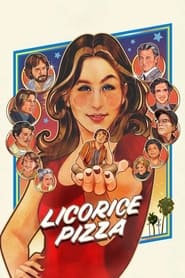
Licorice Pizza (2021)
Anderson's camera follows rather than pins: handheld, long-lensed, catching two people in motion at a slight remove. Watch the running — bodies sprinting through the Valley while the lens compresses space so the distance refuses to close. There's no goal here, no objective being pursued; the film tumbles sideways through encounters in the episodic mode of American Graffiti, sustaining a romantic asymmetry (he wants everything immediately; she wants something she can't yet name) the way Hal Ashby's films did — without forcing it to resolve.
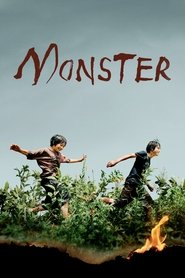
Monster (2023)
Kore-eda's camera doesn't just show events — it selects, frames, and withholds according to whose consciousness you currently inhabit, replaying the same span of time from incompatible vantage points in the tradition of Rashomon. Watch the first section's anxious, compressed framings around a mother who correctly perceives something is wrong and can find no action that sets it right — the confrontation you're trained to expect arrives and does nothing but produce deeper bows. Ryuichi Sakamoto's final score — sparse piano against long silence — gives the film its breath.
Watch these together and something clarifies: a whole counter-tradition of the coming-of-age film, one where the camera watches rather than chases. You'll start noticing the family resemblances — the long lens that keeps a respectful distance in Kes and Licorice Pizza; the single glance carrying more weight than any deed in Au Revoir les Enfants and Monster; the memory-frames of Stand by Me and The Virgin Suicides that turn boyhood into something written down, reassembled, half-invented. These films trust that if you hold on a face, a field, a bag in the wind, a bus full of singing strangers, the audience will do the feeling that plot usually does for them. They ask for your attention — and then reward it with the rarest thing in movies: time you can actually feel passing.