Sightlines · a mini film course
The Long Second Before the Draw: Twelve Films About Waiting, Watching, and the Moment of Action
There's a hand hovering over a holster. A man tilting a barber's chair back on two legs. A face receiving a death sentence like good news. A woman on a slope, straining to hear a decision the wind carries wrong. This set of films — Westerns and samurai pictures, revenge thrillers old and new — all circle the same question: what happens in the space between seeing and doing? Some of these films run the classic engine at full power: a world presses on a person until they act, and the act changes the world. Others hold the engine idling, stretch that suspended second into an aesthetic of its own, or quietly unplug the machine and watch what's left. Seen together, they form a conversation about action itself — who gets to act, what acting costs, and what it looks like when a film refuses to let anyone act at all.
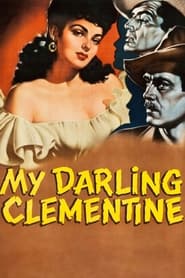
My Darling Clementine (1946)
Start here, with the machine running clean. Watch how Ford tells you everything through posture and landscape: Fonda's Wyatt Earp balanced on a barber's chair, boots on the porch post, doing nothing and yet somehow owning the town. Notice how Monument Valley isn't backdrop but pressure — a disordered place that seems to conscript the man into setting it right. This is the classical Western's grammar at its most confident, and everything else in this set is either building on it or arguing with it.
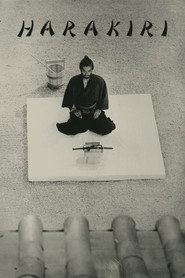
Harakiri (1962)
A samurai film that keeps the sword in its scabbard for two-thirds of its length. Watch how Miyajima's deep-focus widescreen frames turn the clan compound's architecture — raked gravel, receding corridors, layered screens — into an instrument of power: one kneeling man surrounded by geometry he didn't build and can't leave. Notice Nakadai's performance, built almost entirely from tiny adjustments of breath and voice, and how the film accumulates its case through nested testimonies rather than swordplay. Stillness here isn't the absence of drama; it's the drama.
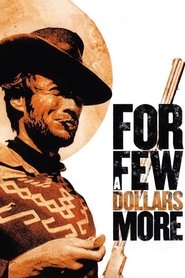
For a Few Dollars More (1965)
Leone found the place where the Western hesitates — the hand near the holster — and built a cathedral on it. Watch the radical oscillation of scale: tiny figures dwarfed by desert immensity, then an eye filling the whole screen. Listen for how a pocket watch's chime becomes a clock counting down to violence, and how Leone stretches the standoff until you feel it as pressure in your chest. The classical Western got the draw over with quickly; Leone realized the waiting was the point.
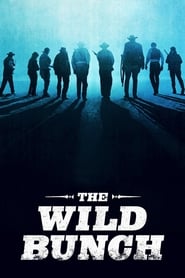
The Wild Bunch (1969)
Peckinpah opens on children laughing at a scorpion swarmed by red ants — an image of the savage appetite running beneath the town's temperance bands and bank facades. Watch how Ballard's wide frame arrays the aging outlaws as a group portrait, men who've outlived the world that gave them meaning, and how the slow-motion violence (a grammar Peckinpah codified from Kurosawa and Bonnie and Clyde) plays as lamentation rather than spectacle. Everything here is sliding downhill, and the film makes you feel the grade.
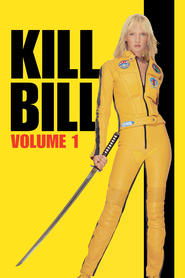
Kill Bill: Vol. 1 (2003)
Cinema normally samples ordinary, in-between moments of motion; Tarantino builds a whole film out of climactic poses — the arterial spray staged as a geyser, duelists frozen in ritual stillness, the standoff held until time itself seems to strike an attitude. Watch how densely he cites his sources: the chaptered revenge ritual and snow-against-blood contrast from Lady Snowblood, the yellow tracksuit from Bruce Lee. Notice Richardson's hot top-light haloing hair and shoulders, giving even grimy rooms a graphic crispness. It's a film made entirely of peak moments, each one honoring the peak it descends from.

The Last Samurai (2003)
Here the collision is history itself: sword against rifle, ritual against railway. Watch how Toll's painterly cinematography — trained on The Thin Red Line — renders the countryside in a register borrowed from Kurosawa: color-coded banners, massed cavalry, static wide tableaux of armies crossing landscape. The film's most haunting idea is a charge toward guns that don't care how beautifully you ride — courage meeting a machine that offers no opening for it.
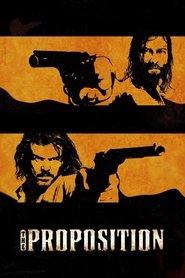
The Proposition (2005)
Open on a fly walking the rim of a wound. Delhomme photographs the outback without flattery — insects on sweat, heat as physical assault — and then lights the Stanley homestead's lace curtains and Christmas dinner with a doomed prettiness, civility ringed by dark. Watch the tension between those two registers: a thin skin of Englishness stretched over a land that has already won. The staging grammar — extreme-long shots miniaturizing figures, extreme close-ups of weathered faces — comes straight from Leone, but the mood, scored sparsely by Cave and Ellis, is pure elegy.
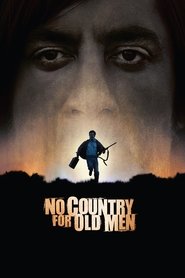
No Country for Old Men (2007)
Deakins's restraint is the star here: long lenses compress figures against featureless desert, emphasizing distance and exposure, and the landscape participates rather than decorates. Listen to the sound — the rustle, the drone, the ambient hum doing the work a score usually does, a grammar inherited from The Conversation. And watch the gas-station scene: a coin on a counter, fluorescent light, talk — and a tension with nowhere to go. You watch the way the owner watches. The film honors every mechanic of the chase thriller and quietly asks what happens when the machine stops delivering what it promises.
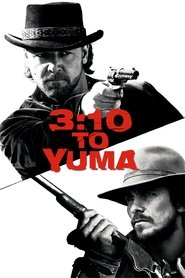
3:10 to Yuma (2007)
Mangold tightens one screw on the classical engine: he makes you notice it running. Papamichael's anamorphic frame hands down the verdict before anyone speaks — a speck of a man under a sky that doesn't care. Watch how the film inherits its pressure-chamber staging from the 1957 original (a criminal's charismatic certainty slowly eroding a lawman's resolve in a hotel room) and its countdown structure from High Noon. A man perceives drought, debt, a maimed leg — and acts anyway. The film's question is what that acting is worth.
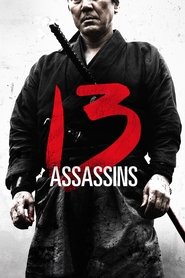
13 Assassins (2010)
Miike does something stranger than it looks: with full conviction and no irony, he rebuilds the classical action machine that so much serious cinema abandoned. Watch the disciplined restraint of the first ninety minutes — the camera holding at formal distance, honoring the kneeling, bowing geometries of Edo-period space, in a strategy learned from Harakiri — before everything erupts. And watch Kōji Yakusho's face when the commission arrives: a man greeting a death sentence like good news. The recruitment structure comes from Seven Samurai; the conviction is Miike's own.
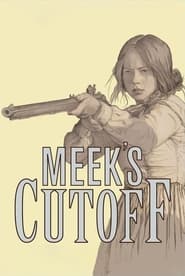
Meek's Cutoff (2011)
Reichardt shrinks the frame to a boxy square, refusing the Western's romance with panorama — you see what the settlers see, which is never enough. Watch how she stages information itself: the women stand apart while the men decide their fate, and the camera stands with the women, catching only murmur and wind. The bonnets — true objects of 1845 — become blinkers, drawing the border of what a person is permitted to see. Every ingredient of the Western is here — desert, wagons, a captured man whose speech goes untranslated — but the machine seizes, and the film asks you to feel what it's like when no one can act on what they know.
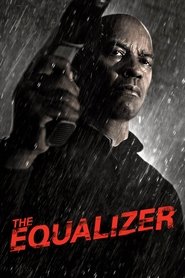
The Equalizer (2014)
For most of an hour, this is a film about a man folding a napkin. Watch McCall's nightly liturgy — the same diner, the squared book, the timed tea — and how Fiore's camera holds him in static or drifting compositions, forever behind glass, framed in windows, caught in reflections: a man studying a world he won't step into. The ritual domesticity descends from Le Samouraï's solitary professional. In a genre built on perceive-decide-strike, the film's boldest choice is how long it refuses to throw that switch — and how much meaning stillness carries before it does.
Why watch these together? Because they teach each other. Ford shows you the engine; Leone shows you its most beautiful hesitation; Kobayashi and Reichardt show you what the frame holds when the engine is refused; Peckinpah and Hillcoat show you what crawls beneath it; Tarantino builds a shrine out of its climaxes; Miike rebuilds it whole; and the Coens, Mangold, Zwick, and Fuqua each test, in their own register, what a decisive act is still worth in a world that may not answer. By the end, you'll find yourself watching every standoff, every held silence, every small figure under a big sky differently — noticing not just what characters do, but the charged, stretched, sometimes unbearable moment in which doing becomes possible at all.