Sightlines · a mini film course
Small Figures, Big Country: Twelve Films About Whether Acting Matters
Every film in this set puts a human being — often a very small one — inside an enormous space and asks a quietly radical question: does what this person does actually change anything? Some of these movies answer with a thunderclap of confident action; others let their characters look, wait, and endure while the world refuses to respond. What unites them is a shared visual language: long lenses that flatten tiny figures against desert and sky, cameras that watch rather than chase, sound designed from wind and engine-hum rather than orchestral reassurance, and a willingness to let time stretch until you feel it. Watch them together and you'll see filmmakers across sixty years arguing with each other about the oldest promise in cinema — that a decisive deed can set the world right.
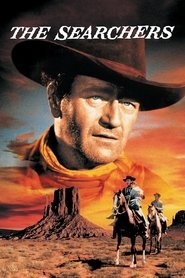
The Searchers (1956)
Start here, at the source. Watch the very first shot: darkness, then a doorway opening onto Monument Valley — we're inside the house, looking out at the wilderness, and that frame-within-a-frame becomes the film's whole architecture. Winton Hoch's saturated Technicolor renders the red buttes as something closer to a moral force than scenery, and Ford, the great mythmaker of the Western, uses all that grandeur to interrogate the myth from the inside: a story of obsession and race in which the land seems to know things the hero doesn't.
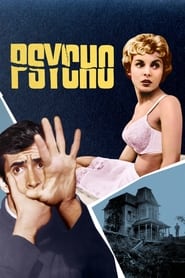
Psycho (1960)
This is a film about looking — who looks, through what frame, and what looking costs. Notice how Hitchcock keeps positioning you as a watcher: through car windows, across desks, through doorways, until you're implicated in the surveillance yourself. Notice too the deliberately plain, television-trained black-and-white photography — no lush atmospherics, just clean, functional dread — and pay attention to how radically the film shifts its own center of gravity partway through. Say no more; feel it happen.
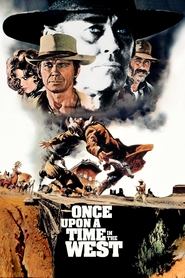
Once Upon a Time in the West (1968)
The opening is one of cinema's great heresies: nearly twelve almost-wordless minutes of men waiting at a train station — a fly, a dripping water tank, cracking knuckles — in the most action-driven genre Hollywood ever built. Watch Leone's optical extremes: telephoto lenses compressing distant landscape into abstraction, then colossal close-ups of weathered faces. It's an Italian's elegy for an American myth, shot largely in Spain, and that outsider's distance is exactly what lets it see the Western clearly.
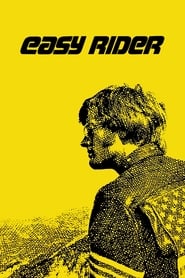
Easy Rider (1969)
Watch the lens flares — the sun smearing across the image as the bikes lean into a curve. In 1969 those were "mistakes," and László Kovács left them in, because the film's whole argument is there: light nobody arranged, a road that runs on with or without the riders. Notice how much of the movie is pure motion that changes nothing, gorgeous travel toward no destination — and how the compiled rock soundtrack, revolutionary at the time, does the emotional work the sparse story refuses to.
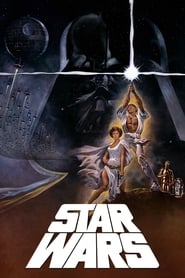
Star Wars (1977)
The great counter-argument of the set. Just as serious cinema was filling up with watchers who couldn't act, Lucas built a cathedral to the character who can — a universe where perceiving a problem and acting on it works, gloriously. But watch for the one held moment where the machine pauses: Luke at the twin sunset, doing nothing, just yearning at a horizon. Also notice the visual grammar assembled from everywhere at once — Kurosawa's screen-wipes and bickering comic companions, WWII bomber-raid editing in the climax — a synthetic style that changed the industry overnight.
Thelma & Louise (1991)
Adrian Biddle's cinematography is the meaning here: cramped, grimy Arkansas kitchens early on, then the frame blowing open into vast light-saturated horizontals as the journey heads west. Scott borrows the Western's monumentalizing grammar — two figures dwarfed by mesa and sky, magic-hour light — and hands it, for the first time at this scale, to two women. Watch what the film's decisive actions actually accomplish versus what the heroic framing promises; the gap between the two is the whole movie.
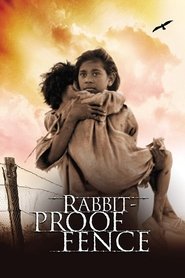
Rabbit-Proof Fence (2002)
Christopher Doyle, world-famous for restless, saturated handheld work in Hong Kong, here turns himself inside out: wide, patient framings, three small figures against salt pan and ochre light. The film is built on the Western's bones — abduction and pursuit across monumental land — but quietly inverted: the abducted children are the searchers, and the single wire of the fence becomes a thread drawn across a continent. Watch the interplay between the vast country and that one taut line; the film breathes between those two scales.
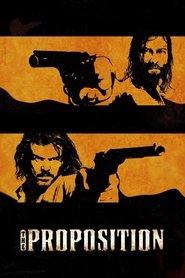
The Proposition (2005)
Open on the insects. Benoît Delhomme photographs the Queensland outback without any softening — flies on sweat, heat you can almost smell — while the settlers' whitewashed homestead, with its lace curtains and planted flowers, glows with what one critic called a doomed prettiness: civility ringed by darkness. Watch the collision of those two worlds, and listen to Nick Cave and Warren Ellis's sparse, elegiac score refusing to tell you how to feel about frontier violence.
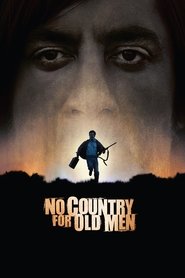
No Country for Old Men (2007)
Roger Deakins at his most strategically restrained: long lenses press figures against featureless desert, emphasizing distance and exposure, and the landscape participates rather than decorates. Listen as much as you watch — the film builds tension almost entirely from ambient sound, the rustle and the room tone, in a lineage running back to The Conversation. And notice the famous gas-station coin toss: a scene where nothing moves except talk and fluorescent light, and the suspense comes from a man realizing he can only watch what's happening to him.
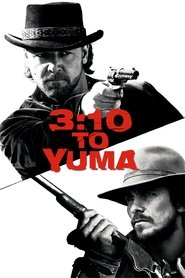
3:10 to Yuma (2007)
Phedon Papamichael opens with the verdict before anyone speaks: a small man on a horse under a sky that doesn't care. Watch how the widescreen frame is used for geometry rather than spectacle, and how the film runs the classic Western engine — a pressured man volunteers for a dangerous job — while making you feel the engine working. The heart of it is a pressure-chamber two-hander, a charismatic outlaw patiently eroding a decent man's certainties, inherited from the 1957 original and from High Noon's ticking-clock structure.

Dune: Part Two (2024)
Greig Fraser shoots the sun as an antagonist: hard natural light, immense negative space, armies swallowed by horizons, in the direct lineage of Lawrence of Arabia. But the thing to watch is Stilgar — the film's true believer, for whom nothing can fail to be a sign. Every event, even a denial, becomes proof of prophecy, and the film shows you, with sly comedy, how faith reshapes perception — and how a myth planted like a tool can wait centuries for a hand to pick it up.
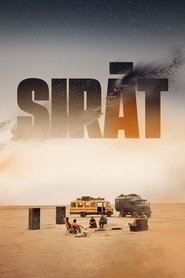
Sirāt (2025)
The newest film in the set, and a summation of everything before it. Mauro Herce shoots on Super 16, alternating vast depopulated wides — a convoy of vans reduced to specks against Moroccan canyon walls — with jolting handheld work amid rave dancers. It begins as a missing-person search: a father offering a photograph, hand to hand, through a crowd. Watch what the film does to that search — and how it fuses the doomed-convoy tension of The Wages of Fear and Sorcerer with a pounding techno pulse into something critics could only call an "unholy amalgam."
Watched together, these films become a sixty-year conversation. Ford builds the doorway; Leone stretches the wait; Hopper lets the road lead nowhere; Lucas answers with pure confident motion; Scott, Noyce, Hillcoat, the Coens, Mangold, Villeneuve, and Laxe each inherit the same image — the small figure in the big indifferent country — and bend it toward their own question. Pay attention to how each film handles the moment before action: the pause, the watching, the held breath. That's where every one of these directors shows you their hand, and where the deserts, highways, and dark doorways stop being backdrops and start being the story.