Sightlines · a mini film course
When Watching Becomes the Story: Cinema That Stops Chasing and Starts Seeing
Most movies run on a simple engine: a character sees a problem, acts on it, and the action changes things. The twelve films on your list share a quieter, stranger conviction — that the most powerful thing a camera can do is hold still and pay attention. In these films, the camera watches rather than chases. Time is allowed to stretch until you feel it passing in your own body. Spaces — a hotel, a house, a hillside, a warehouse — stop being backdrops and start behaving like minds. And the people at the center are less doers than witnesses: figures who see their worlds with terrible clarity and cannot simply fix them. Watching these films together is a course in a different kind of movie pleasure — the pleasure of looking longer, listening harder, and letting a film think alongside you.
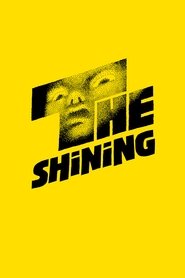
The Shining (1980)
Watch — and listen — to the famous gliding shots that follow Danny's tricycle through the hotel: the wheels going loud on hardwood, soft on carpet, loud again, so you brace before every corner. The Steadicam was brand new, invented to smooth out shaky footage; Kubrick turned it into a way of thinking, a camera that seems to drift through a space arranging itself ahead of the characters. Notice too the rigorously symmetrical corridors receding to a single vanishing point — and notice that the hotel's geography quietly refuses to add up. Viewers have tried for decades to map the Overlook and failed. That failure is the point: this is a building you experience less as a place than as a mind you're moving inside.
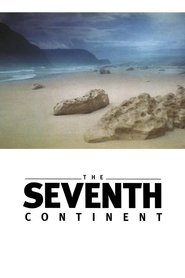
The Seventh Continent (1989)
You can watch this film for a long stretch before realizing you haven't seen a full face. Haneke's camera looks at hands, a faucet, a cereal bowl, banknotes at a teller's window, a car passing through a wash — the world arriving as an inventory of objects and gestures rather than readable people. Watch how the recurring car-wash image works: a family sealed in a clean box, watching a surface, waiting for it to be over. The static, frontal framings and hard cuts to black turn comfortable routine itself into the source of dread — a horror film without a monster.
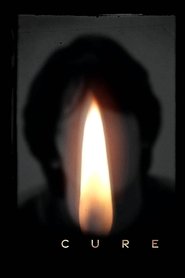
Cure (1997)
Notice the distance. Kurosawa holds his characters in wide, desaturated frames — concrete grays, fluorescent sickliness — so figures never escape their environments into the comfort of a close-up. And watch how the film's central device mirrors the act of watching movies itself: a point of light in the dark, a patient, circling voice, a viewer emptied of resistance. When the flame flickers or water drips, you'll find yourself leaning in exactly the way the characters do. It's a serial-killer film built by subtraction — no grand design, no spectacle — and all the more unnerving for it.
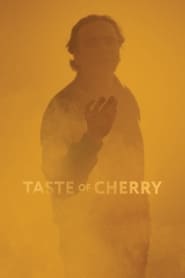
Taste of Cherry (1997)
Watch how Kiarostami films a conversation. Two men sit side by side in a car, looking forward at the road, almost never at each other — the standard face/face/face grammar of movie dialogue simply withheld. You read them through posture, vocal pitch, an oblique glance. And because the lens so often sits where the windshield would be, the person being addressed is, structurally, you. The ochre hills of the Tehran periphery unspool behind the glass like a second character, the earth ever-present. Almost nothing here behaves like plot, and that is the design.
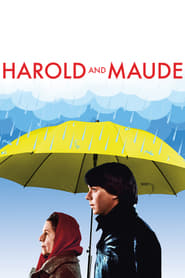
Harold and Maude (1971)
Watch the timing. Ashby was an Oscar-winning editor before he directed, and the film's dark comedy lives in the cut — a death staged with total theatrical commitment, met by a world too bored to look twice. Notice how Harold's elaborate performances are routines rather than actions: nothing follows from them, and the gag lands precisely because of it. Against this, Alonzo's muted, overcast Northern California photography — autumnal cemeteries, grey Bay light — plays everything absurd with a perfectly straight face. This is the New Hollywood rebellion delivered as deadpan.

Antichrist (2009)
Listen to the acorns falling on the cabin roof — a forest making more of itself, seed after seed, indifferent and tireless. That sound tells you something no character's careful, rational language can reach. Watch the collision of two visual registers: a lustrous black-and-white slow-motion prologue, consciously beautiful, and then a restless, corroding camera once the couple reaches the woods. Von Trier films nature not as scenery but as pressure — an ordinary place slowly peeled back to reveal something churning underneath. The film is dedicated to Tarkovsky, and you'll see why in its reverence for wind, water, and falling bodies.
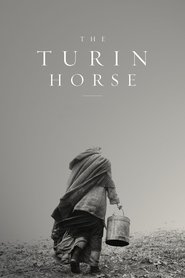
The Turin Horse (2011)
Watch them eat the potato. The camera holds; nothing is explained; you wait the way they wait, and the waiting is the film. Tarr builds the whole thing from long, sustained black-and-white takes — Fred Kelemen's photography is one of the great achievements in contemporary monochrome — structured across six days of accumulating exhaustion: the well, the wind, the lamp, the horse. You don't receive information about a world running down; you inhabit it, minute by minute, and time itself becomes the thing on screen.
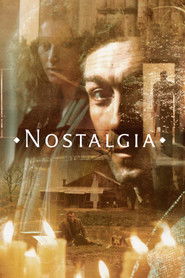
Nostalgia (1983)
There is a shot here — a man carrying a small candle flame across a drained pool, the steam snuffing it, the walk starting over — that runs some nine minutes without a cut, with real precariousness rather than a simulation of it. Nothing is "happening"; everything is at stake. Watch how Tarkovsky builds pressure through duration rather than editing, and how he shifts between color and sepia to move between present and memory. The film's subject is exile — the sense that inner life itself is a homeland no one else can visit — and its slow, water-saturated images make you feel that untranslatability rather than explain it.
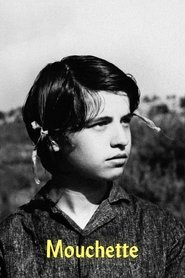
Mouchette (1967)
Start with her hands. Bresson builds his film from fragments — hands at a bumper-car rail, isolated gestures, objects — and from sounds that arrive before or without their images. Notice the famous blankness of Nadine Nortier's face: Bresson directed non-professional "models," draining performance away so that the bare facts of a girl's endurance carry everything. The sober, overcast black-and-white photography never dramatizes. What looks like austerity is actually a kind of attention — the camera refusing to look away from what communities prefer not to see.
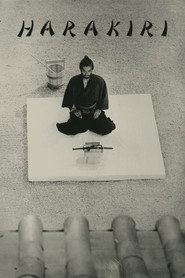
Harakiri (1962)
A man kneels on raked gravel, and around him an entire institution arranges itself — retainers in rigid rows, screens receding, the wide anamorphic frame spreading the clan out like geometry the lone man sits trapped inside. Watch how Kobayashi uses architecture as an instrument of power, and how he keeps the sword sheathed for most of the film's length: this is a samurai picture where testimony replaces combat, where a case accumulates rather than a battle erupting. Nakadai's performance is built from incremental adjustments of breath and voice. The stillness is the argument.
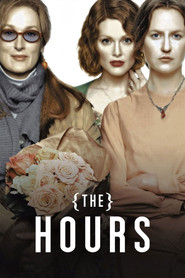
The Hours (2002)
Most films that braid three timelines want you to keep them straight; this one wants the opposite. Watch how the editing rhymes gestures across decades — a woman cracks an egg, arranges flowers, lowers her face to a pillow — so that three women in three eras seem to share one nervous system. Notice McGarvey's distinct palettes: cool grey-green for 1923 England, hard oppressive brightness for 1951 suburbia, and listen for how Philip Glass's score runs underneath everything like a river. The film thinks across time without anyone in it needing to remember anything.
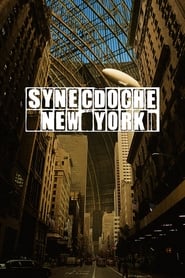
Synecdoche, New York (2008)
Watch how the impossible gets photographed: Frederick Elmes (who shot Eraserhead and Blue Velvet) films a house that is quietly, actually on fire with the same unhurried, autumnal calm he'd give a kitchen sink. The uncanny is never flagged, and that flat acceptance is your door in. Then watch the central structure — a theater director building a full-scale replica of his own city and life, hiring an actor to play himself, then an actor to play that actor — and notice the moment when the copy stops representing the life and starts absorbing it. Reality and its double, held up side by side until you can't tell which is which.
Why watch these together? Because each film trains you for the next. The Steadicam's uncanny glide in The Shining sharpens your ear for the acorns on von Trier's roof; Bresson's fragmented hands in Mouchette teach you to read Haneke's faucets and banknotes; the nine-minute candle walk in Nostalgia prepares you for Tarr's potato, and both make Kobayashi's kneeling stillness feel electric rather than empty. The lineages run visibly through the set — Bresson feeds Haneke and Kiarostami and Tarr; Tarkovsky is von Trier's dedicatee; Mizoguchi's gliding wides stand behind both Kurosawa and Kobayashi. But the deeper reward is a retuned attention. These films ask you to stop waiting for what happens next and start noticing what is happening now — in the sound of wheels on carpet, the light on a windshield, the length of a held shot. Give them that patience and they give back something rare: the feeling of a film thinking, and of yourself thinking with it.